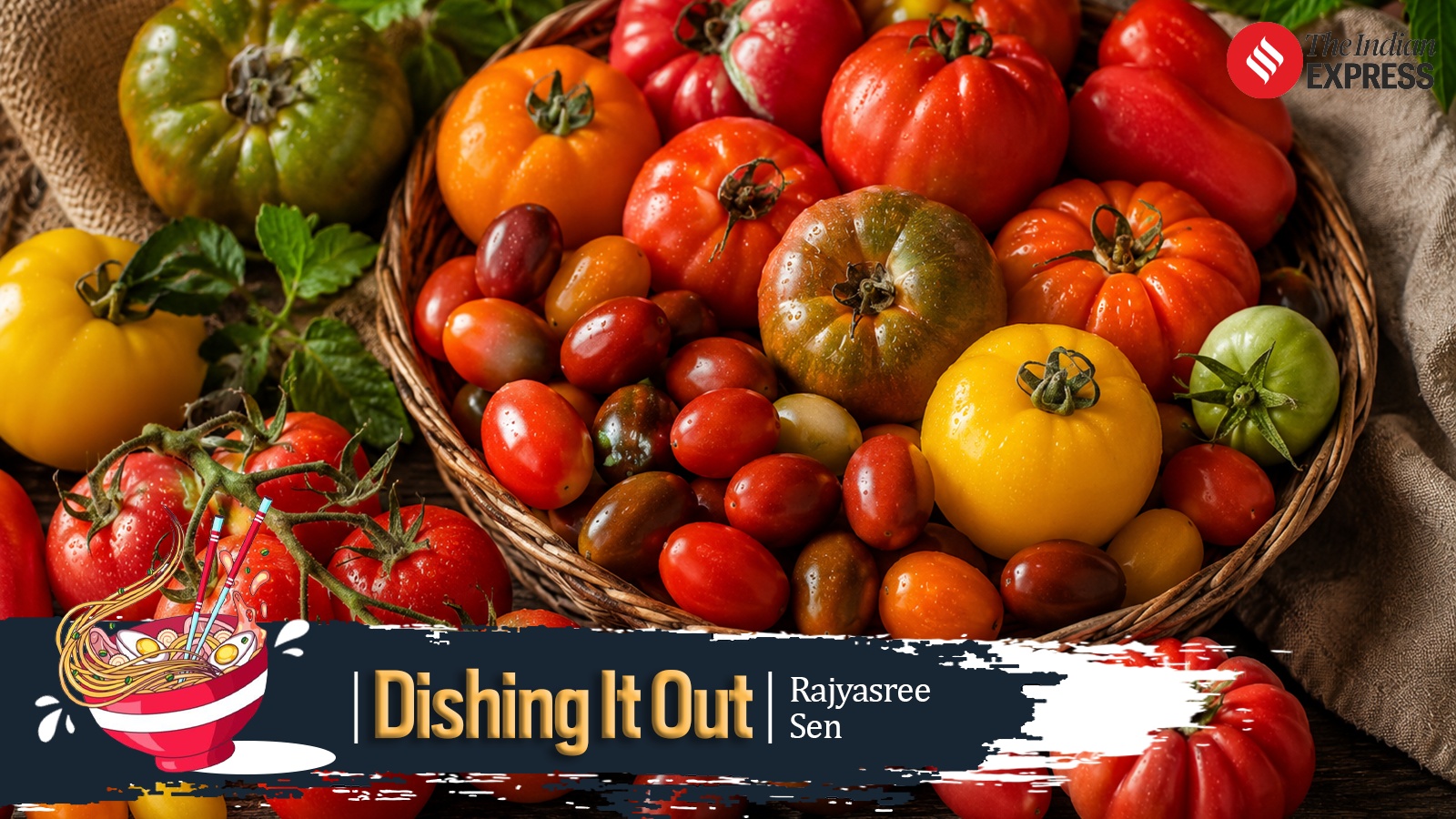
Tomatoes, now a staple in Indian households, originated in South America and were introduced to India by Portuguese explorers in the 1600s. Their popularity surged during the British era, eventually becoming integral to Indian cuisine. This article traces the tomato’s migration, cultivation, and culinary transformation in India.
मुख्य बिंदु (Key Takeaways)
- Tomatoes are native to South America and arrived in India via Portuguese traders in the 1600s.
- The British colonial period popularized tomatoes in Indian cooking, especially in Bengali sweet‑sour dishes.
- India now cultivates around 1,000 tomato varieties and ranks third globally after China and Turkey.
Often labeled “vilayati” (foreign) in India, the tomato is far from indigenous. The fruit’s South‑American roots were first planted on Indian soil by Portuguese explorers in the early 17th century, but it remained a novelty until the British arrived.
British Reluctance and Gradual Acceptance
Early British administrators shunned tomatoes, classifying them among nightshades—plants thought to be poisonous. By the mid‑18th century, however, European culinary trends embraced tomatoes in soups, salads, and stews, and the habit migrated to Indian kitchens via colonial cookbooks. Texts such as Wyvern’s Indian Cookery Book (1840) listed tomatoes under “English vegetables grown in India.”
First Commercial Cultivation
Scottish botanist William Roxburgh documented large‑scale tomato cultivation across India in 1832. Nineteenth‑century Anglo‑Indian cookbooks featured tomatoes in bakes, gratins, and gravies, but these recipes were largely European in flavour. The 1801 Persian‑translated manual Nuskha‑i Ni’mat Khān was among the earliest to illustrate tomato usage in shorba and curries, targeting Mughal kitchens.
20th‑Century Indianization
Tomatoes proved especially harmonious with Bengali sweet‑sour cooking, as noted by food historian Lizzie Collingham. By 1914, Savitri Chowdhuri’s diaspora cookbook and the 1926 Hindi text Pak Chandrika offered tomato‑based gravies and chutneys, cementing the fruit’s place in regional cuisines.
Modern Landscape and Future Outlook
Today, India grows roughly 1,000 tomato varieties, ranking third worldwide after China and Turkey. The fruit’s visual appeal and flavor diversity make it a market favourite both domestically and abroad. In the next piece, we’ll explore the history of gunpowder (podi)—the fiery spice blend that crowns dosas, idlis, and ghee‑drizzled dishes.