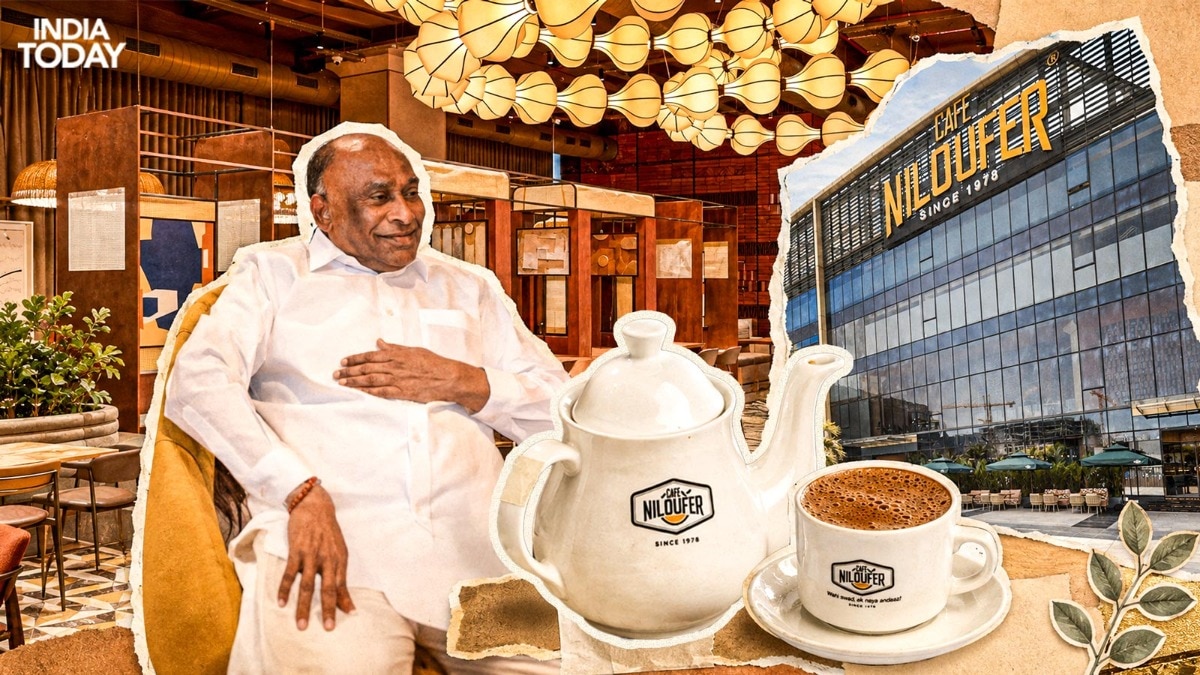
A young man who arrived in Hyderabad without a ticket transformed a humble tea stall into a culinary landmark. Discover the story of Anumula Babu Rao and the legacy of Cafe Niloufer.
- Anumula Babu Rao started his journey in Hyderabad in 1975 with nothing but a dream.
- Cafe Niloufer now serves over 20,000 cups of Irani chai daily across nine outlets.
- The brand's success is built on a strict philosophy of quality over quantity.
In the heart of Hyderabad, tea is more than just a beverage; it is a social ritual. At the center of this culture stands Anumula Babu Rao, the visionary behind Cafe Niloufer. His trajectory from sleeping on footpaths to owning one of the city's most prestigious cafes is a masterclass in perseverance and entrepreneurial grit.
Babu Rao's odyssey began in 1975 when he traveled from Adilabad to Hyderabad without a ticket. With no financial backing, he took on any job available, starting at a textile store before moving into the food and beverage industry. He entered a restaurant as a waiter, but his ambitions were larger than his role. He didn't just serve tea; he swept floors and washed dishes, learning every operational nuance of the business from the bottom up.
The Birth of a Legend
By 1976, Rao became associated with a small tea stall located opposite the Niloufer Hospital. His relentless work ethic earned him the trust of the owner, who eventually entrusted him with the management of the establishment. By 1978, Babu Rao officially founded Cafe Niloufer. In those early years, the menu was minimalist, focusing solely on the perfection of Irani Chai and Osmania Biscuits.
Why This Matters
BozokMedia analysis shows that the enduring success of Cafe Niloufer lies in its refusal to compromise. In an era of rapid scaling and cost-cutting, Rao's insistence on personally overseeing the blending of tea powder ensures a consistent taste profile. This creates a 'trust-equity' with the customer that modern franchises often struggle to replicate.
"I would never serve a customer anything that I won’t eat or drink myself." - Anumula Babu Rao
The Royal Connection and Expansion
The name 'Niloufer' carries a rich historical weight, linking the cafe to the Ottoman Empire. Princess Niloufer Khanum Sultan, born into Ottoman royalty, married into the Nizam's family of Hyderabad. The Niloufer Hospital, established in her honor, provided the geographical anchor for the cafe. The word itself is Persian for 'blue lotus'.
Today, the flagship outlet is a massive 40,000 square foot facility spanning three floors, capable of hosting over 700 customers. A standout feature is the two-tonne "Kettle of Love" sculpture, symbolizing the warmth and hospitality the cafe provides. From a single stall, the business has expanded to nine outlets across the city, including Hitech City and Lakdikapul.
| Metric | Early Days (1978) | Modern Era (2026) |
|---|---|---|
| Presence | 1 Small Stall | 9 Outlets |
| Daily Volume | Modest | 20,000+ Cups |
| Infrastructure | Footpath/Small Shop | 40,000 Sq Ft Facility |
Frequently Asked Questions
1. What are the signature items at Cafe Niloufer?
The cafe is world-famous for its Irani Chai, buttery Osmania Biscuits, and Maska Bun.
2. How did Babu Rao acquire the cafe?
Starting as a waiter, he proved his competence and loyalty to the original owner, who eventually handed over the business to him.