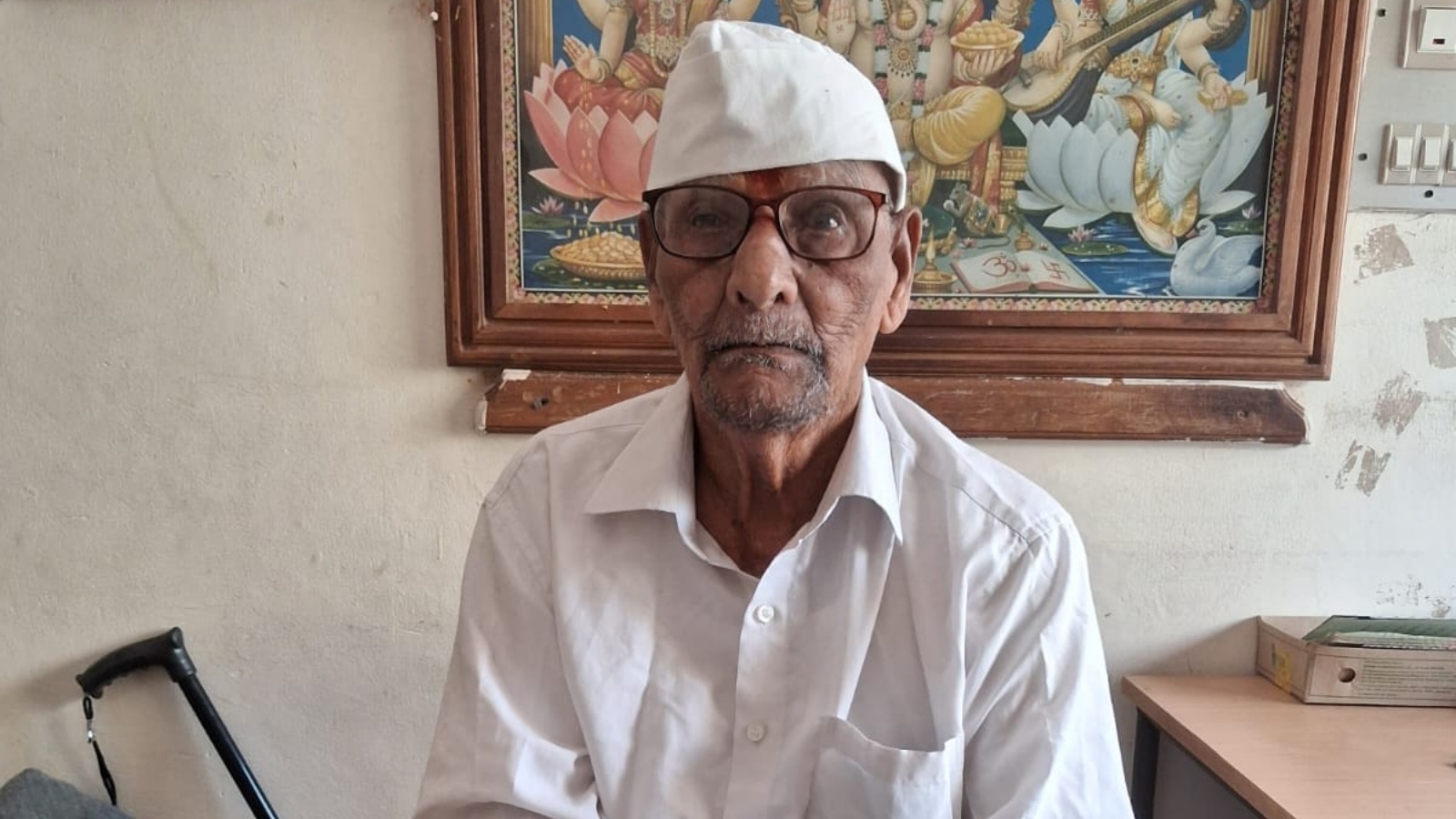
At 99, YC Revanna, a survivor of the 1942 Quit India Movement, shares his harrowing experiences and calls upon today's youth to continue the struggle for a better India.
Key Takeaways
- YC Revanna joined the Quit India Movement in 1942 at the age of 15.
- He faced extreme brutality, including being abandoned in dense forests by British police.
- A staunch Gandhian, his ideology was shaped by witnessing Mahatma Gandhi in 1934.
- He emphasizes that the journey from 'Swarajya' to 'Ramarajya' is still ongoing.
In 1942, a 15-year-old YC Revanna did something radical: he jumped out of his school window to join the Quit India Movement. Today, at 99, he stands as one of the last two surviving registered freedom fighters in Mysuru, offering a profound perspective on India's journey from colonial rule to democracy.
A Trial by Fire: Abandoned in the Wild
The struggle for independence was not merely about protests; it was about survival. Revanna recalls being detained by the British police and abandoned in the pitch-dark, predator-filled forests of 'Kakana Kote' (now part of the Nagarahole Tiger Reserve). This brutal tactic aimed to terrify minors into submission, yet it only fueled his resolve.
"The leaders we had were very promising; they made us feel the significance of freedom."
Why This Matters: BozokMedia Analysis
BozokMedia analysis shows that the transition from physical struggle against foreign rule to civic engagement in a modern democracy is the most critical evolution for India's youth. Revanna’s life bridges the gap between the era of sacrifice and the era of responsibility, reminding us that patriotism must evolve with the times.
The Vision of Ramarajya
For Revanna, the independence achieved in 1947 was not the final destination. He believes that while Swarajya (self-rule) was attained, the ultimate goal of Ramarajya (an ideal state) requires continuous agitation and organization by the youth.
Frequently Asked Questions
1. What was the 'Kakana Kote' incident?
It was a practice where British police abandoned minor protesters in dense forests to make them lose their way and deter further activism.
2. How did Gandhi influence Revanna?
Revanna saw Gandhi during his 1934 visit to Mysore, and Gandhi's philosophies of non-violence and social reform became the guiding principles of his life.