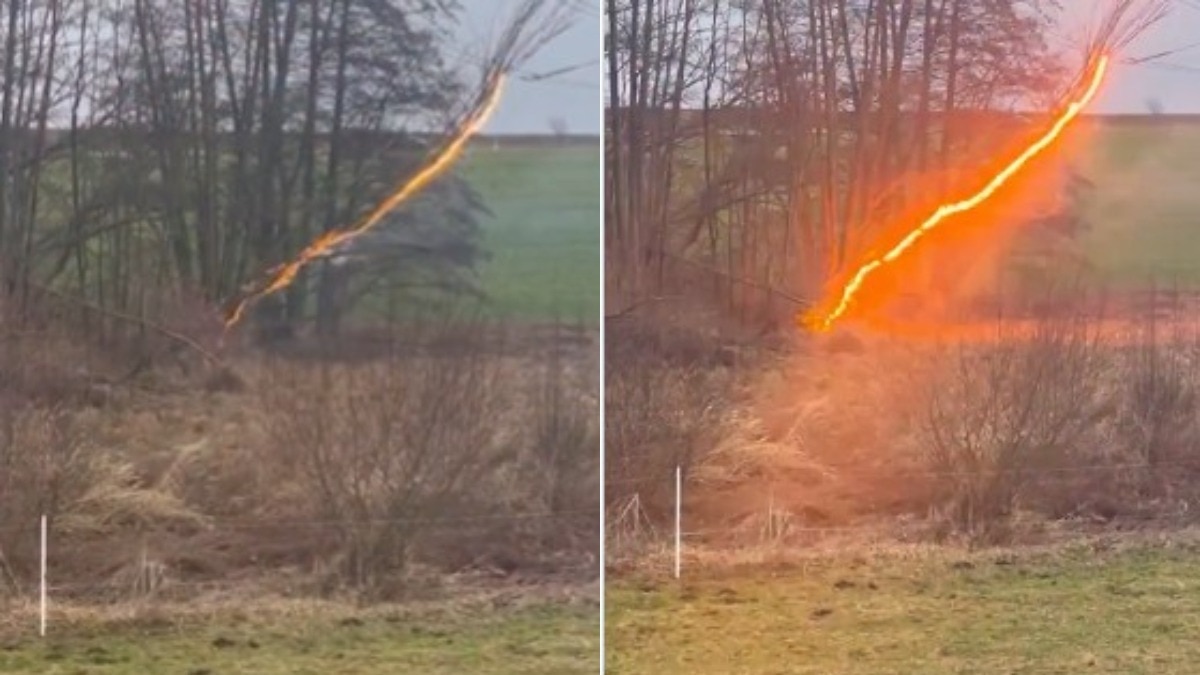
A viral video from Germany shows a tree erupting in rhythmic, pulsing flames. While it looks like a lightning strike, the scientific reason behind this phenomenon is much more complex.
Key Takeaways
- A viral video from Apolda, Germany, shows a tree engulfed in rhythmic flames.
- The visual appearance suggested a lightning strike, but the cause was different.
- A storm caused a large tree to fall onto high-voltage power lines.
- The pulsing effect was caused by 50 Hz AC electrical arcing.
A stunning video from Germany is currently taking social media by storm, showing a massive tree engulfed in rhythmic, pulsing flames. To the untrained eye, the sight is terrifying, appearing as though the tree has been repeatedly struck by lightning from the sky. However, the reality behind this spectacular display is rooted in electrical physics rather than meteorology.
The incident occurred in the Apolda region of Germany. According to reports from AccuWeather and ARK Media, a severe storm caused a large tree to snap and fall directly onto high-voltage power lines. The immediate contact created a continuous electrical circuit, causing the tree to catch fire instantly.
Why This Matters
BozokMedia analysis shows that such incidents highlight the extreme vulnerability of electrical infrastructure during extreme weather events. The interaction between organic matter and high-voltage currents creates unpredictable and highly dangerous environments for local residents and utility workers.
The rhythmic pulsing of the flames is a direct visual manifestation of the 50 Hz alternating current flowing through the tree.
What truly baffled viewers was the inconsistent nature of the fire. The flames did not burn steadily; they pulsed, brightening and dimming in a specific rhythm. Experts explain that because the tree was in contact with a 50 Hz AC supply, the electrical arcing occurred in sync with the frequency of the electricity, creating a 'throbbing' visual effect.
Historical Context
Historically, falling trees during storms have been one of the leading causes of localized power outages and electrical fires globally. As climate change increases the frequency of severe storms, the intersection of vegetation and high-voltage grids remains a critical concern for utility management companies worldwide.
Frequently Asked Questions
1. Was the tree actually struck by lightning?
No, the tree was ignited by making contact with a live high-voltage power line during a storm.
2. Why did the fire look like it was pulsing?
The pulsing was caused by the 50 Hz alternating current (AC) creating periodic electrical arcing.