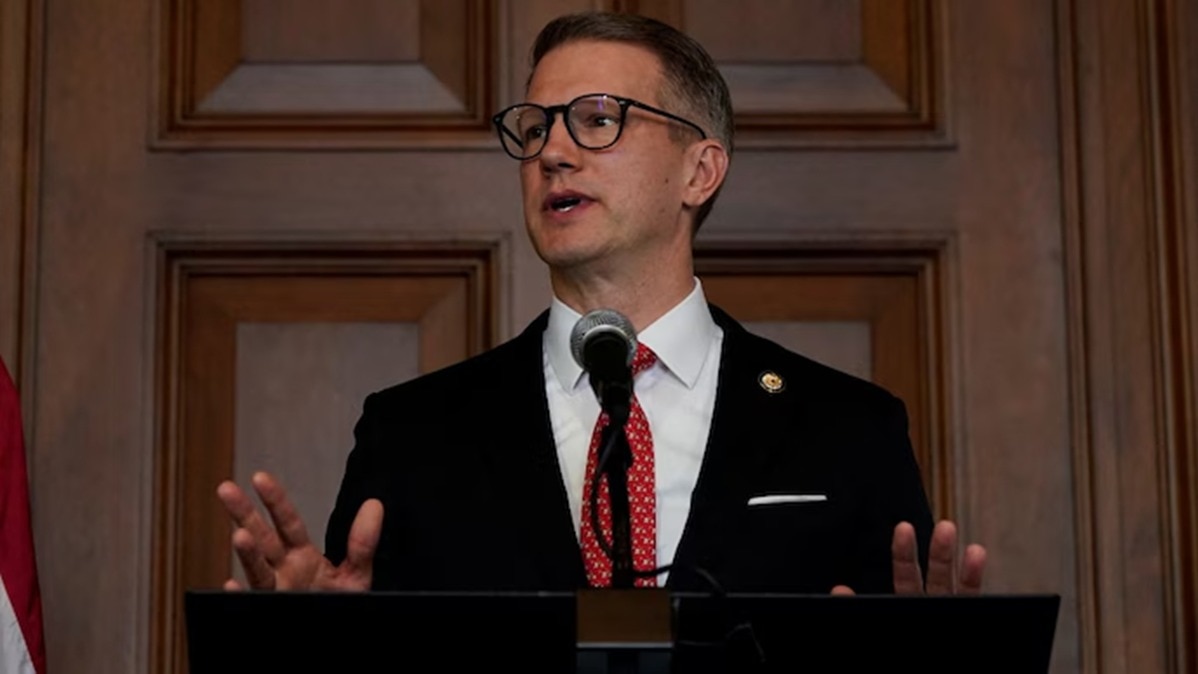
Republican MP Riley Moore has labeled India's proposed FCRA amendments as a 'direct attack on Christians,' warning of potential fallout in India-US bilateral ties.
Key Takeaways
- US Rep. Riley Moore called the FCRA amendments an 'attack on the Christian community.'
- Moore warned that the bill could strain bilateral relations between India and the US.
- The Indian government maintains the changes aim to increase transparency in foreign funding.
- Proposed rules grant the government significant control over religious charity assets.
The proposed amendments to India's Foreign Contribution (Regulation) Act (FCRA) have sparked an international diplomatic stir. Republican Congressman Riley Moore, aligned with Donald Trump's party, has launched a scathing critique of the move. Labeling the legislation a 'direct attack on Christians,' Moore cautioned that the bill could become a major point of contention in the strategic partnership between India and the United States.
Religious History and Political Friction
In a post on X, Congressman Moore invoked the deep-rooted history of Christianity in India, noting its presence since the time of St. Thomas the Apostle. He expressed grave concern that the FCRA Amendment Bill, 2026 would empower the government to exert undue control over churches and religious charitable institutions, effectively managing their foreign-funded assets.
"This is a direct attack on the Christian community. If this bill proceeds in its current form, it will be a major concern for our bilateral relations with India." — Rep. Riley M. Moore
Why This Matters
BozokMedia analysis shows that this controversy transcends religious sentiment, touching upon the core of financial sovereignty and administrative oversight. The proposed creation of a 'Designated Authority' is at the heart of the debate. This body would possess the power to take over the management of foreign funds and the assets acquired through them, a move critics fear could be used to stifle civil society.
FCRA Amendment Comparison
| Feature | Current Regulations | Proposed 2026 Amendments |
|---|---|---|
| Regulatory Body | Ministry of Home Affairs | Newly formed 'Designated Authority' |
| Fund Transfers | Regulated | Strict prohibitions on transferring funds to other NGOs |
| Renewal Threshold | Standard Registration | Minimum utilization threshold (₹10 Lakhs) required for renewal |
While opposition parties and NGOs argue that these changes could devastate educational and healthcare institutions—particularly in states like Kerala and Mizoram—the Indian government defends the bill as a necessary measure to curb 'toxic' NGOs and ensure accountability in foreign donations.
Frequently Asked Questions
1. What is the FCRA?
The Foreign Contribution (Regulation) Act governs how NGOs, religious bodies, and educational institutions in India receive and utilize foreign funds.
2. Why is the US reacting to this?
US lawmakers are concerned that the new amendments grant the Indian government excessive control over religious organizations and their properties.