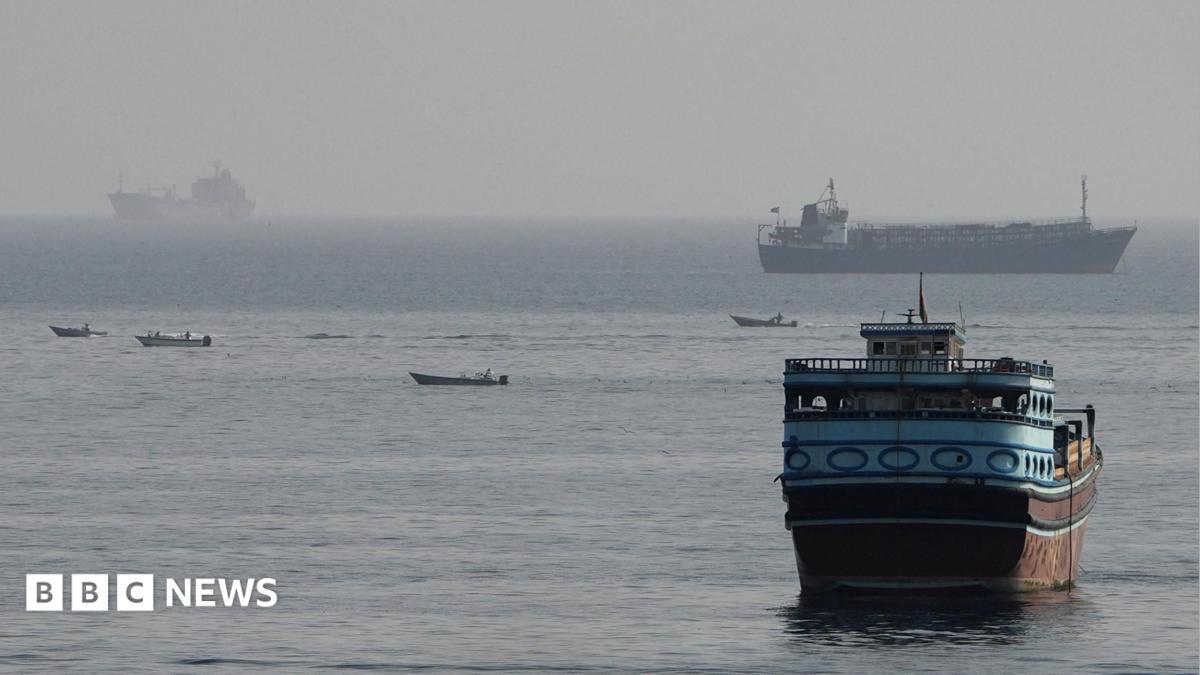
Iran has confirmed an agreement with Oman regarding a shipping route through the strategic Strait of Hormuz. While the deal is in its final stages, Tehran warns that US naval blockades remain a primary security threat.
Key Takeaways
- Iran and Oman have agreed on geographical coordinates for a shipping route.
- The agreement is reportedly in its final stages of implementation.
- Iran blames US naval blockades for ongoing security risks in the strait.
In a significant diplomatic development, Iran has announced that it has reached an agreement with Oman concerning a designated shipping route through the Strait of Hormuz. Iranian Foreign Ministry spokesman Esmaeil Baqaei confirmed that the deal is currently in its "final stages," though specific technical details of the route have not yet been disclosed to the public.
Security Concerns and US Tension
Despite the progress, Baqaei issued a stern warning, noting that an agreement with Oman alone cannot guarantee safe navigation. He argued that the primary destabilizing factor remains the United States' naval blockade of Iranian ports and its "aggressive and threatening actions" against Iranian interests.
Why This Matters
BozokMedia analysis shows that the Strait of Hormuz is perhaps the most critical maritime chokepoint in the world. Approximately one-fifth of the global oil supply and a massive portion of liquefied natural gas (LNG) pass through this narrow corridor. Any disruption here has an immediate and volatile impact on global energy markets and fuel prices.
The security of the Strait is not merely a bilateral issue between Iran and Oman, but a complex geopolitical struggle involving global superpowers.
The geopolitical tension has escalated following attacks by the US and Israel in late February. Amidst this, US President Donald Trump has issued a sharp warning, stating that Iran would be "hit very hard" if the strait is not reopened promptly. While US officials suggest talks are progressing, Tehran maintains it is not negotiating with the United States.
Historical Background
The Strait of Hormuz has long been a flashpoint for international conflict. For decades, the tension between Iran and Western powers has used the strait as a lever of influence, with the threat of closure serving as a powerful tool in regional power dynamics and global economic stability.
Frequently Asked Questions
1. What is the core of the Iran-Oman agreement?
The agreement focuses on establishing specific geographical coordinates for shipping routes to facilitate movement through the Strait of Hormuz.
2. How does this affect global oil prices?
Any instability or closure in the Strait leads to immediate spikes in global oil prices due to the massive volume of energy passing through the area.


