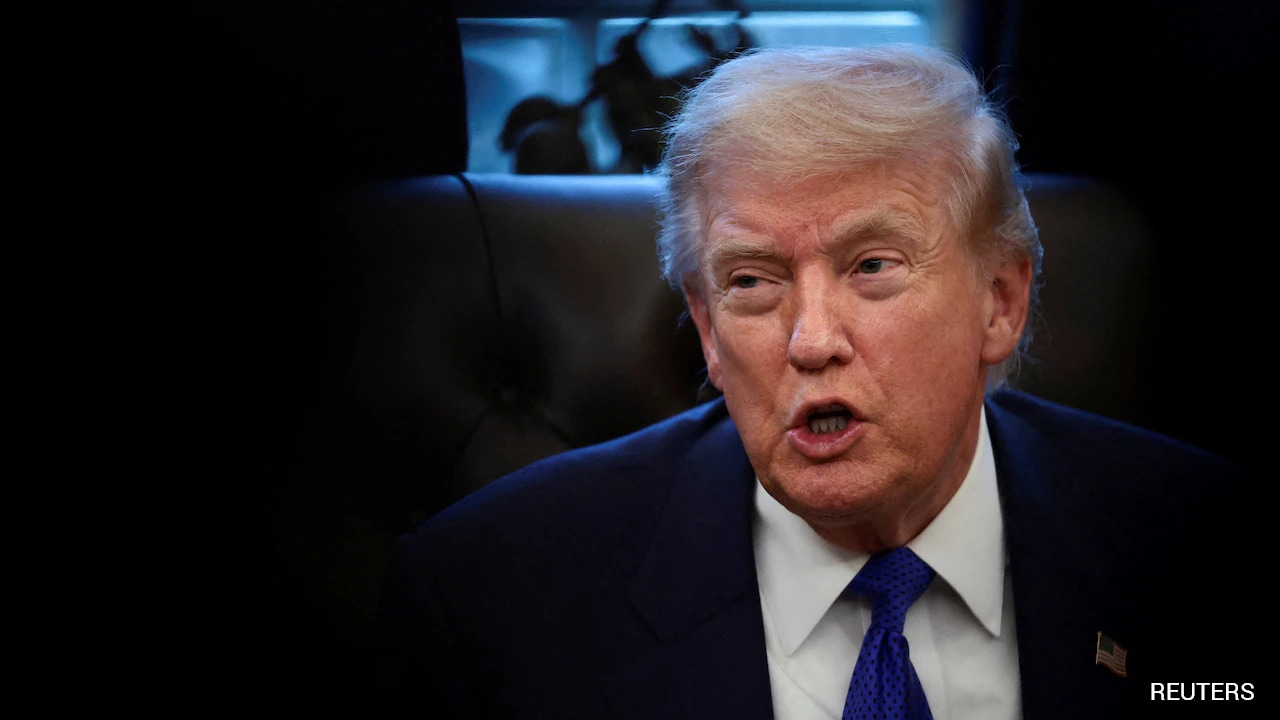
US President Donald Trump has signaled a strategic shift, prioritizing economic warfare over military escalation in the ongoing tension with Iran. The administration aims to leverage Tehran's economic instability to resolve maritime disputes.
Key Takeaways
- Trump is pivoting from military threats to economic pressure on Iran.
- Iran's severe inflation and lack of funds are being used as leverage.
- The focus is shifting toward restoring shipping in the Strait of Hormuz.
- Nuclear agreements may take a backseat to maritime security.
US President Donald Trump has signaled a significant de-escalation in military rhetoric regarding Iran. As tensions persist over the strategic Strait of Hormuz, Washington appears to be prioritizing economic strangulation over fresh military offensives.
In a recent interview, Trump adopted a notably restrained tone, stating, "We are low-keying it. We are just watching Iran with its huge inflation and the fact they have no money." He emphasized that Iran is in a dire economic state, even struggling to compensate its own military personnel, a situation exacerbated by the ongoing US naval blockade.
Why This Matters
BozokMedia analysis shows that this shift is a calculated move to maintain global oil stability. With crude oil trading around $75 a barrel, a full-scale military conflict could trigger a price surge that would hurt American consumers. By focusing on economic pressure, Trump seeks to achieve geopolitical goals without the domestic political cost of a new war.
Trump is treating the Middle East crisis like a high-stakes chess game, moving pieces to squeeze the opponent's wallet rather than their borders.
The impasse remains centered on the Strait of Hormuz. While negotiations involving Oman have hit roadblocks due to new, stringent demands from Tehran—including the lifting of all sanctions and military withdrawals—the US has remained firm against Iranian attempts to impose tolls on commercial vessels. Interestingly, Trump has indicated he might bypass a comprehensive nuclear deal if Iran restores free shipping through the waterway.
Historical Background
The Strait of Hormuz has long been a geopolitical flashpoint. Control over this narrow waterway dictates the flow of energy to the global market, making it a central theater for US-Iran confrontations for decades.
Frequently Asked Questions
1. Why is the Strait of Hormuz so important?
It is one of the world's most vital oil transit chokepoints, through which a massive percentage of global petroleum products pass.
2. What is the current state of the US-Iran relationship?
Relations are highly strained, characterized by economic sanctions, maritime disputes, and long-standing disagreements over Iran's nuclear program.