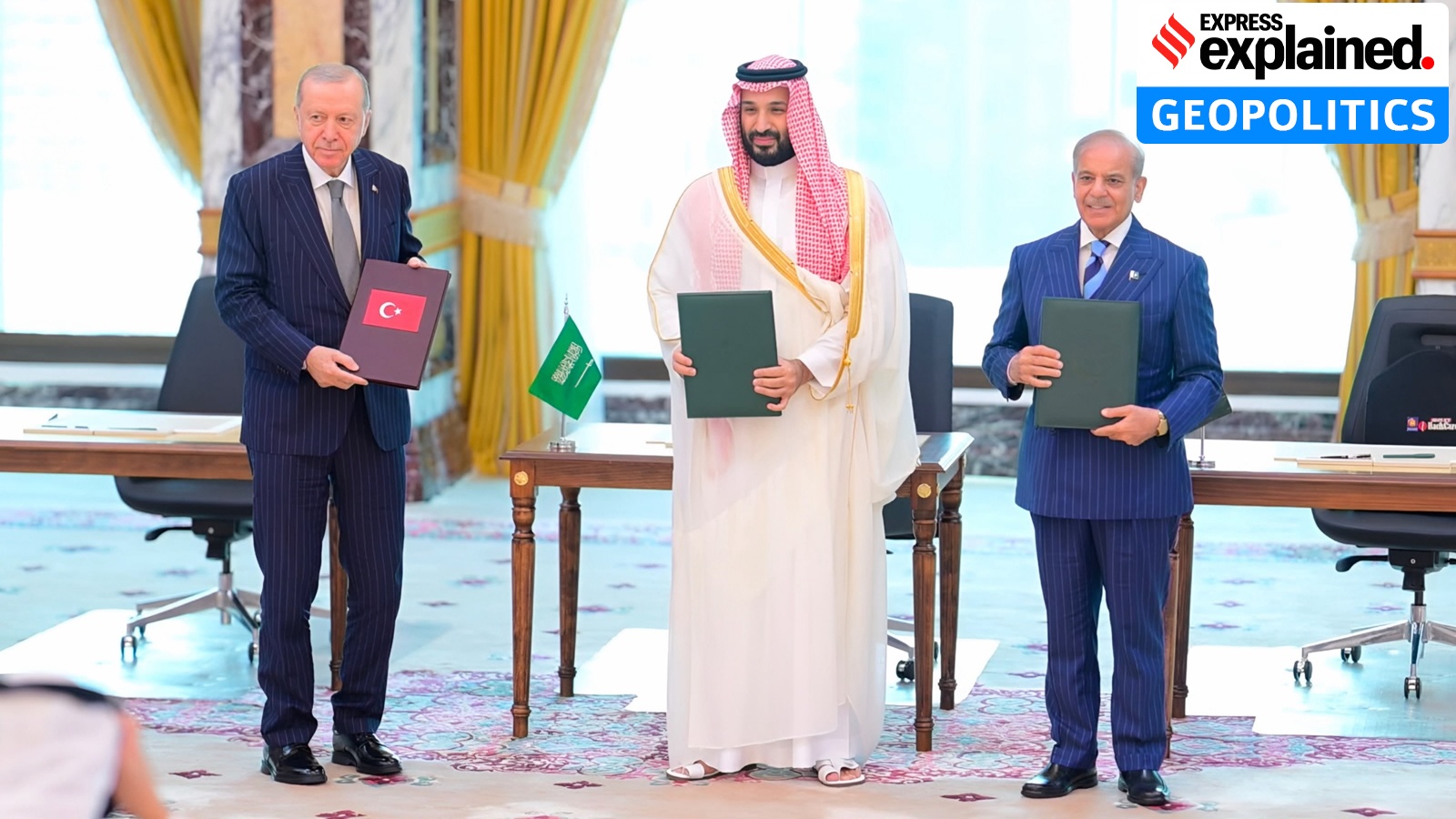
A landmark trilateral defense agreement between Pakistan, Saudi Arabia, and Turkey has emerged, mirroring NATO's collective security model. This shift could redefine power dynamics in West and South Asia.
Key Takeaways
- Pakistan, Saudi Arabia, and Turkey have signed the 'Mecca Joint Defence Agreement'.
- The pact includes a collective security clause similar to NATO's Article 5.
- The alliance aims to counterbalance the influence of Iran and Israel.
- India is closely monitoring the shift in regional military dynamics.
The signing of the 'Mecca Joint Defence Agreement' by Pakistan, Saudi Arabia, and Turkey marks a seismic shift in the geopolitical landscape of West and South Asia. In an era where US security guarantees are being questioned, these three nations are pivoting toward a model of regional self-reliance. The agreement is significant because it incorporates a collective security mandate: an attack on one is an attack on all.
The Complexity of Interlocking Alliances
While the pact promises strength, it introduces profound diplomatic risks. The treaty creates a complex web of obligations that could potentially clash with existing alliances like NATO. For instance, if a member is attacked by a non-NATO entity like Israel, the repercussions for Turkey's NATO obligations could be catastrophic. Such interlocking military commitments have historically been triggers for large-scale global conflicts.
A Convergence of Three Powers
The Mecca Agreement effectively merges three distinct strategic assets: Pakistan's nuclear-armed conventional military, Saudi Arabia's massive financial reserves and leadership of the Sunni world, and Turkey's sophisticated defense industry and military prowess. BozokMedia analysis shows that this alliance is designed to create a new power axis to check the influence of Iran and Israel in the region.
This trilateral pact is less about immediate defense and more about creating a new geopolitical bloc to challenge existing regional hegemonies.
Historically, Pakistan has utilized international treaties to gain leverage against India. From joining SEATO in 1954 to current strategic maneuvers, Islamabad has consistently sought to use global alliances to offset India's growing stature. Today, Saudi Arabia and Turkey appear to be leveraging Pakistan to expand their own strategic footprints in Asia.
India's Strategic Response
New Delhi is treating this development with high vigilance. Interestingly, as Pakistan looks West, India has been reorienting its military focus toward the China border. By converting strike corps into mountain divisions for the northern frontiers, India has fundamentally altered the military balance on the Western front.
Frequently Asked Questions
1. How does the Mecca Agreement differ from previous pacts?
Unlike bilateral deals, this is a trilateral collective security agreement that mandates mutual military response to attacks.
2. What is the main target of this alliance?
While unstated, the alliance seeks to create a strategic counterweight to the influence of Iran and Israel in West Asia.