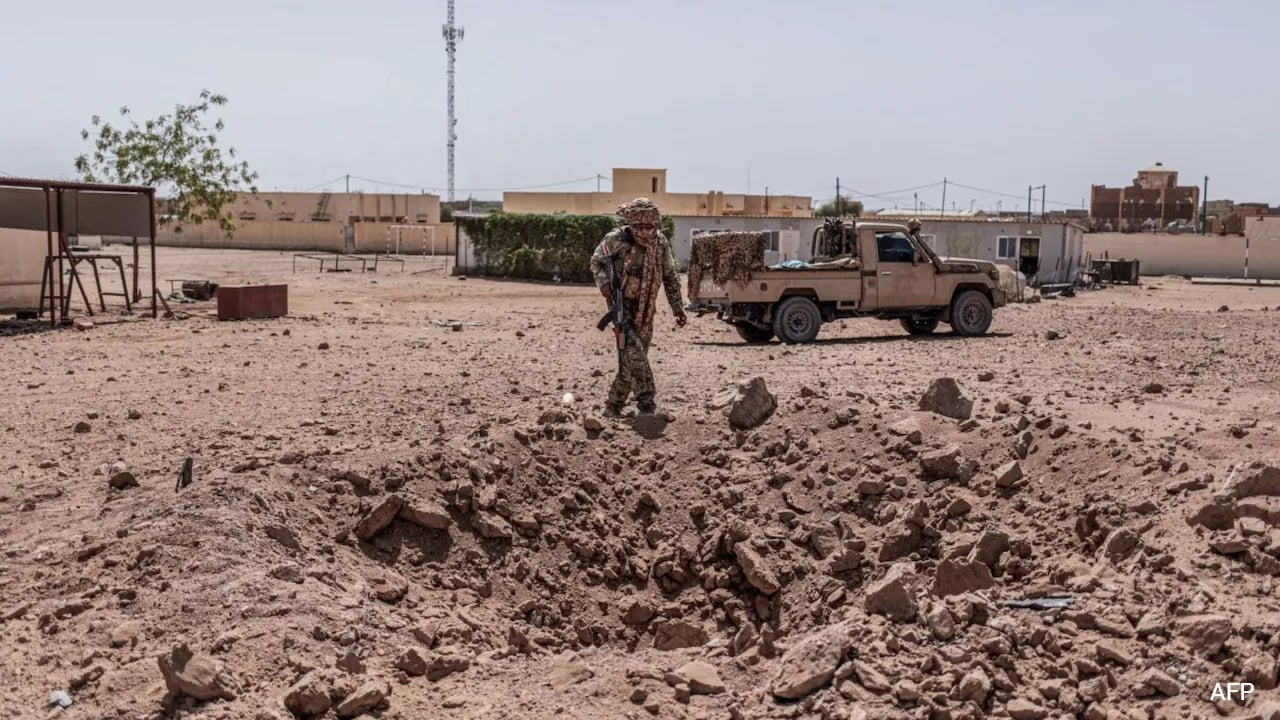
A violent ambush targeting a convoy of Malian soldiers and Russian paramilitary contractors has reignited intense fighting in Northern Mali.
The security situation in Mali has taken a violent turn as Tuareg separatists launched a coordinated attack on a military convoy. The convoy, which included both Malian national security forces and Russian mercenaries, came under heavy fire in a high-stakes engagement. Malian authorities have confirmed that intense combat operations are currently ongoing in the affected region.
The Strategic Aftermath of the Kidal Offensive
This latest ambush follows a period of significant military shifts in the region. Just over two months ago, the Malian military, bolstered by Russian tactical support, executed a major offensive that resulted in the capture of the strategic northern stronghold of Kidal. The fall of Kidal, which had long served as a central hub for separatist movements, stripped the rebels of a key operational base, prompting them to pivot toward guerrilla-style ambushes to reclaim influence.
The Russian Factor and Geopolitical Shifts
The presence of Russian paramilitary groups—often associated with the Wagner Group or the restructured Africa Corps—has fundamentally altered the landscape of the Malian conflict. As Western influence, particularly from France, has receded from the Sahel, Russia has stepped in to provide security assistance to the Malian junta. However, the deployment of these foreign fighters has become a lightning rod for local insurgencies, who view the presence of Russian contractors as an existential threat to their quest for autonomy.
Implications for the Sahel Region
The escalating violence in Northern Mali poses a significant threat to the stability of the entire Sahel region. The struggle between the Malian state and Tuareg separatists is not merely a localized territorial dispute but a complex conflict involving ethnic identity, resource control, and global power dynamics. As the fighting intensifies, the risk of humanitarian catastrophe and the spread of extremist ideologies across borders remains a critical concern for the international community.