Iran's former Supreme Leader Ayatollah Ali Khamenei was buried at the Imam Reza Shrine following week-long mourning. The absence of his successor, Mojtaba Khamenei, remains a focal point of speculation.
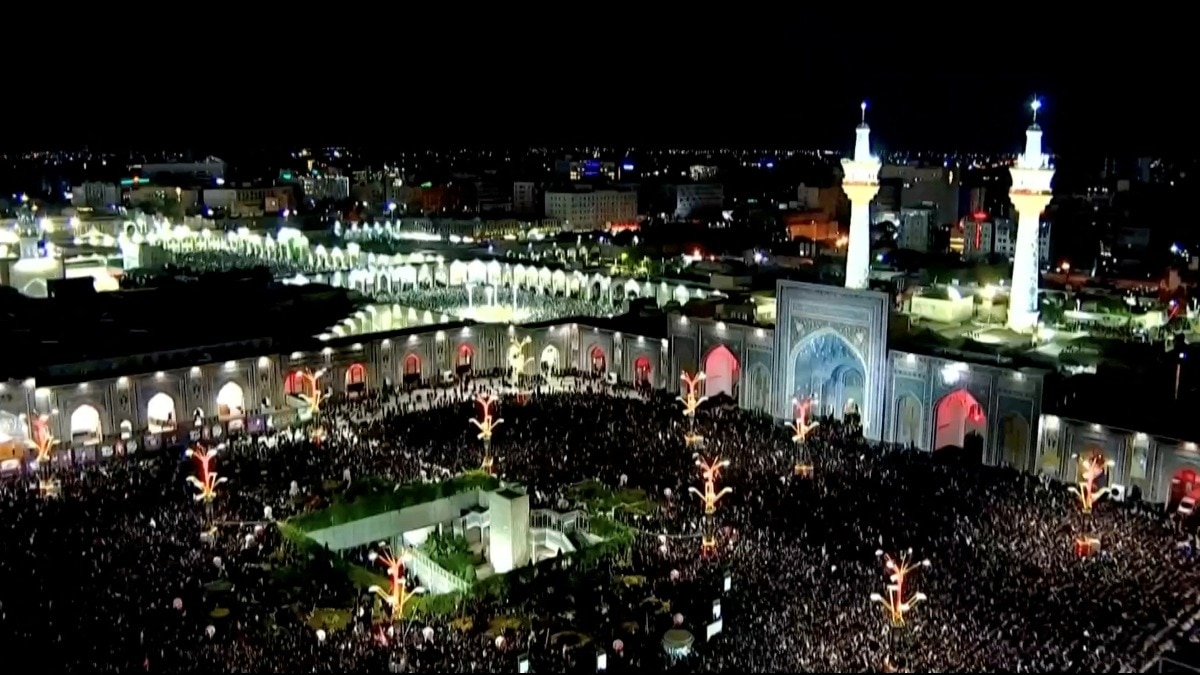
The era of Ayatollah Ali Khamenei has officially come to a close as his remains were interred at the holy Shrine of Imam Reza in Mashhad early Friday morning. The burial concluded a week of intense, mass funeral processions that spanned across Iran and Iraq, marking a period of profound national mourning and heightened regional tension.
A Funeral Defined by Defiance
The funeral ceremonies in Mashhad were characterized by a powerful display of both religious devotion and anti-Western sentiment. As the coffin, draped in the Iranian national flag, moved through the crowded streets, mourners erupted in chants against U.S. President Donald Trump and American influence in the region. The atmosphere was electric, blending traditional Shi'ite lamentations with revolutionary fervor, as security forces struggled to manage the massive influx of devotees.
The Mystery of Mojtaba Khamenei
Amidst the solemnity, a significant shadow loomed over the proceedings: the conspicuous absence of Mojtaba Khamenei. Despite being proclaimed the new Supreme Leader by the clerical assembly in March, Mojtaba has remained invisible to the public eye since the outbreak of the conflict that claimed his father's life.
Intelligence sources in Tehran suggest that Mojtaba sustained debilitating injuries during the February 28 strikes, resulting in facial disfigurement and severe limb trauma. While he is reportedly in recovery, his lack of public presence—and the state's refusal to release any visual media of him—has fueled intense speculation regarding his ability to lead and the security protocols surrounding his protection from further foreign strikes.
Legacy and the Road Ahead
Khamenei's 37-year tenure transformed Iran into a formidable regional power, yet his leadership was often marked by internal dissent and economic struggles under heavy sanctions. As the Islamic Republic transitions to new leadership under the shadow of recent warfare, the nation faces a critical juncture. The stability of the regime will heavily depend on how effectively the new leadership can navigate the economic fallout of the war and the internal pressures for reform.