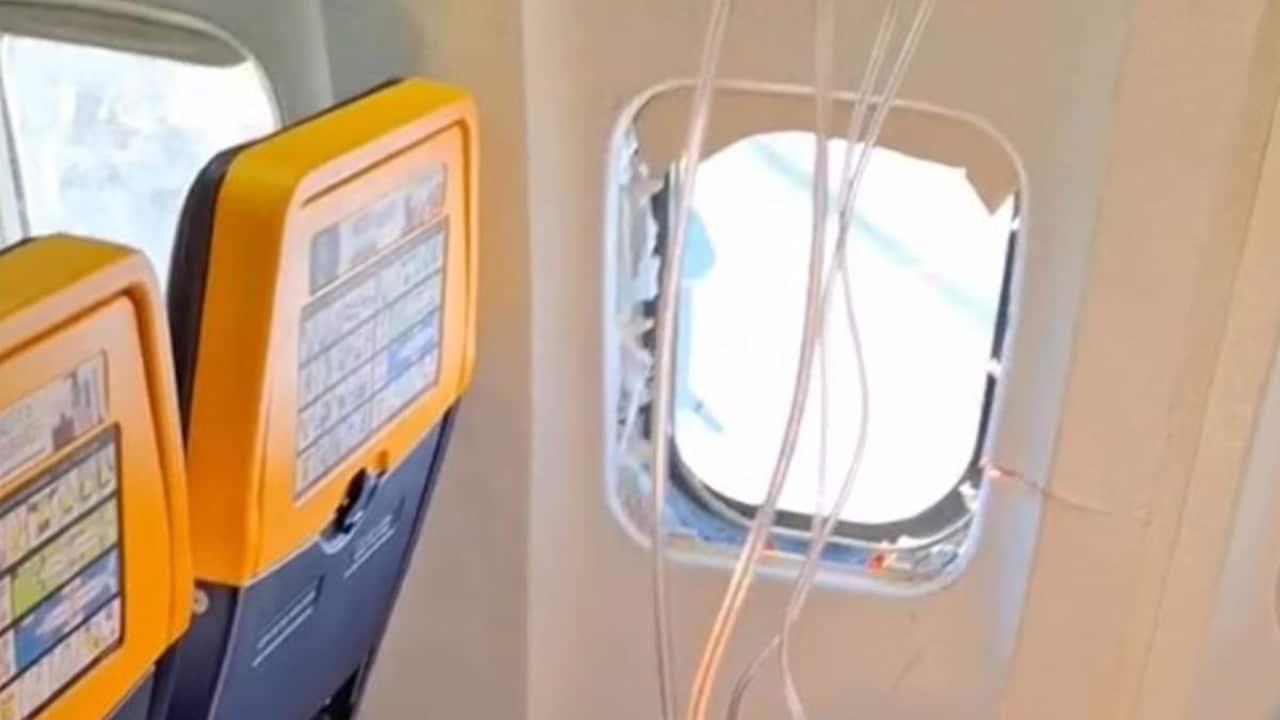
A window burst on a Greece‑to‑Germany flight nearly pulled a Serbian tourist out of the aircraft. The passenger suffered friction burns and was hospitalized, but remains in stable condition.
Key Takeaways
- A sudden window failure raises fresh concerns about aircraft structural safety.
- The Serbian tourist was hospitalized with friction burns but is stable.
- Similar incidents in the past have prompted regulators to tighten inspection standards.
During an international flight operated by a German carrier, a Serbian tourist traveling from Thessaloniki, Greece, to Memmingen, Germany, faced a life‑threatening situation when a cabin window detached from its frame. Passengers reported hearing a sound akin to a tire burst followed by collective screams, prompting immediate alarm across the cabin.
Incident Details
Approximately halfway through the flight, a mid‑cabin window suddenly gave way, separating from its structural housing. The rapid decompression and ensuing airflow created a powerful suction force that threatened to yank the occupant of the seat adjacent to the window out of the aircraft. Quick actions by the flight crew and assistance from fellow passengers helped keep the tourist in his seat, averting a potential tragedy. He later required medical attention for friction burns caused by the violent wind, and was admitted to a local hospital. Doctors confirmed his condition as stable, with no life‑threatening injuries.
Historical Context and Comparable Events
Window failures, while rare, have historically resulted in serious accidents. Notable cases include the 2009 incident on an Asia Airlines Boeing 777 and a 2018 event involving a European low‑cost carrier, both of which prompted investigations by aviation authorities such as the European Union Aviation Safety Agency (EASA) and the U.S. Federal Aviation Administration (FAA). These incidents spurred a re‑evaluation of window design standards, leading to stricter certification processes and more rigorous in‑service inspections.
Safety Measures and Future Outlook
Aircraft manufacturers now employ multi‑layered, reinforced glass and enhanced frame structures to mitigate the risk of window detachment. Airlines are augmenting routine inspections, employing non‑destructive testing techniques to detect micro‑fractures before they propagate. In response to the latest event, European regulators have mandated a comprehensive audit of all airline fleets within the next six months, focusing on cabin window integrity.
Advice for Passengers
Any unusual noises or visible structural anomalies should be reported to the crew immediately. Passengers are also advised to keep seat belts fastened while seated, as sudden pressure changes can create unexpected forces that jeopardize safety.