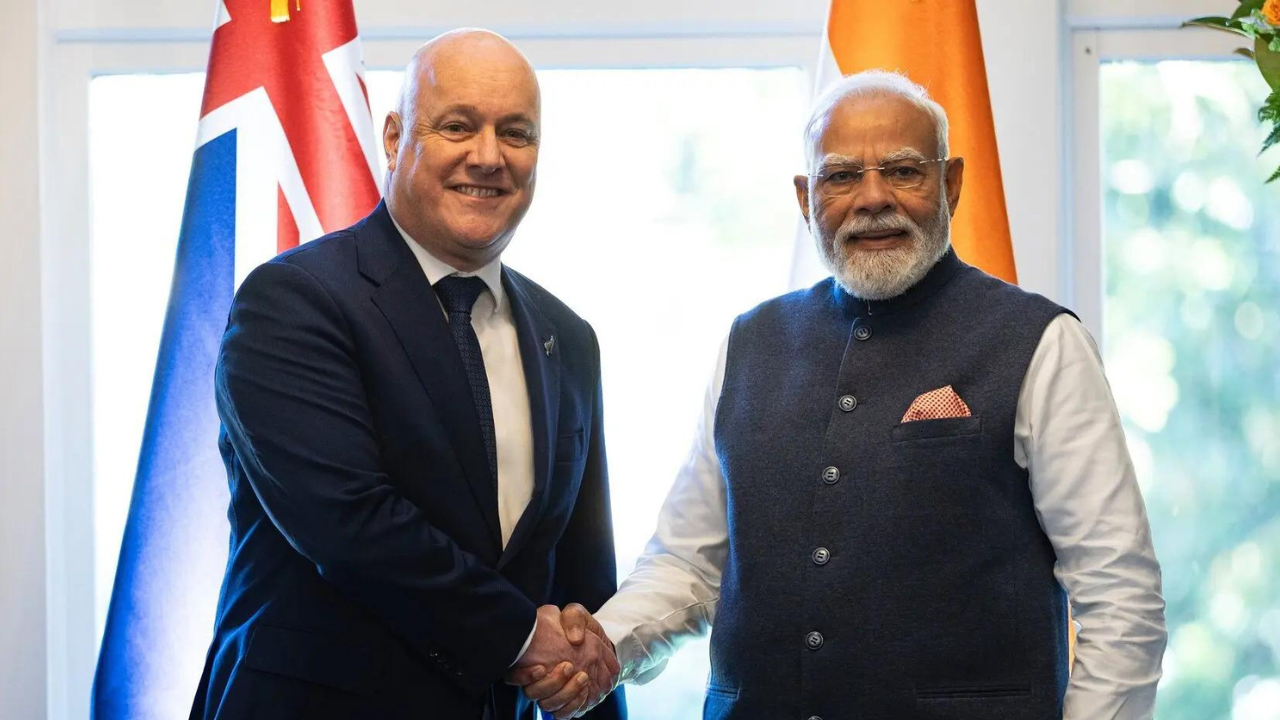
Prime Minister Modi and New Zealand's Prime Minister Christopher Luxon signed 18 agreements aiming to lift bilateral trade to Rs 35,000 crore within five years, while forging fresh defence and maritime cooperation.
मुख्य बिंदु (Key Takeaways)
- Goal to double bilateral trade to Rs 35,000 crore in five years
- New defence and maritime security agreements between the two navies
- FTA includes a $20 billion investment commitment from New Zealand
India and New Zealand elevated their relationship to a strategic partnership on July 12, 2026, branding each other as “natural partners made for each other.” While diplomatic ties date back to the 1950s, this new framework deepens collaboration across trade, defence, science‑technology, tourism and culture.
Background and Strategic Importance
Both nations have long‑standing friendly relations, but the rising Chinese footprint in the Indo‑Pacific has accelerated the need for a coordinated response. The maritime cooperation clause—facilitating reciprocal logistics support between the Indian Navy and the New Zealand Defence Force—aims to safeguard sea lanes that are vital for global commerce.
Trade and Investment Highlights
Prime Minister Narendra Modi announced that under the freshly signed free‑trade agreement (FTA), bilateral trade is projected to reach Rs 35,000 crore within five years. New Zealand simultaneously pledged $20 billion in investments over the next 15 years, targeting agriculture, renewable energy, and information technology sectors, thereby opening new avenues for Indian exporters and entrepreneurs.
Defence, Security and Counter‑Terrorism
Among the 18 accords is the creation of a Joint Working Group on terrorism, which will enable intelligence sharing on groups such as Khalistan separatists operating abroad. Both leaders condemned recent cross‑border terrorist attacks, reaffirming New Zealand’s support for India’s zero‑tolerance policy. Additionally, the maritime security component will see New Zealand vessels receiving logistical assistance from Indian ports, reinforcing freedom of navigation.
Education, Culture and Future Roadmap
Education was highlighted as a “central pillar” of the partnership. New Zealand, a popular destination for Indian students, invited its universities to set up campuses in India, fostering people‑to‑people links and research collaboration. A 2030 roadmap, covering trade, defence, tourism, culture, sports and multilateral issues, provides a clear implementation timeline for ministries and stakeholders.
Collectively, these initiatives signal that the India‑New Zealand alliance is moving beyond a bilateral trade deal to a comprehensive strategic framework that will shape regional stability and economic growth.


