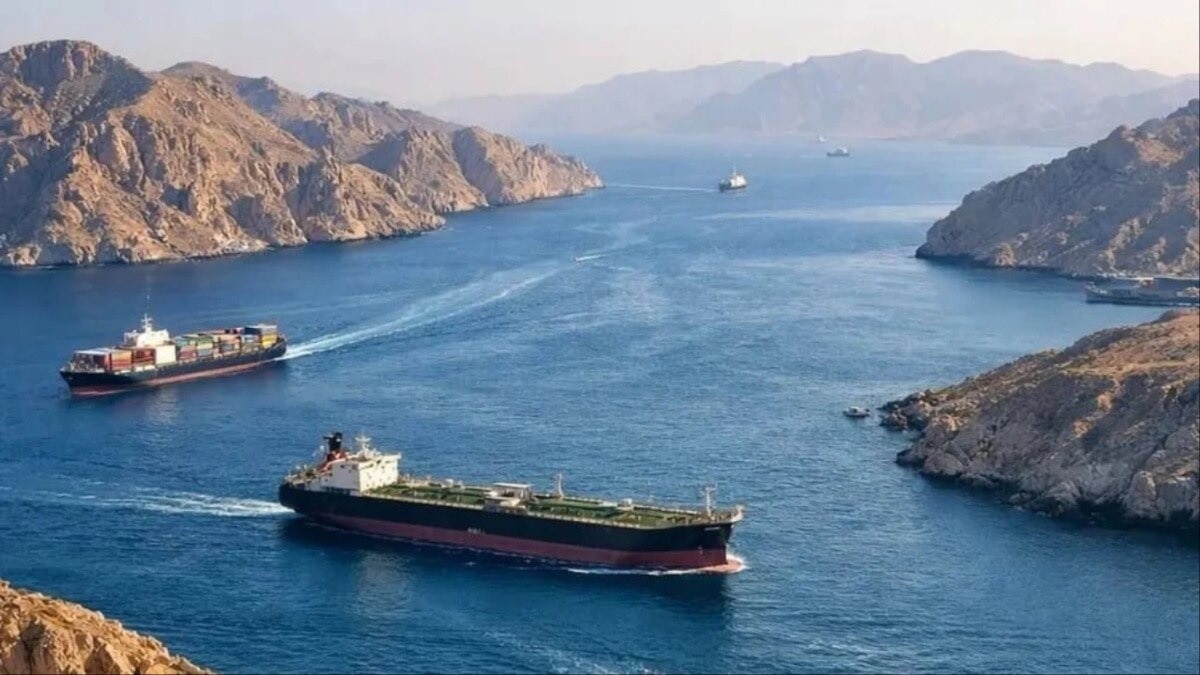
Iran's Islamic Revolutionary Guard Corps (IRGC) Navy announced a temporary closure of the Strait of Hormuz after a vessel ignored warnings and was met with a warning shot. The move adds uncertainty to global shipping and oil markets.
Key Takeaways
- IRGC closed the Strait of Hormuz after a vessel attempted an unapproved route and was fired warning shots.
- Closure threatens disruptions in global oil transport and maritime trade.
- Iran warned that no ship will be allowed to transit until U.S. interference ends.
The Islamic Revolutionary Guard Corps (IRGC) Navy of Iran issued a statement early Sunday declaring the Strait of Hormuz "temporarily closed" after a foreign vessel allegedly attempted to navigate an unapproved route. The announcement, broadcast by Iran’s state media (IRIB), said multiple vessels ignored repeated warnings, prompting the IRGC to fire warning shots and halt the offending ship.
Strategic Importance of the Strait
The Strait of Hormuz is a chokepoint through which roughly five percent of the world’s oil and a substantial portion of other commodities flow. Control of this narrow waterway has long been a lever of political influence for Tehran, and recent years have seen heightened U.S. naval presence adding to regional friction.
Details of the Incident
According to the IRGC Navy, the targeted vessel disabled its navigation systems and pursued an illegal route, endangering maritime security. After the warning shots, the ship was forced to stop. The IRGC warned that, until what it termed "U.S. interference" ceases, no vessel will be permitted to transit the strait.
Economic and Geopolitical Implications
A prolonged closure could trigger spikes in oil prices and force shipping companies to seek longer, costlier alternative routes. Analysts caution that even a short‑term disruption may ripple through global supply chains, amplifying market volatility. Moreover, the decision underscores the deepening rift between Tehran and Washington, each viewing the strait as a strategic asset.
Looking Ahead
International maritime law questions the legality of unilateral closures, and the global community—including the United Nations Maritime Organization—will be watching closely for diplomatic resolutions. Iran’s stark warning that any "misstep" by its perceived adversary will meet a "severe response" signals that the region could see further escalations if diplomatic channels fail.