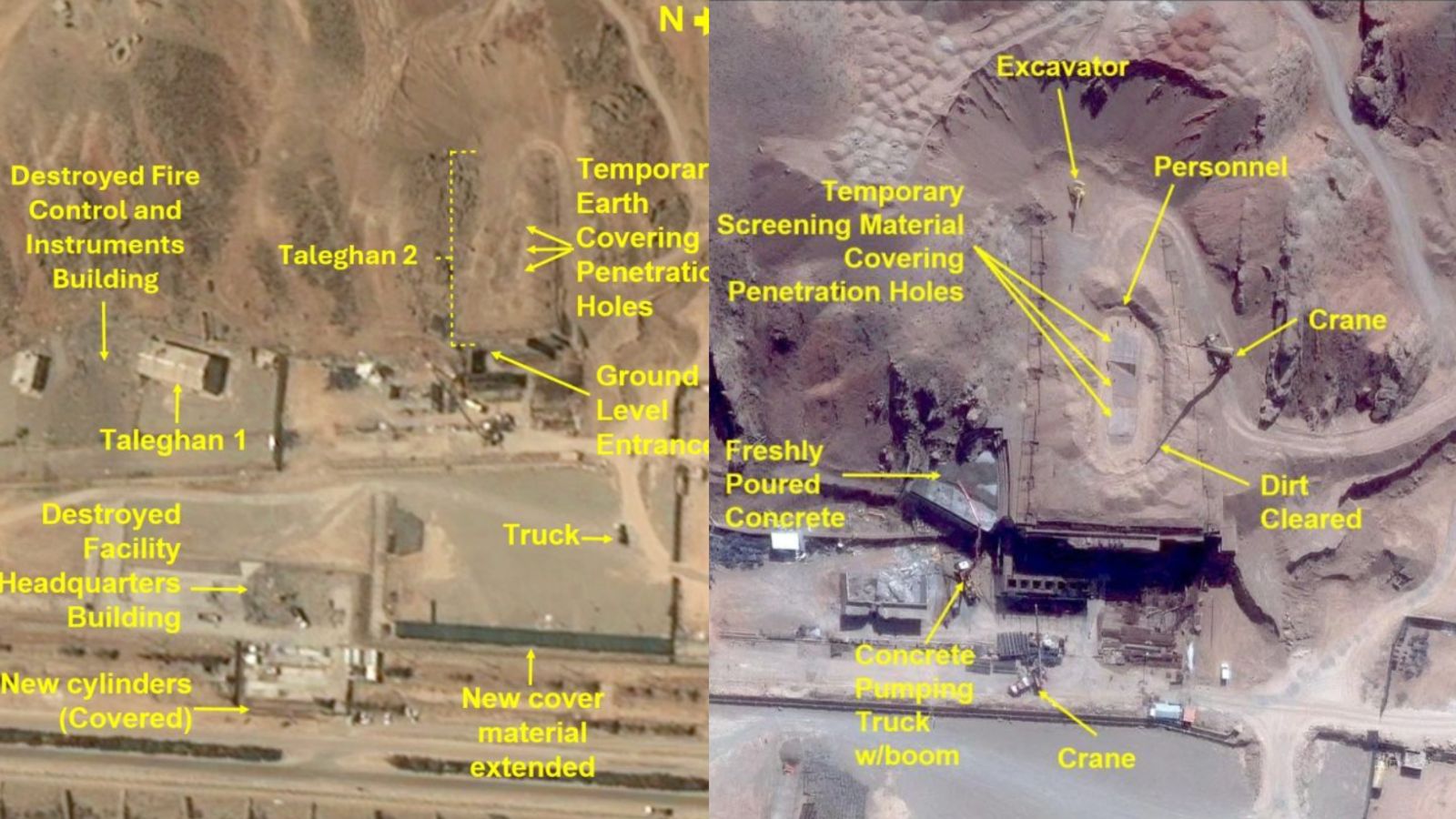
Satellite imagery shows Iran has begun permanent reconstruction of the Taleghan‑2 underground nuclear site within the Parchin complex. The move casts fresh doubt on the durability of the recent US‑Iran memorandum of understanding.
Key Takeaways
- Satellite photos confirm ongoing permanent reconstruction at Taleghan‑2
- Iran has moved from temporary fixes to structural rebuilding after US strikes
- The development challenges the effectiveness of the US‑Iran MoU
Imagery captured between June and early July 2026 reveals fresh construction activity at the Taleghan‑2 underground nuclear facility inside the Parchin Military Complex. The site, believed to host test chambers and equipment for nuclear weapons research, was heavily damaged in two US airstrikes earlier this year.
Background and Historical Context
Iran’s nuclear program has been a focal point of international tension for decades. After the 2015 Joint Comprehensive Plan of Action (JCPOA), Tehran continued certain military‑nuclear activities, prompting renewed sanctions and diplomatic friction in 2023‑2024. In 2026, the United States launched two precision strikes on Parchin, destroying the hardened underground bunker and adjacent support structures, temporarily halting Iran’s progress.
What the New Satellite Images Show
Analysis by the Institute for Science and International Security (ISIS) indicates that by 12 June 2026, the three bomb impact holes were covered with soil as a provisional measure. By 18 June, trucks and a large crane were on site, signaling the start of reconstruction. Subsequent images from 22 June and 7 July display concrete pours, installation of steel rebar mesh, and the removal of temporary covers—clear evidence of a shift from short‑term repairs to permanent rebuilding.
Political Implications and Potential Outcomes
The activity directly challenges the memorandum of understanding signed by the United States and Iran in late June, which stipulated that Tehran would cease all military‑nuclear research. If Iran completes the reconstruction, it could undermine regional stability, heighten tensions with Israel and Gulf states, and force Washington to reconsider its diplomatic and possibly military posture toward Tehran.
Looking Ahead
International monitoring bodies, including the United Nations Security Council, will need to scrutinize the rebuilding effort closely. Should Iran be deemed in violation of the MoU, renewed economic sanctions or targeted strikes could follow. Conversely, the visible progress may open a narrow window for renewed diplomatic engagement—provided both sides adjust their strategic calculations.