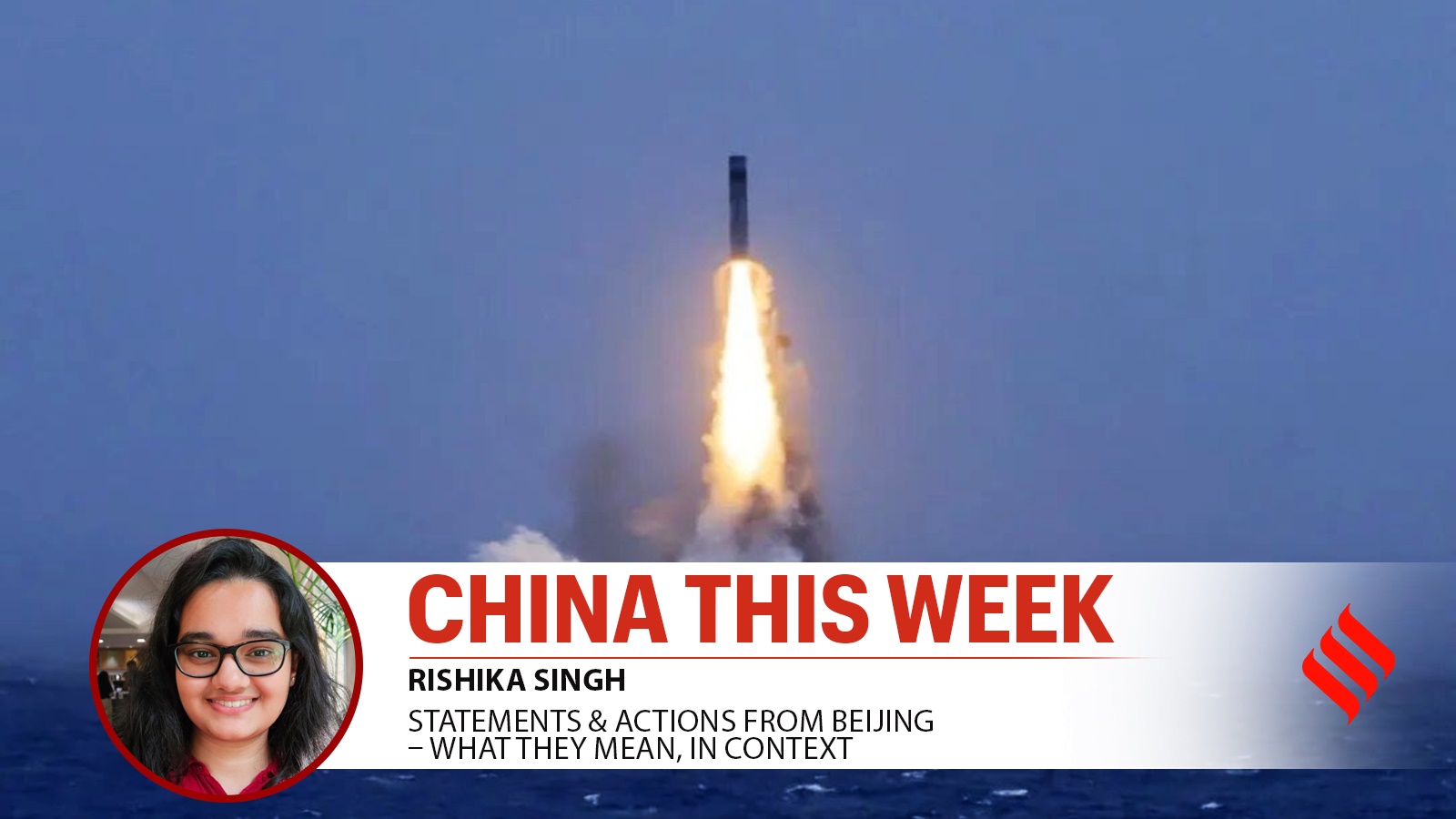
China this week promoted two senior officers to general rank, launched a submarine‑based strategic missile test, and successfully recovered the first stage of its Long March‑10B carrier rocket. The moves signal a sharpening of Beijing's military posture and a leap in its space‑reusability capabilities.
Key Takeaways
- Two senior officers promoted to general, reshaping the CMC hierarchy
- Submarine‑launched ICBM successfully hit designated international waters
- Long March‑10B achieves first controlled first‑stage recovery, boosting re‑use potential
Beijing rolled out three high‑profile developments in its defense and space sectors this week, each carrying weighty strategic implications. President Xi Jinping signed orders on July 3 to elevate two senior military leaders to the rank of general, the People’s Liberation Army (PLA) Navy conducted a submarine‑launched strategic missile test, and the Long March‑10B carrier rocket performed its inaugural controlled first‑stage recovery on July 10.
Two New Generals in the CMC
The newly promoted officers are Zhang Shuguang, secretary of the Central Military Commission (CMC) discipline inspection commission and director of its supervision committee, and Wang Gang, commander of the PLA Air Force. Their elevation comes amid a sweeping anti‑corruption purge that has emptied five of the seven CMC seats since early 2024, after senior generals Zhang Youxia and Liu Zhenli were investigated for “disciplinary violations.”
Analysts view the appointments as Xi’s effort to staff the CMC with trusted allies ahead of the upcoming Party congress, ensuring that decisions on Taiwan, the South China Sea and broader regional security rest with loyalists.
Submarine‑Launched ICBM Test
State media Xinhua reported that a PLA Navy nuclear‑powered submarine successfully launched an intercontinental ballistic missile (ICBM) carrying a dummy warhead into the Pacific’s high seas, landing precisely within the pre‑designated zone. While Beijing framed the launch as a routine training exercise, Reuters identified the missile as a true ICBM capable of traveling over 5,000 km.
The test marked the first public demonstration of a submarine‑launched ballistic missile (SLBM) into international waters, underscoring China’s ability to project a strategic nuclear strike from beneath the ocean. Japan, Australia, and New Zealand voiced strong concerns, interpreting the move as a destabilising signal in an already tense Indo‑Pacific environment.
Long March‑10B First‑Stage Recovery
On July 10, China lifted the Long March‑10B carrier rocket, achieving a milestone comparable to SpaceX’s reusable Falcon series: the controlled descent and soft‑landing of the rocket’s first stage. The achievement demonstrates Beijing’s growing competence in reusable launch technology, a key factor in reducing launch costs and increasing cadence.
Experts note that this success positions China among a small group of nations capable of routine first‑stage recovery, potentially reshaping the commercial and military launch markets in the next decade.
Implications for Regional Security and Space Competition
Combined, these developments suggest a dual‑track strategy: consolidating command loyalty while accelerating high‑tech capabilities. With the CMC hierarchy being refreshed, Beijing appears ready to make decisive strategic choices, especially concerning Taiwan and contested maritime claims.
In space, the demonstrated re‑use capability could accelerate China’s plans for crewed missions, lunar exploration and a future modular space station, narrowing the technological gap with the United States and private players.