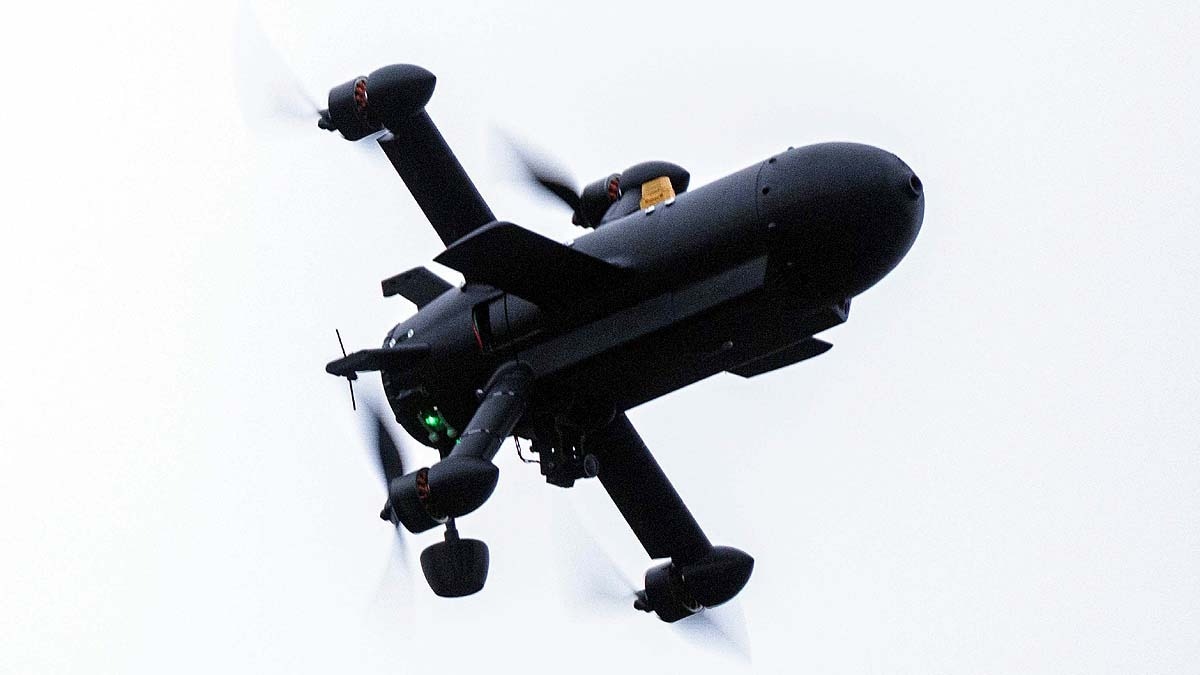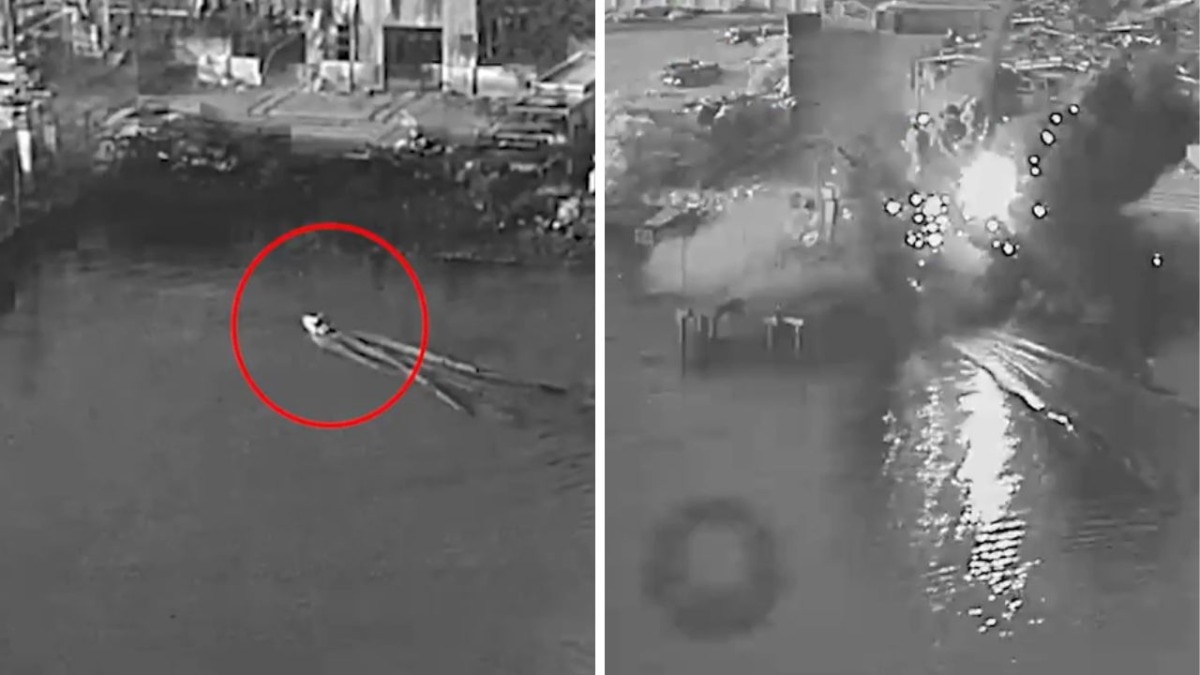
The United States has released footage of its first-ever suicide drone strike on an Iranian submarine, heightening regional tensions and showcasing new loitering munition capabilities.
Key Takeaways
- The released video shows a autonomous suicide drone precisely striking an Iranian submarine.
- This marks the first recorded suicide‑drone attack in maritime warfare, highlighting emerging technology.
- The incident could have long‑term ramifications for regional security dynamics.
The United States has made public a video of its inaugural suicide‑drone strike against an Iranian submarine, intensifying an already volatile maritime environment in the Middle East. The footage captures a lightweight loitering munition launched from a surface vessel, cruising for roughly two minutes before diving onto the submarine’s hull and detonating on impact.
Incident Details
While the exact class of the submarine is not disclosed, analysts suggest it could be a Kilo‑class or the indigenous Ghadir‑type operating in the Persian Gulf. The drone, often referred to as a “suicide drone,” has previously been employed in land‑based operations; its adaptation for naval use signals a strategic shift. The weapon’s payload, likely around 30 kg, is designed to self‑destruct upon confirming a target via onboard sensors.
Background and Prior Incidents
US‑Iran maritime tensions date back to the 1980s Iran‑Iraq war, where both sides targeted oil tankers in the Gulf. More recent flashpoints include the 2020 drone strike on a Gulf tanker, the 2023 over‑flight of a US warship by Iranian UAVs, and Iran’s recent simulated attacks on US vessels. This latest suicide‑drone strike could serve as a trigger point, raising the risk of retaliatory actions on both sides.
Technical Analysis
The drone appears to be a Switchblade‑300 or a comparable loitering munition, capable of carrying a moderate warhead and equipped with AI‑driven target recognition. Its key advantage lies in autonomous decision‑making, reducing the need for human intervention and enabling rapid, precise engagements. This technology challenges traditional torpedo‑based anti‑submarine warfare by offering a cost‑effective, low‑signature alternative.
Regional Impact and International Reaction
Iran promptly condemned the video as “unlawful aggression” and accused the United States of violating international maritime law. United Nations maritime experts warned that such actions could be deemed “unjustified use of force” under the United Nations Convention on the Law of the Sea (UNCLOS). Moreover, the incident has spurred NATO and allied navies to reassess their anti‑submarine strategies, with several nations exploring counter‑measures against loitering munitions.
In sum, the released footage not only showcases a breakthrough in unmanned warfare but also hints at a possible reshaping of the regional power balance. How the international community will regulate the deployment of autonomous weapons in contested waters remains a pressing question.