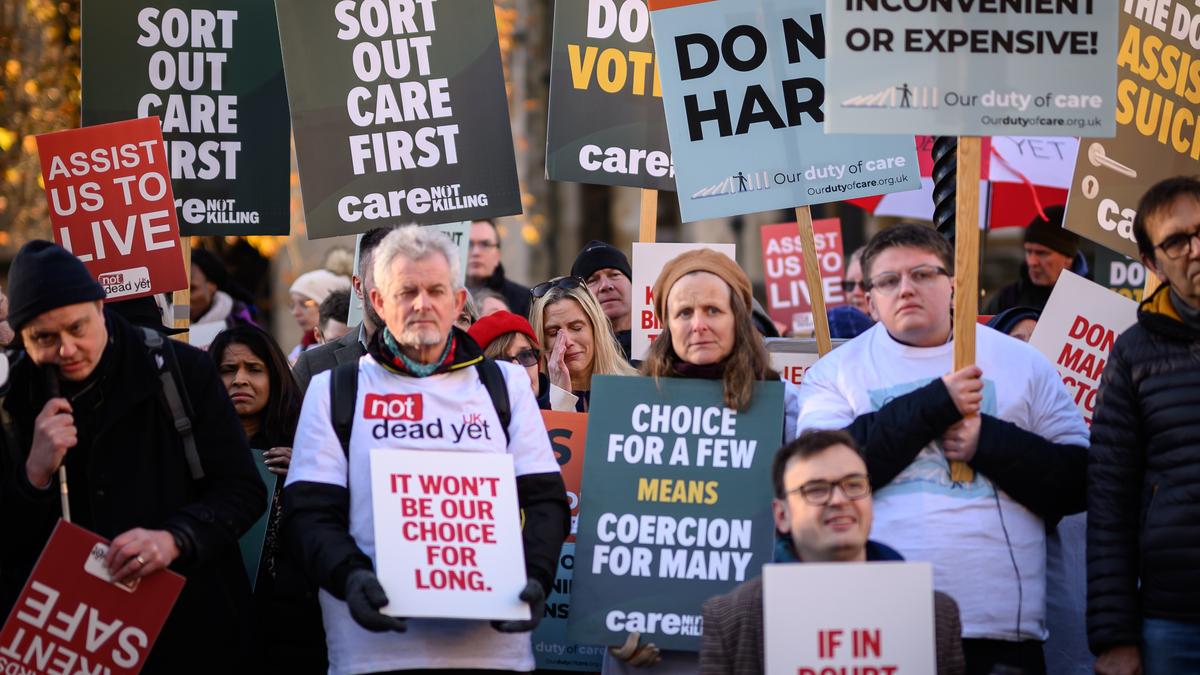
The UK House of Commons voted 330-275 to give initial approval to a bill that would let terminally ill adults end their lives with safeguards. Supporters hail it as a dignity measure, while opponents warn of coercion of vulnerable groups.
Key Takeaways
- UK Parliament gives preliminary approval to an assisted dying bill for terminally ill adults.
- Bill mandates strict safeguards: self‑administration, two independent doctors, and a High Court judge’s sign‑off.
- Opponents fear potential coercion of disabled and elderly people, citing economic and familial pressures.
London—On Friday, 29 November 2024, the British House of Commons passed the first stage of a landmark assisted‑dying bill by a 330‑275 vote. The private member’s bill, championed by Labour MP Kim Leadbeater, now moves to further scrutiny before a final parliamentary vote.
Historical Context
Debates over assisted dying have simmered in the UK for decades, following legal recognitions in the Netherlands, Belgium, and several U.S. states. A 2015 High Court judgment hinted at the possibility of physician‑assisted death, but no legislative framework existed. Leadbeater’s bill seeks to fill that gap, mirroring trends in liberal democracies while navigating Britain’s distinct legal and cultural landscape.
Parliamentary Debate Highlights
Speakers shared poignant personal accounts of family members who suffered in the final months of life and of patients who resorted to secret suicide because assistance is currently a crime. Proponents argued that the legislation would restore dignity and reduce clandestine deaths. Opponents, led by MP Danny Kruger, warned against creating a “state suicide service,” insisting that no amount of safeguards can fully eliminate pressure on vulnerable individuals.
Safeguards and Scope
The bill limits eligibility to adults over 18 with a prognosis of less than six months to live. Applicants must be capable of self‑administering lethal medication, and the decision must be endorsed by two independent physicians and a High Court judge. The legislation excludes Scotland and Northern Ireland, raising questions about uniformity across the United Kingdom.
Political and Societal Implications
Although introduced by a Labour MP, the vote was cross‑party, reflecting deep divisions within the governing centre‑left coalition. Prime Minister Keir Starmer publicly endorsed the reform, while Health Secretary Wes Streeting and Justice Minister Shabana Mahmood voted against it. The outcome will force the government to address funding models for the NHS, hospice care, and legal oversight, and could set a precedent for other Commonwealth nations.
Looking Ahead
The bill now faces a committee stage where amendments are likely. Experts stress that parallel investment in palliative care, mental‑health services, and public education is essential to ensure that any decision to end life stems from genuine patient autonomy rather than external coercion.