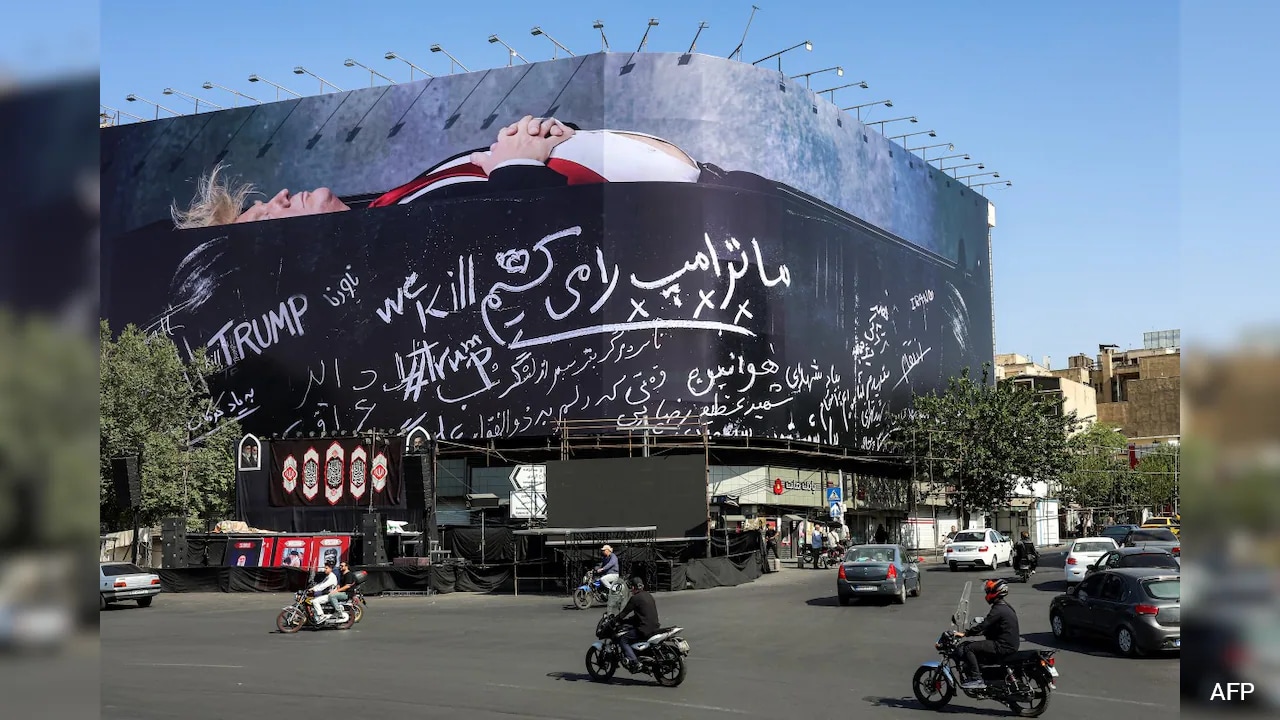
In a provocative move, Iran has unveiled a new billboard featuring a graphic depiction of the US President in a coffin, signaling intensifying geopolitical tensions.
Key Takeaways
- Iran has released a controversial billboard showing the US President inside an open black coffin.
- The imagery serves as a powerful tool of political communication and psychological warfare.
- This move highlights the deep-seated animosity between Tehran and Washington.
Iran has once again utilized public spaces as a potent medium for political communication, sending a jarring message to the international community. A newly unveiled billboard has sparked global outrage and concern, featuring a graphic depiction of the United States President, Donald Trump, resting inside an open black coffin. This visual provocation is a stark reminder of the volatile relationship between the two nations.
A Graphic Display of Hostility
The imagery used in the hoarding is intentionally unsettling. It portrays the President with disheveled hair, eyes and mouth closed, with his hands resting upon a red tie over a protruding stomach. This level of detail suggests a calculated attempt to dehumanize and mock the leadership of the United States, transforming a political disagreement into a visceral, visual confrontation.
Historical Context of Iranian Propaganda
Historically, the Iranian government has leveraged public iconography and large-scale propaganda to project strength and defiance against Western hegemony. By placing such imagery in public view, Tehran seeks to consolidate domestic support while simultaneously challenging the United States on a global stage. This is not merely an isolated incident but part of a long-standing strategy of using symbolic aggression to communicate geopolitical stances.
Implications for Global Diplomacy
The ramifications of such escalatory rhetoric cannot be overstated. As tensions simmer in the Middle East regarding nuclear capabilities, regional influence, and proxy conflicts, such provocations threaten to close the windows for diplomatic engagement. Experts suggest that while this serves as a tool for domestic mobilization in Iran, it significantly heightens the risk of miscalculation and retaliatory actions from the US and its allies, potentially destabilizing the fragile security balance in the region.