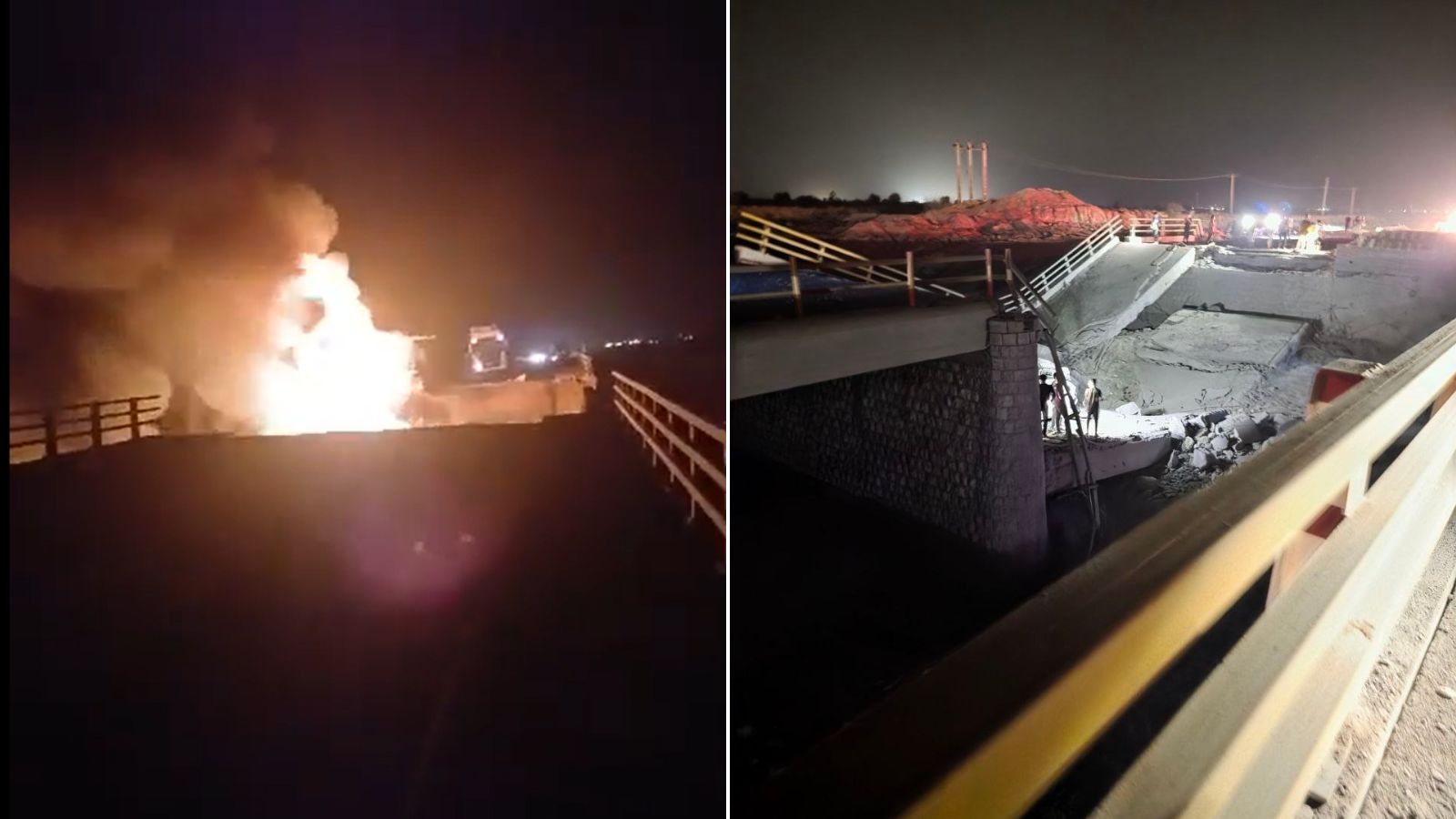
The escalating military confrontation between the US and Iran has expanded into Syria and Iraq. With critical bridges destroyed and the Strait of Hormuz blockaded, global oil markets are in turmoil.
Key Takeaways
- US airstrikes targeted six strategic bridges in Iran's Hormozgan province to disrupt logistics.
- Iran's IRGC expanded operations, striking US interests in Syria, Iraq, and allied nations like Qatar.
- The Strait of Hormuz remains under blockade, causing a surge in global Brent crude prices.
- President Trump asserted that the US is 'winning big' in its military campaign against Tehran.
The Middle East is rapidly descending into a wider regional conflagration as the direct military confrontation between the United States and Iran enters its sixth consecutive day. What began as localized airstrikes has now transformed into a multi-front war, with combat zones expanding into Syria, Iraq, and even targeting US-allied territories like Qatar. President Donald Trump, in a high-stakes address to the nation, maintained an aggressive stance, claiming the US is "winning big" and that the strategic objectives of the military effort will soon be realized.
Strategic Infrastructure and the Hormuz Blockade
In a calculated move to cripple Iran's domestic movement, US forces targeted critical infrastructure in the southern Hormozgan province. Reports confirm that at least six bridges, including the vital Gariveh bridge linking Bandar Abbas, have been destroyed. This tactical shift aims to exert maximum pressure on Tehran to relinquish its influence over the Strait of Hormuz. However, the blockade has backfired on global markets; the Iranian Revolutionary Guard Corps (IRGC) has vowed to halt all oil and gas exports as long as US aggression persists, leading to a sharp spike in crude oil prices.
Regional Spillover: Syria and Iraq Under Fire
The conflict is no longer contained within Iranian borders. The IRGC has demonstrated its ability to project power by launching missile and drone attacks against US special operations command centers in Syria and Kurdish regions in northern Iraq. Furthermore, Iranian retaliation has targeted maritime and air control radars in Oman and military sites in Kuwait and Bahrain. This expansion suggests a coordinated effort by Tehran to punish US allies and disrupt American military dominance in the region.
Economic Implications and Global Volatility
The geopolitical instability is being felt immediately in the global economy. With the interim ceasefire having collapsed, the uncertainty surrounding the Strait of Hormuz—a primary artery for the world's energy supply—has sent Brent crude prices climbing. Analysts warn that if the hostilities continue to target maritime infrastructure and energy transit points, the world could face a significant energy crisis and unprecedented inflationary pressure.
