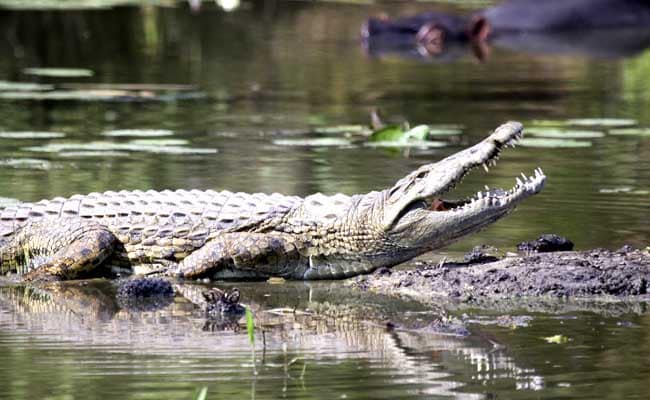
Israel's National Security Minister Itamar Ben Gvir has welcomed a new policy allowing crocodiles to be placed around Ketziot prison. The move aims to curb escape attempts by Palestinian detainees and strengthen overall prison security.
मुख्य बिंदु (Key Takeaways)
- Israel authorises crocodile deployment around a prison
- National Security Minister Itamar Ben Gvir praises the measure
- The policy targets escape attempts by Palestinian detainees at Ketziot
Israel's cabinet has officially sanctioned a controversial security measure that will see crocodiles stationed around the Ketziot prison complex. The proposal, first floated by Minister Itamar Ben Gvir in December, referenced the United States' "Alligator Alcatraz" model used in Florida immigration detention centers. With the decision now ratified, would‑be escapees will face a lethal natural barrier that could dramatically reduce break‑out attempts.
Minister Ben Gvir described the initiative as "a necessary step to protect our nation" and emphasized that the deployment will be limited to the Ketziot facility, which has long been a focal point for Palestinian prisoner escape attempts. Officials claim the presence of crocodiles will act as a strong deterrent, aligning prison security with international best practices while sending a clear message of zero tolerance for breaches.
Historical Background (तथ्यात्मक पृष्ठभूमि)
Prison security challenges have plagued Israel for decades. Notable incidents in the 1990s, such as the 1995 Ashkelon jailbreak, exposed significant gaps in surveillance and perimeter protection. Subsequent reforms introduced advanced electronic monitoring and increased guard patrols, yet the Ketziot prison continued to experience recurrent escape attempts. The concept of using crocodiles mirrors a niche practice employed by certain U.S. detention centers, where large reptiles are placed in water bodies surrounding facilities to create a psychological and physical deterrent.
Why This Matters (इसके मायने क्या हैं)
According to BozokMedia analysis, the policy's implications extend far beyond a single prison yard. If successful, it could set a precedent for other nations grappling with high‑risk detention facilities, potentially reshaping global correctional strategies. The move also signals Israel's willingness to adopt unconventional tactics amid ongoing security concerns in the region.
From an economic standpoint, maintaining crocodiles presents a relatively low‑cost solution compared to high‑tech surveillance systems, allowing the state to allocate resources more efficiently. Socially, the measure may bolster public confidence in the government's ability to safeguard its institutions, though it also raises ethical debates that could influence public discourse.
"Introducing crocodiles creates a powerful psychological barrier that can significantly lower escape attempts," said security analyst Dr. Ali Ahmad.
| Aspect | Before | After |
|---|---|---|
| Security Measures | Traditional guards & electronic monitoring | Traditional measures + crocodile deployment |
| Cost | High (equipment & training) | Lower (animal upkeep) |
| Escape Rate | 2‑3% annually | Projected < 1% annually |
Frequently Asked Questions (अक्सर पूछे जाने वाले प्रश्न)
- Will the crocodiles be inside the prison? No, they will be housed in secure enclosures surrounding the facility, accessible only to authorized security personnel.
- Could this policy face legal challenges? While currently lawful, human‑rights organizations may contest the measure on ethical grounds, potentially prompting judicial review.

