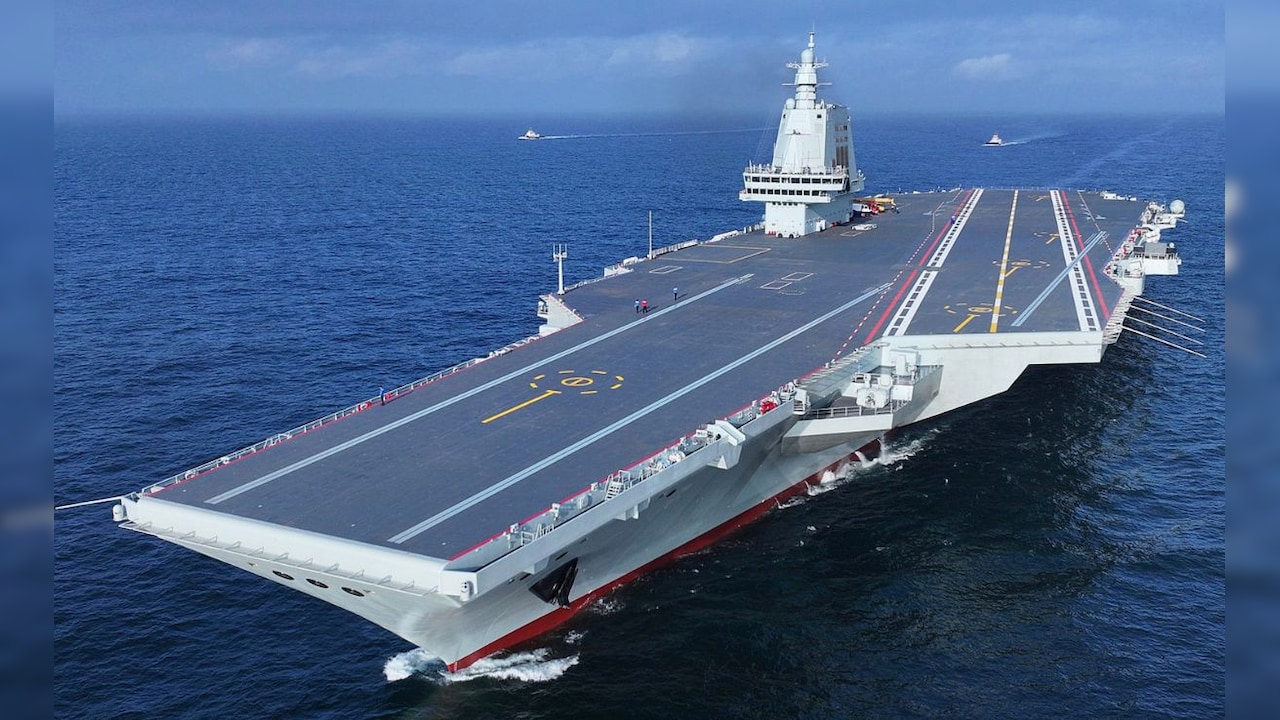
China is rapidly scaling its stealth fighter production, with projections suggesting an output of 300-400 advanced jets annually by 2027.
China is no longer just a manufacturing hub for consumer goods; it is rapidly transforming into a global powerhouse for advanced military aviation. Recent strategic assessments reveal that China is currently the only nation in the world serially producing two distinct families of stealth fighter aircraft simultaneously. This unprecedented industrial capability signals a massive shift in the global air power paradigm.
Industry experts and defense analysts project a staggering trajectory for China's aviation sector. By 2027, the combined output of China's various advanced fighter jet programs is estimated to reach between 300 and 400 aircraft per year. This scale of production is designed to bolster China's naval air wings, enabling its aircraft carriers to project power far beyond its immediate coastline.
Why This Matters (इसके मायने क्या हैं)
BozokMedia analysis shows that this rapid escalation in aircraft production is not merely a domestic achievement but a calculated move to challenge the status quo in the Indo-Pacific region. For nations like India, this represents a significant shift in the security calculus. The sheer volume of advanced stealth technology being deployed by China could potentially overwhelm existing air defense networks and necessitate a complete overhaul of regional strategic doctrines.
Furthermore, this surge highlights the massive industrial-military integration within the Chinese economy. As China transitions from a quantity-based military to a quality-based one, the economic implications for global defense markets are profound. This competition will likely drive a new arms race, forcing neighboring democracies to accelerate their own indigenous manufacturing capabilities and defense spending to maintain a credible deterrent.
The ability to mass-produce stealth technology at this scale is a game-changer that could redefine aerial warfare in the coming decade.
Historical Background
For decades, China's military aviation was heavily reliant on Soviet-era designs and technology transfers. However, the last twenty years have seen a radical shift toward self-reliance and high-end innovation. The development of the J-20 stealth fighter marked China's entry into the elite club of stealth-capable nations. This evolution is part of a broader long-term strategy to achieve military parity with, and eventually superiority over, Western powers in the Pacific theater.
| Feature | China's Trajectory | India's Trajectory |
|---|---|---|
| Stealth Production | Dual-family mass production | Developing (Focus on AMCA/Tejas) |
| Projected Annual Output | 300-400 advanced jets by 2027 | Gradual scaling of indigenous jets |
| Strategic Intent | Global power projection | Regional deterrence & sovereignty |
Frequently Asked Questions (अक्सर पूछे जाने वाले प्रश्न)
Question 1: What makes China's current fighter production unique?
Answer: China is the only state currently capable of mass-producing two different generations/families of stealth fighters at the same time.
Question 2: How does this impact the Indo-Pacific?
Answer: It increases the aerial dominance of China in contested waters, potentially challenging the naval presence of other regional powers.