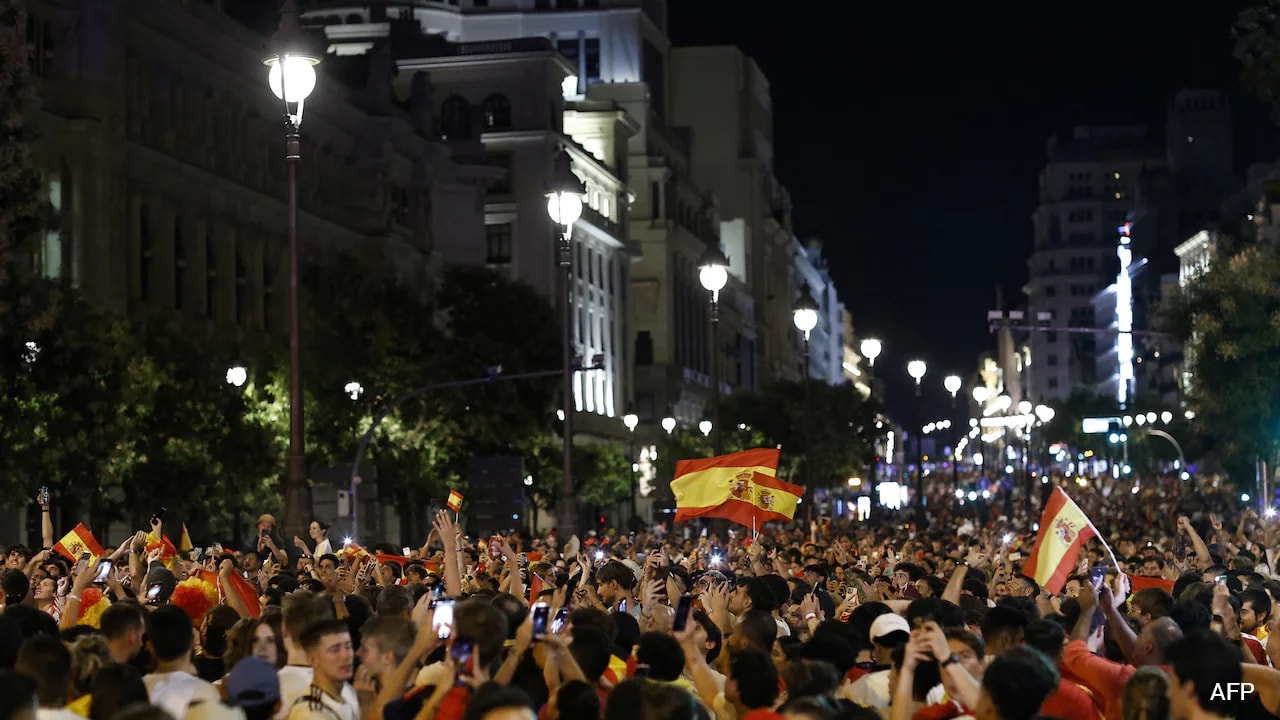
A midnight celebration for Spain's World Cup victory turned fatal when an overcrowded fountain collapsed, killing a 13-year-old boy and injuring several others.
The euphoria surrounding Spain's historic World Cup victory took a devastating turn into tragedy during midnight celebrations. In a scene of chaotic joy, a public fountain collapsed under the immense weight of enthusiastic fans, resulting in the tragic death of a 13-year-old boy and leaving several others injured.
According to eyewitness reports, the incident occurred when a large group of revelers climbed onto the fountain structure to celebrate. The structural integrity of the fountain could not withstand the concentrated live load of the crowd, leading to a sudden and violent collapse. Emergency responders arrived on the scene shortly after the collapse to provide medical assistance and secure the area.
Why This Matters (इसके मायने क्या हैं)
BozokMedia analysis shows that this incident highlights a critical gap in urban safety management during large-scale public events. While city infrastructure is designed to handle standard pedestrian traffic, it is rarely engineered to withstand the concentrated, dynamic loads caused by mass celebrations where people climb on monuments or decorative structures. This event serves as a grim reminder for urban planners to integrate 'celebration-load' safety margins into public works.
Furthermore, this tragedy underscores the socio-political pressure on local governments to balance public freedom of expression with rigorous crowd control. As cities globally become hubs for massive sporting celebrations, the failure to implement real-time monitoring and structural safeguards can turn moments of national pride into periods of national mourning, impacting public trust in municipal safety protocols.
The intersection of mass human emotion and structural engineering creates a high-risk environment that requires specialized crowd-management protocols.
Historical Background
Historically, major sporting triumphs have often been accompanied by massive, spontaneous gatherings in city centers. From the streets of Rio to the squares of Madrid, 'victory surges' are a phenomenon where crowds move unpredictably. Urban engineering has historically struggled to account for these 'extreme load events,' leading to various structural failures in monuments and public spaces during moments of intense collective emotion.
| Factor | Standard Public Use | Mass Celebration Scenario |
|---|---|---|
| Structural Load | Predictable/Low | Unpredictable/Extreme |
| Risk Level | Minimal | Critical |
| Safety Requirement | Routine Maintenance | Dynamic Crowd Control & Engineering Audits |
Frequently Asked Questions (अक्सर पूछे जाने वाले प्रश्न)
Question 1: What caused the fountain to collapse?
Answer: The collapse was caused by the excessive weight and concentrated pressure of people climbing on the structure during the celebration.
Question 2: How can such accidents be prevented?
Answer: Prevention requires stricter crowd control, better structural assessments for public monuments, and immediate intervention by authorities when crowds exceed safe limits.