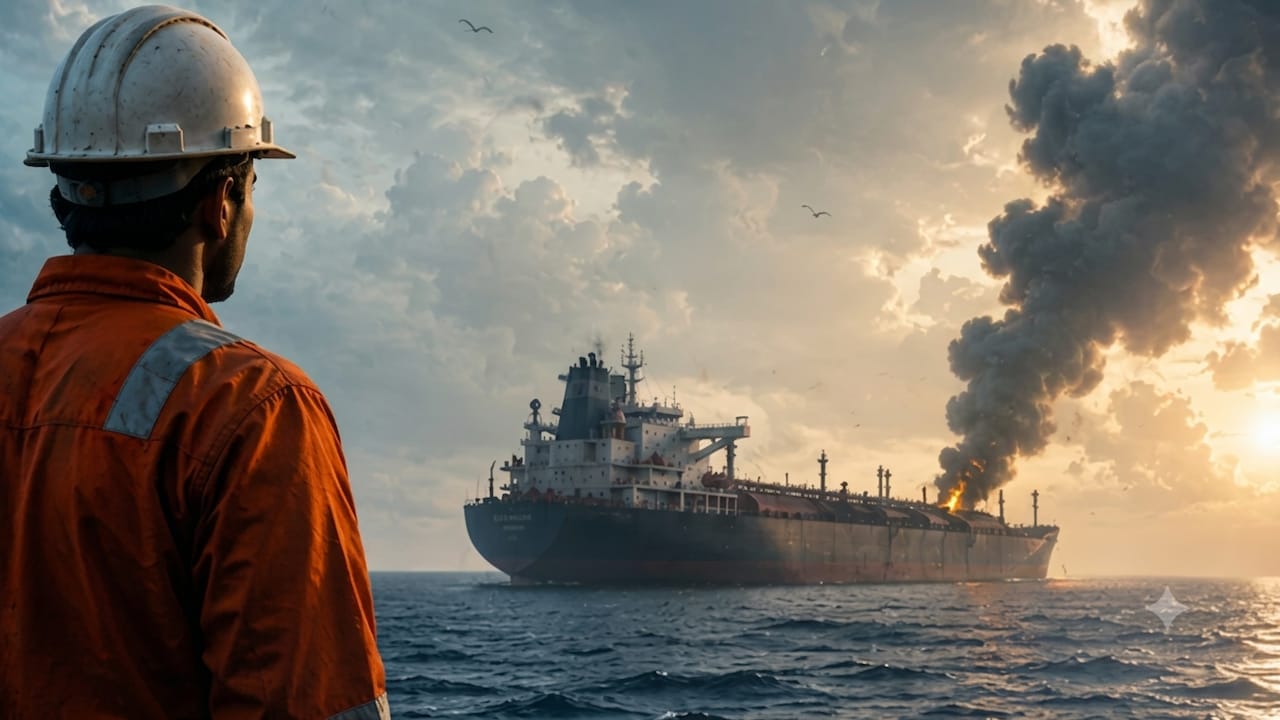
Amid rising attacks on merchant vessels, shipping companies are proposing massive salary bonuses to crews navigating the volatile Strait of Hormuz.
In a startling development reflecting the escalating maritime insecurity in the Middle East, shipping companies are reportedly offering massive financial incentives to seafarers. According to a document reviewed by Bloomberg, a company has proposed offering sailors an additional six months' salary if they complete a round trip through the Strait of Hormuz to collect crude oil from Saudi Arabia or Iraq and unload it in the Gulf of Oman.
This proposal emerged just before the latest wave of attacks on merchant vessels reported this Monday, highlighting the extreme volatility of the region. The Strait of Hormuz is widely considered the world's most critical energy chokepoint, facilitating the transit of a massive percentage of the global oil supply. The offer of a 'risk premium' in the form of half a year's extra pay underscores the life-threatening nature of the current maritime environment.
Why This Matters (इसके मायने क्या हैं)
BozokMedia analysis shows that this move is much more than a simple labor negotiation; it is a symptom of a widening geopolitical crisis. As shipping companies are forced to pay exorbitant premiums to retain crew members, these costs are inevitably passed down the supply chain. This could lead to a spike in global crude oil prices, impacting energy costs for consumers worldwide.
Furthermore, this situation highlights the fragility of global trade routes. When key transit points become combat zones, the entire logic of 'just-in-time' global logistics is challenged. The necessity of offering such high incentives suggests that traditional maritime security measures are currently insufficient to deter regional aggressors.
The escalation of maritime warfare in critical chokepoints acts as a hidden tax on the global economy, driving up costs for every consumer.
Historical Background
The Strait of Hormuz has been a flashpoint for global conflict for decades. Its strategic importance lies in its role as the sole maritime exit for much of the Persian Gulf's oil production. Historically, during the 1980s 'Tanker War' between Iran and Iraq, merchant vessels were frequently targeted, leading to similar spikes in insurance and operational costs. Today, the resurgence of tension makes it a central pillar of modern geopolitical instability.
| Feature | Standard Maritime Route | Strait of Hormuz (Current) |
|---|---|---|
| Risk Level | Low to Moderate | Extremely High |
| Compensation | Standard Salary | 6 Months Additional Salary |
| Primary Threat | Weather/Technical | Geopolitical Attacks/Missiles |
Frequently Asked Questions (अक्सर पूछे जाने वाले प्रश्न)
Question 1: Why are sailors being offered such high pay?
Answer: The massive bonus is a risk premium intended to incentivize sailors to brave the high threat of missile and drone attacks in the Strait of Hormuz.
Question 2: How does this affect the average consumer?
Answer: Increased shipping and insurance costs in this region can lead to higher global oil prices and increased inflation.