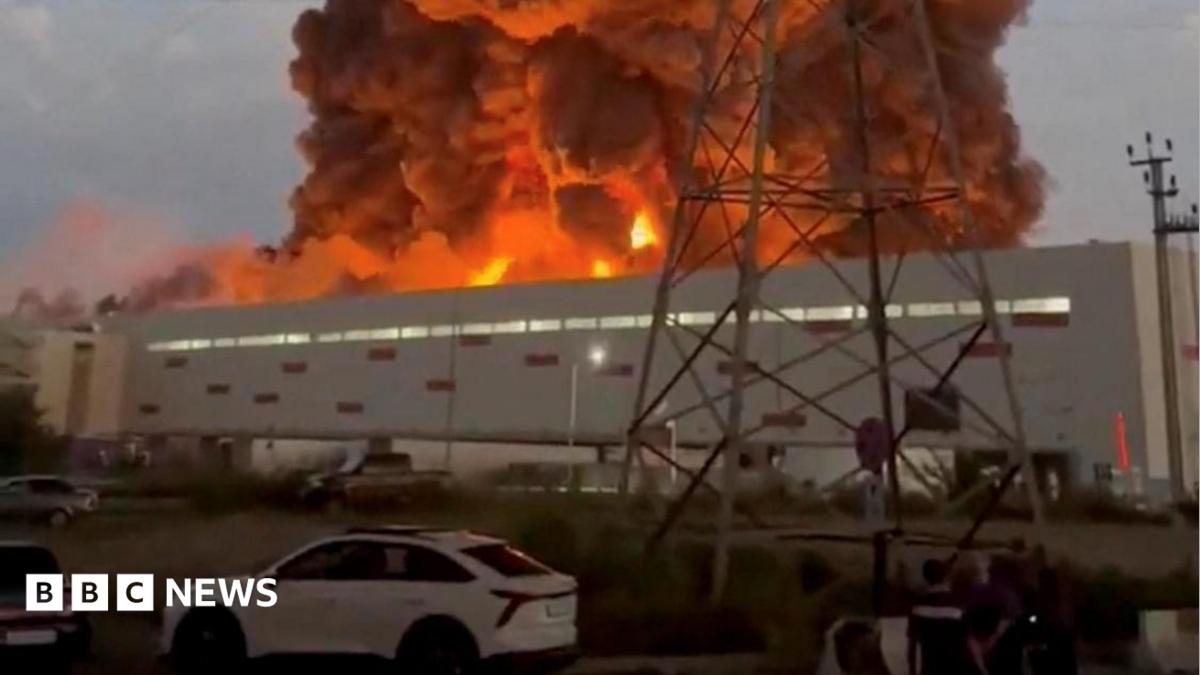
A series of targeted drone attacks on Wildberries warehouses has dealt a massive blow to Russia's e-commerce ecosystem and small businesses.
Key Takeaways
- Ukrainian drones targeted multiple Wildberries warehouses across Russia.
- Massive destruction of goods worth approximately $1 billion reported.
- The strikes aim to disrupt logistics used for military supply chains.
- Small-scale Russian merchants face devastating financial losses without compensation.
In a significant escalation of the conflict, Ukrainian drone strikes have repeatedly hit several retail warehouses belonging to Wildberries, Russia's largest online retailer. These attacks, spanning several days, have not only disrupted essential supply chains but have also inflicted severe economic damage on thousands of small and medium-sized enterprises (SMEs) that rely on the platform for their livelihoods.
The strikes hit critical locations including Elektrostal east of Moscow and Kotovsk in the Tambov region. Reports indicate that the attacks resulted in fatalities among night-shift workers and the destruction of vast amounts of inventory. Kyiv has justified these strikes by claiming that these logistics hubs are utilized to transport sanctioned components necessary for drone production and other military equipment.
Why This Matters (इसके मायने क्या हैं)
BozokMedia analysis shows that this shift in targeting signifies a move toward 'total economic warfare.' By hitting Wildberries and its rival Ozon—which serve nearly 90% of Russia's economically active population—Ukraine is hitting the very pulse of the Russian domestic economy. This isn't just about military logistics; it's about making the economic cost of war felt by the average Russian citizen.
For the Russian state, protecting these hubs is a challenge. While the Kremlin denies military use, the disruption of these marketplaces impacts everything from household appliances to clothing. This creates a secondary front of instability: economic anxiety. As supply chains break, the resulting scarcity and price hikes could fuel internal domestic pressure against the ongoing conflict.
'The battlefield has expanded from the trenches to the digital marketplaces that sustain the nation's civilian economy.'
Historical Background: Since the full-scale invasion in February 2022, the conflict has evolved from a conventional territorial war into a long-distance campaign of attrition. Ukraine has increasingly utilized long-range drones to strike Russian energy infrastructure, oil depots, and now, logistics hubs, aiming to starve the Russian military machine of fuel, parts, and supplies.
| Impact Area | Direct Military Impact | Indirect Economic Impact |
|---|---|---|
| Target | Armored Vehicles/Troops | E-commerce Warehouses/SMEs |
| Consequence | Tactical battlefield shifts | Inflation and loss of livelihoods |
| Scope | Frontline specific | Nationwide consumer disruption |
Frequently Asked Questions (अक्सर पूछे जाने वाले प्रश्न)
1. Why is Ukraine targeting commercial warehouses?
Ukraine asserts that these hubs are used to move military-grade components and supplies to the front lines.
2. Will sellers receive insurance for lost stock?
Most sellers are unlikely to receive compensation, as recent contract updates classify drone attacks as 'force majeure' events.