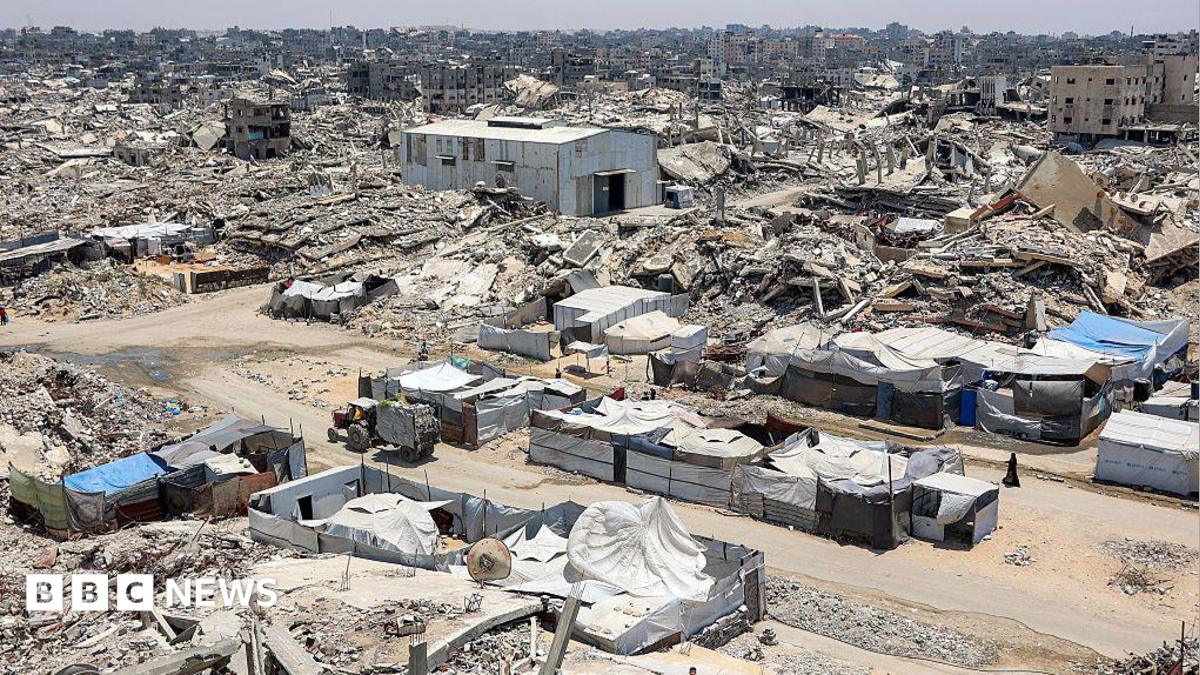
In a major breakthrough, Hamas has reportedly accepted a disarmament plan that involves laying down its weapons in exchange for an Israeli military withdrawal from Gaza. US President Donald Trump has hailed the move as a monumental step toward stability.
Key Takeaways
- Hamas has agreed to a phased disarmament and power transfer to a Palestinian National Committee.
- The plan includes the inventorying and securing of heavy weapons, depots, and tunnels.
- Israel remains skeptical, insisting on disarmament before any military withdrawal.
- The US-led Board of Peace will oversee the implementation and Gaza's redevelopment.
A significant shift in the Middle East conflict has emerged as Hamas announces its acceptance of a disarmament roadmap for the Gaza Strip. Under this proposed plan, the group would relinquish its military capabilities in exchange for the complete withdrawal of Israeli troops from the territory. US President Donald Trump has characterized this development as "a monumental step toward lasting peace and security."
A four-page document reviewed by the BBC outlines a rigorous, phased approach to the disarmament. The roadmap mandates an inventory and secure storage of heavy weaponry, military production sites, and the destruction of underground tunnel networks. This process is designed to be overseen by the Palestinian National Committee—a group of independent technocrats—alongside the deployment of an International Stabilisation Force (ISF).
Why This Matters
BozokMedia analysis shows that the success of this roadmap hinges on the delicate balance of trust between two warring entities. While the disarmament of Hamas is the primary prerequisite for peace, the actual mechanism of weapon handover remains opaque. The transition from a militant-led governance to a technocratic committee represents a fundamental restructuring of Palestinian politics.
The transition from armed resistance to civil governance is the most volatile phase of any peace process.
Despite the progress, Israel maintains a position of deep skepticism. Far-right National Security Minister Itamar Ben-Gvir has dismissed the plan as "unacceptable." Israeli officials have reiterated that no withdrawal will occur from the 'Yellow Line'—the demarcation of their controlled zones—until Hamas is fully disarmed. Currently, Israel controls over 60% of the Gaza Strip, complicating the proposed withdrawal timelines.
Historical Background
The conflict in Gaza has been exacerbated by the intense warfare that began in October last year. President Trump's 20-point peace plan, unveiled last September, sought to create a structured environment for reconstruction through the Board of Peace, aiming to move the region beyond the cycle of violence through international oversight and economic redevelopment.
Frequently Asked Questions
1. What happens to Hamas's civil servants?
The plan stipulates that all public employees, including health and education staff, will be treated lawfully and fairly regarding their rights.
2. Who will control the weapons once surrendered?
Weapons are to be moved into secure storage managed by the Palestinian National Committee under international supervision.