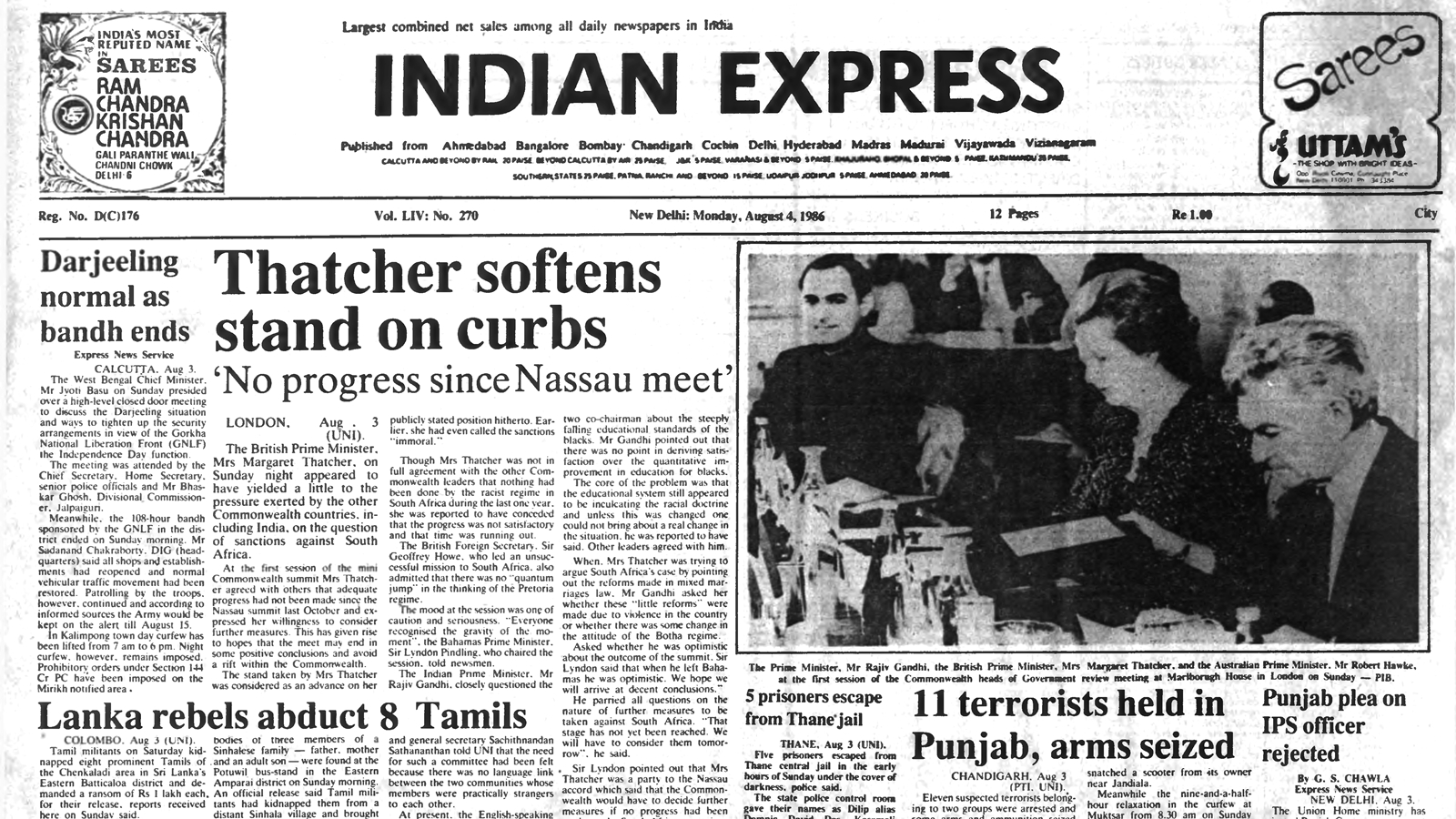
Looking back at August 4, 1986, when British PM Margaret Thatcher signaled a shift in policy regarding South African sanctions following pressure from the Commonwealth.
Key Takeaways
- Margaret Thatcher expressed willingness to consider further sanctions against South Africa.
- Pressure mounted from Commonwealth nations, including India, to combat apartheid.
- The move was seen as a way to prevent a major rift within the Commonwealth organization.
On August 4, 1986, the political landscape was shifting. British Prime Minister Margaret Thatcher appeared to be softening her stance on the controversial issue of sanctions against South Africa. This shift came after significant diplomatic pressure from various Commonwealth nations, most notably India.
During the first session of the mini-Commonwealth, Thatcher acknowledged that sufficient progress had not been achieved since the Nassau summit. By expressing a willingness to consider further measures, she provided a glimmer of hope that the international community could reach a consensus and avoid a permanent fracture within the Commonwealth.
Why This Matters
BozokMedia analysis shows that this historical moment was a classic example of multilateral diplomacy overcoming unilateral resistance. Thatcher's concession was not just about South Africa, but about maintaining the structural integrity of the Commonwealth in the face of moral outrage over apartheid.
Thatcher's pivot was a calculated diplomatic maneuver to balance British economic interests with the growing moral imperative of the global community.
While the global spotlight was on Thatcher, domestic Indian news from that era also highlighted Jyoti Basu managing the Darjeeling situation and security operations in Punjab, showcasing a period of intense political transition both globally and locally.
Historical Background
The mid-1980s were defined by the struggle against Apartheid in South Africa. While the UK maintained strong trade ties with the regime, the rest of the world, led by many Commonwealth members, demanded total economic isolation of the South African government to force democratic reforms.
Frequently Asked Questions
1. Why was Thatcher hesitant about sanctions?
The UK had significant economic interests and trade relations with South Africa, which Thatcher sought to protect.
2. How did India influence this decision?
India was a vocal leader within the Commonwealth, consistently pushing for stronger anti-apartheid measures to align with global human rights standards.