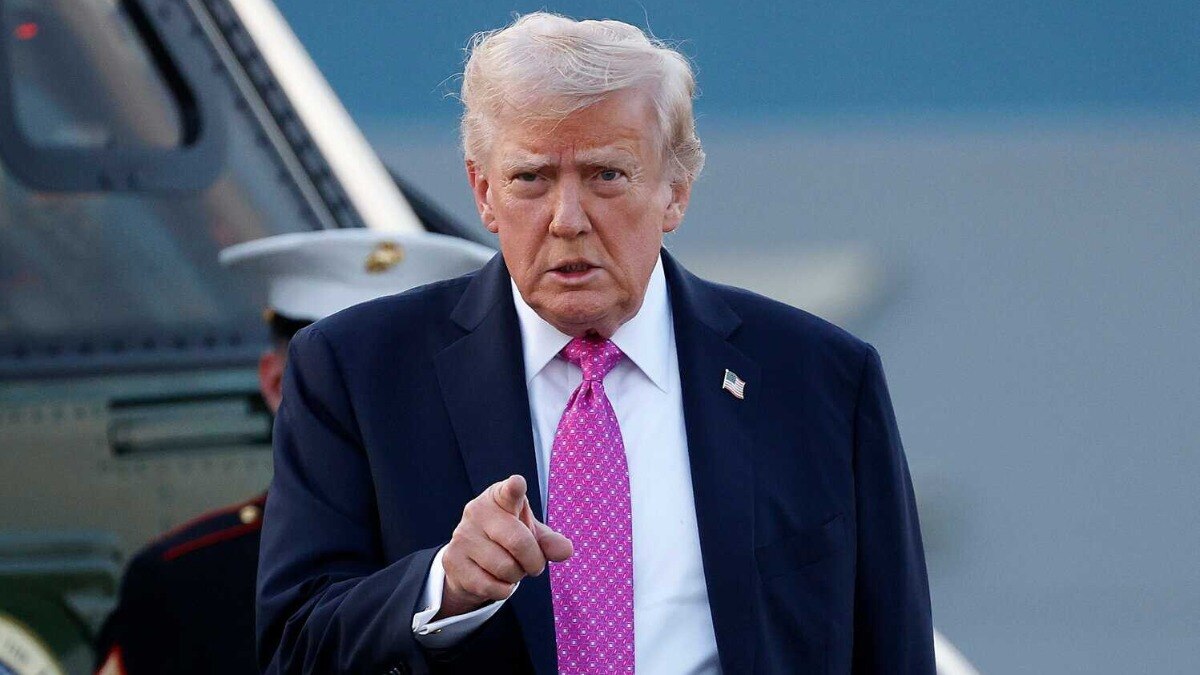
Geopolitical tensions have spiked as former President Donald Trump issues a stern counter-threat to Iran regarding the strategic Strait of Hormuz. This escalating standoff poses significant risks to global oil supply chains and maritime security in the Persian Gulf.
Key Takeaways
- Trump responds aggressively to Iranian threats in the Persian Gulf.
- The Strait of Hormuz remains a critical chokepoint for global energy.
- Military confrontation risks have increased following the exchange of warnings.
The Strait of Hormuz has once again become the epicenter of international friction following a sharp exchange of threats between the United States and Iran. After Iran issued warnings regarding the strategic waterway, former President Donald Trump retaliated with a stern counter-threat, raising the stakes for regional security. The situation has created an atmosphere of uncertainty, with global markets watching closely for any sign of military escalation.
Historical Background
The Strait of Hormuz has been a flashpoint for conflict for decades, serving as the gateway for nearly one-third of the world's seaborne oil trade. Historically, Iran has utilized its geographic advantage to exert pressure on Western nations, particularly the United States. From the "Tanker War" of the 1980s to recent seizures of merchant vessels, the waterway has frequently been a barometer for US-Iran relations. The current rhetoric echoes previous crises but carries a higher risk of miscalculation given the existing naval buildups.
Why This Matters
BozokMedia analysis shows that any disruption in the Strait of Hormuz would lead to an immediate spike in global oil prices, triggering inflation worldwide. Trump's direct response signals a commitment to maintaining freedom of navigation, but it also risks drawing the US into a broader conflict if Iran perceives the posturing as an existential threat.
"When two superpowers face off in a narrow chokepoint, the margin for error is minimal, but the consequences are catastrophic."
Naval Power Comparison
| Aspect | United States | Iran |
|---|---|---|
| Naval Fleet | Global reach with Aircraft Carriers | Small boats focused on coastal defense |
| Strategy | Missile defense & Power projection | Asymmetric warfare & Mines |
| Alliances | NATO & Gulf States | Syria & Regional Militias |
Frequently Asked Questions
Q: Why is the Strait of Hormuz so important?
A: It handles approximately one-third of the world's liquefied natural gas and oil seaborne trade, making it vital for global energy security.
Q: What did Trump's threat entail?
A: Trump warned of severe consequences if Iran attempted to block the waterway or harass international shipping, signaling readiness for military action.