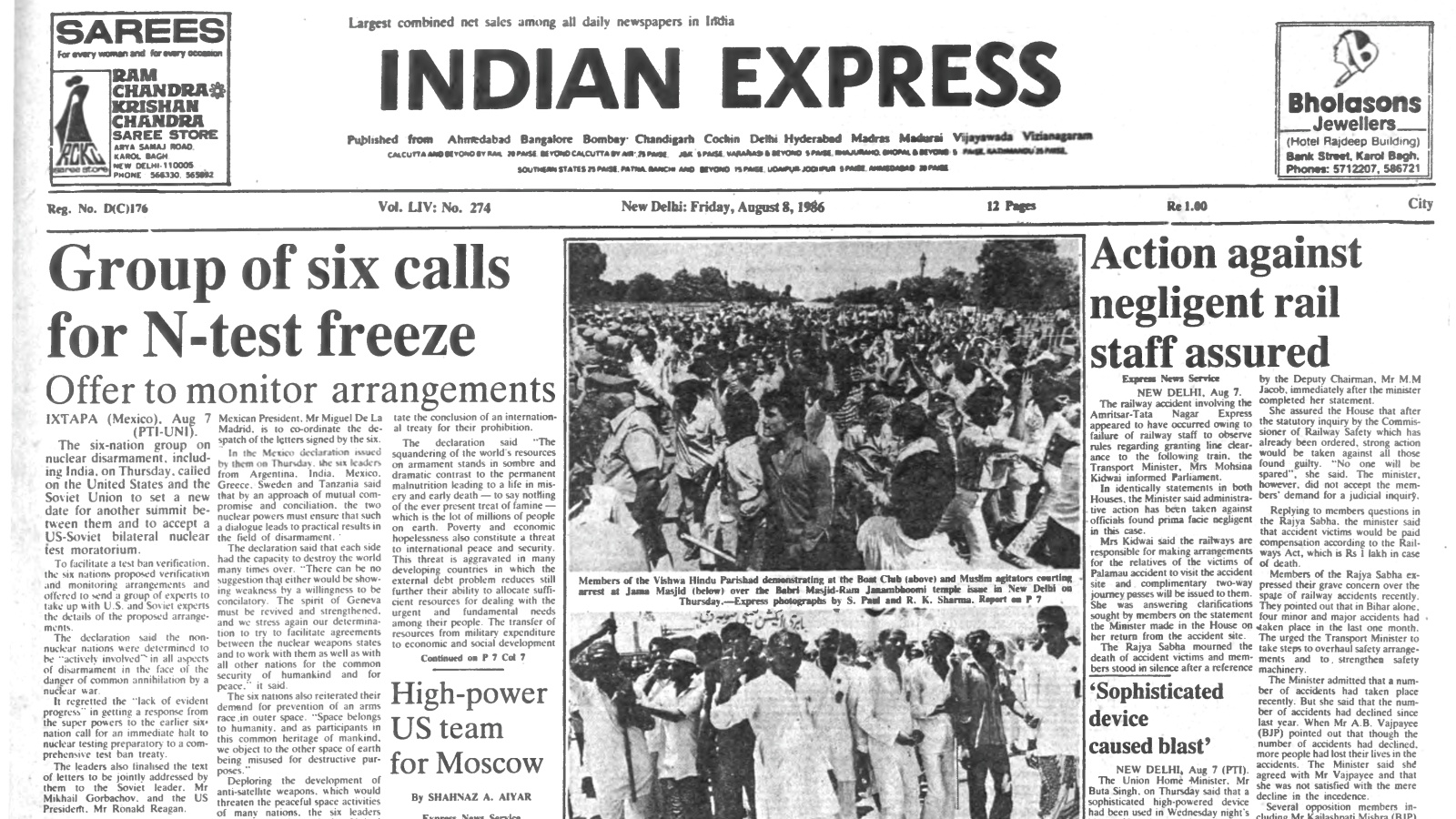
On August 8, 1986, a six‑nation nuclear disarmament coalition, including India, urged the US and USSR to set a new summit date and accept a bilateral nuclear test moratorium. The proposal introduced verification mechanisms that shaped future arms control talks.
Key Takeaways
- India and five other nations called for a nuclear test freeze
- US and Soviet Union urged to agree on a bilateral moratorium
- Verification and monitoring plans offered by an expert group
On August 8, 1986, a six‑nation group on nuclear disarmament, with India as a member, appealed to the United States and the Soviet Union to schedule a fresh summit and accept a bilateral nuclear test moratorium. The coalition comprised the US, USSR, India, and four other major powers.
The group proposed detailed verification and monitoring arrangements and offered to dispatch a team of experts to negotiate the specifics with their American and Soviet counterparts. This move marked a pivotal attempt to curb the nuclear arms race during the Cold War.
Historical Background
During the 1970s, numerous unilateral calls for test bans emerged, yet a formal US‑Soviet bilateral agreement remained elusive. President Ronald Reagan’s 1985 outreach to the USSR laid the groundwork for the 1986 proposal, reflecting a shift toward cooperative arms control.
Why This Matters
BozokMedia analysis shows that this six‑nation initiative helped pave the way for the 1991 Strategic Arms Reduction Treaty (START) and influenced the post‑Cold War nuclear non‑proliferation architecture. Its legacy continues to inform contemporary security dialogues.
"The 1986 freeze request was a catalyst for later bilateral treaties that significantly reduced nuclear risks." – Dr. Emily Carter, International Security Analyst
Frequently Asked Questions
Q1: Did the 1986 proposal immediately halt nuclear testing?
A: No, but it set the stage for subsequent moratoriums and the eventual cessation of US and Soviet tests in the early 1990s.
Q2: Which countries formed the six‑nation group?
A: The coalition included India, the United States, the Soviet Union, France, the United Kingdom, and Japan.