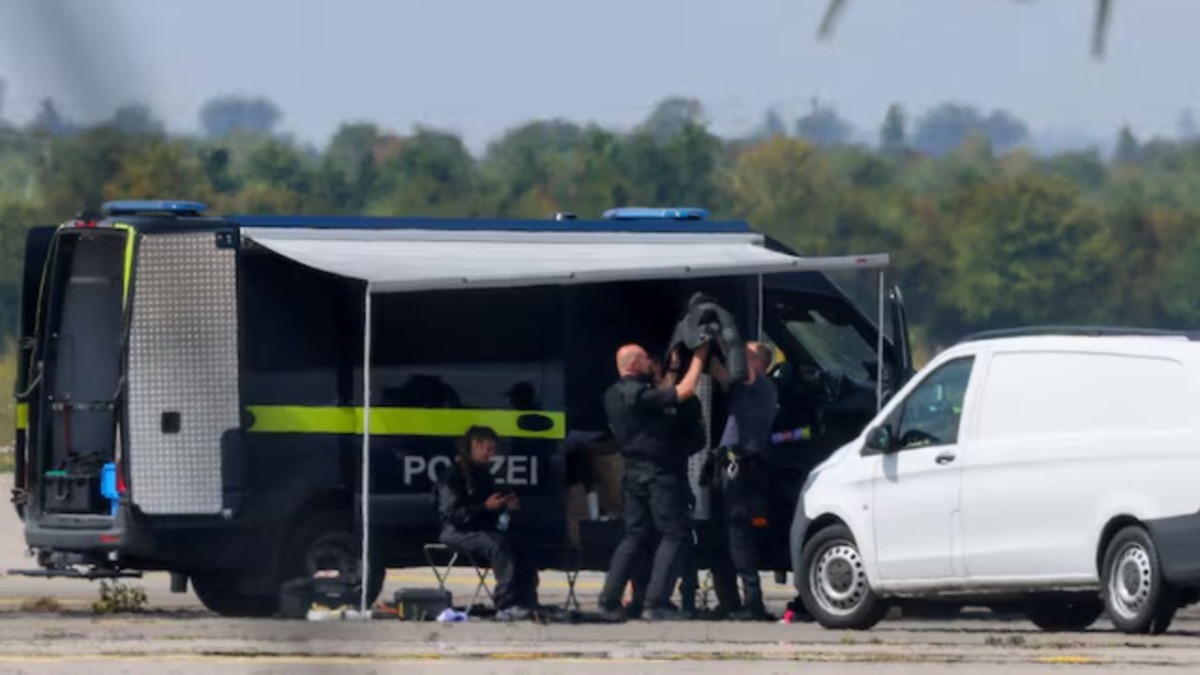
Following the discovery of an explosive-laden drone at Leipzig/Halle Airport, Germany's Interior Minister has warned that the nation is facing daily hybrid warfare attempts aimed at destabilizing the country.
Key Takeaways
- An explosive-laden drone was discovered near Leipzig/Halle Airport in eastern Germany.
- Interior Minister Alexander Dobrindt warns of daily hybrid warfare, including espionage and sabotage.
- The German government plans to double its anti-drone expert force to 300.
- Lawmakers have pointed toward Russia, though the Russian embassy denied involvement.
Germany is facing a heightened state of alert after an explosive-laden drone was intercepted near the Leipzig/Halle Airport. This incident has prompted German officials to warn that the nation is currently a constant target of 'hybrid warfare' designed to incite fear and social instability.
Interior Minister Alexander Dobrindt stated in an interview with Bild am Sonntag that while Germany is not in a conventional war, it is under constant assault through non-traditional means. "Espionage, sabotage, cyberattacks, or covert operations by foreign powers aimed at destabilising Germany... are a constant reality," Dobrindt remarked.
Why This Matters
BozokMedia analysis shows that the shift toward hybrid warfare represents a significant evolution in global conflict. By utilizing low-cost, high-impact tools like drones and cyber disruption, aggressors can bypass traditional military defenses, making it increasingly difficult for democratic nations to attribute attacks and respond effectively.
"The goal of hybrid warfare is not necessarily territorial conquest, but the psychological erosion of a nation's stability."
In response to these escalating threats, the German government is moving to aggressively bolster its defenses. Reports indicate plans to double the federal team of anti-drone experts from 150 to 300 and expand the network of specialized bases from four to eight. This follows a separate incident where two drones were spotted over a military base in Mechernich.
Historical Background
Since the 2022 invasion of Ukraine, the security landscape in Europe has shifted dramatically. The rise of unmanned aerial vehicles (UAVs) in modern combat has forced NATO members like Germany to reconsider their domestic security protocols, particularly regarding critical infrastructure like airports and military installations.
Frequently Asked Questions
Q1: What exactly is hybrid warfare?
A1: It is a strategy used by states to achieve political objectives through a mix of non-military tools, such as cyberattacks, disinformation, and sabotage, to remain below the threshold of open conflict.
Q2: Has any country been officially blamed?
A2: While the Interior Minister did not name a specific country, several German lawmakers have pointed to Russia, a claim the Russian embassy has dismissed as 'fabricated provocation.'