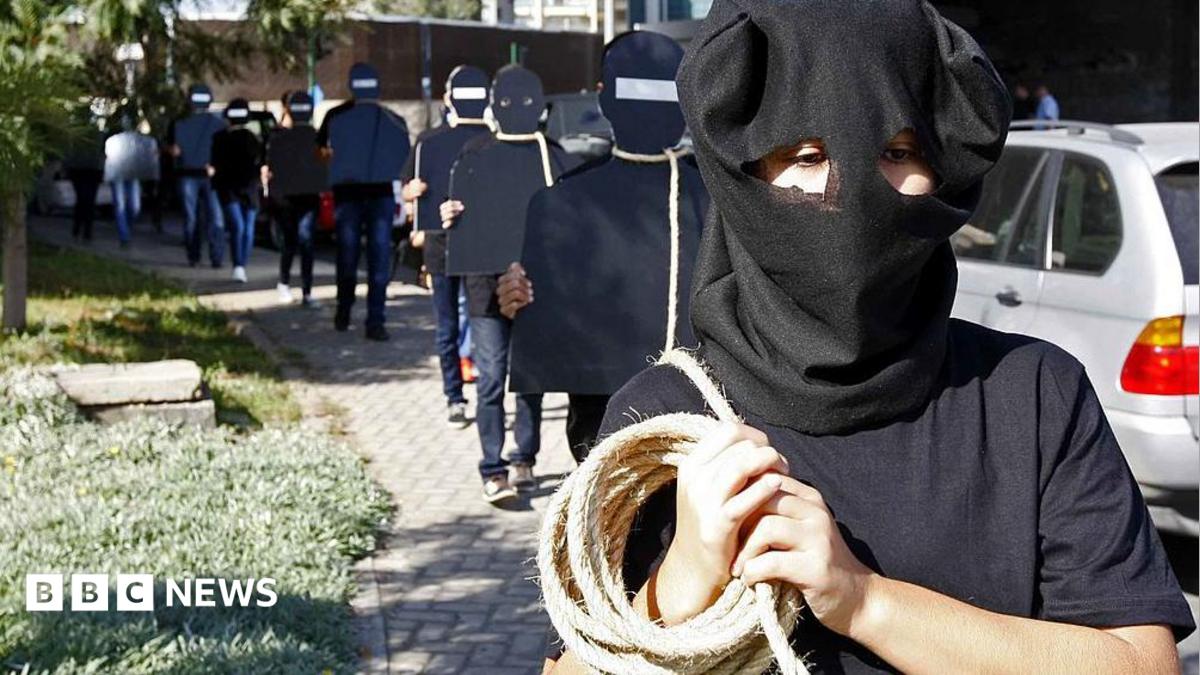
In a landmark decision, Lebanon's parliament has voted to abolish capital punishment, positioning the nation to become the first in the Middle East to formally end the practice.
Key Takeaways
- Lebanon is set to become the first Middle Eastern country to formally abolish the death penalty.
- Capital punishment will be replaced by life imprisonment with hard labour.
- The majority of MPs supported the bill, while Hezbollah's bloc voted against it.
- Lebanon has maintained a de facto moratorium on executions since 2004.
BEIRUT: Lebanon's parliament has taken a historic step by voting to abolish the death penalty. This legislative move, if finalized by the cabinet and signed by President Joseph Aoun, would make Lebanon the first country in the Middle East to formally end capital punishment.
During Tuesday's session, a majority of the 128-seat parliament backed the measure. However, the move saw opposition from Hezbollah's parliamentary bloc. The legislation is now slated to move to the cabinet for approval before reaching the President's desk. The Lebanese government has already signaled its support for the reform.
Legal Transition and Implementation
Under the proposed law, the death penalty will be replaced with life imprisonment involving hard labour. While hard labour is already a component of Lebanese law, its practical implementation has been limited in recent years due to the nation's severe financial crisis and overcrowded prison systems. Currently, rights groups estimate that over 78 individuals remain on death row despite no executions being carried out since January 2004.
"We cannot solve a crime with a crime or end violence with violence." — Oragit Younan, Co-founder of the Lebanese Association for Civil Rights.
Why This Matters
BozokMedia analysis shows that this decision creates a sharp contrast with regional trends. While Jordan has recently resumed executions and Iran continues to use capital punishment amidst political unrest, Lebanon's move represents a significant shift toward human rights-centric governance. This decision is the culmination of nearly three decades of advocacy by civil society and legal professionals.
Historical Context
Attempts to remove the death penalty from the Lebanese legal code are not new; similar legislation failed in 2004 and 2008. For the past two decades, Lebanon has operated under a de facto moratorium, as the required signatures from the President, Prime Minister, and Justice Minister had not been obtained for any execution since 2004.
Frequently Asked Questions
1. When will the law officially take effect?
The law will take effect once it passes through the cabinet and receives the President's signature.
2. What happens to those currently on death row?
Under the new legislation, their sentences are expected to be commuted to life imprisonment with hard labour.