Houthi rebels launched a deadly attack on a commercial vessel near the Bab al-Mandab Strait, killing four crew members. Simultaneously, Iran has threatened to block the strategic Strait of Hormuz unless US conditions are met.
Key Takeaways
- Houthi attack on Egyptian cargo ship results in 4 deaths.
- Iran threatens to close the Strait of Hormuz amid US tensions.
- US Navy uses Hellfire missiles to disable a Panama-flagged vessel.
- Global oil markets and shipping lanes face extreme uncertainty.
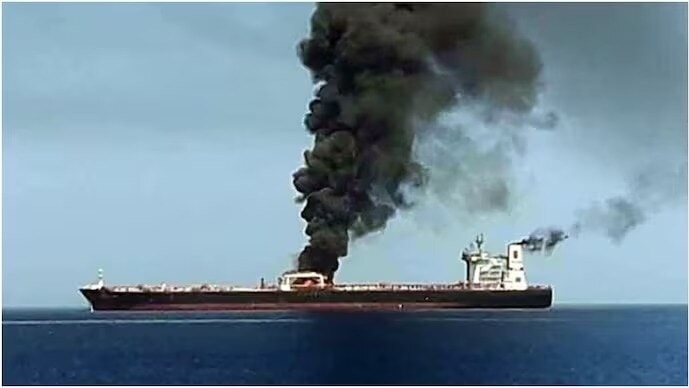
The maritime front of the Iran-US conflict has escalated into a deadly confrontation. In a significant escalation, Houthi rebels targeted a commercial vessel near the Bab al-Mandab Strait, leading to the deaths of four crew members of an Egyptian-owned cargo ship named 'Tihama'. Additionally, two Yemeni rescuers died while attempting to assist the vessel.
This incident marks a lethal turning point in the ongoing tensions. While Houthi-controlled media claimed the target was a vessel allegedly transporting military equipment for Saudi Arabia, the reality underscores the growing vulnerability of international shipping in the Red Sea corridor.
Why This Matters
BozokMedia analysis shows that the volatility in these strategic waterways is no longer just a regional skirmish; it is a direct threat to the global economic engine. Disruption in the Bab al-Mandab and the Strait of Hormuz can trigger a massive spike in crude oil prices and paralyze global supply chains.
The weaponization of maritime choke points represents the most significant threat to global energy security in the modern era.
Adding to the chaos, Iran has tightened its grip on the Strait of Hormuz. Senior security official Mohsin Rezaei stated that the strategic waterway will remain closed to shipping unless the United States meets Iran's demands, specifically regarding the release of frozen Iranian assets abroad.
On the other side of the spectrum, the US Navy engaged in a direct strike, deploying MH-60 helicopters to fire Hellfire missiles at a Panama-flagged cargo ship. The US military claimed the vessel attempted to violate the blockade near Iranian ports, successfully disabling its steering system.
Historical Background
The Strait of Hormuz and Bab al-Mandab are the world's most critical maritime 'choke points.' The Strait of Hormuz is the primary artery for global oil transit, while Bab al-Mandab connects the Red Sea to the Indian Ocean. Any military interference in these zones has historically led to immediate fluctuations in global markets and energy costs.
Frequently Asked Questions
1. What happened in the Bab al-Mandab attack?
Houthi rebels attacked an Egyptian cargo ship, resulting in the deaths of four crew members.
2. What is Iran's condition for opening the Strait of Hormuz?
Iran demands that the US change its stance and release Iran's frozen assets held in foreign banks.