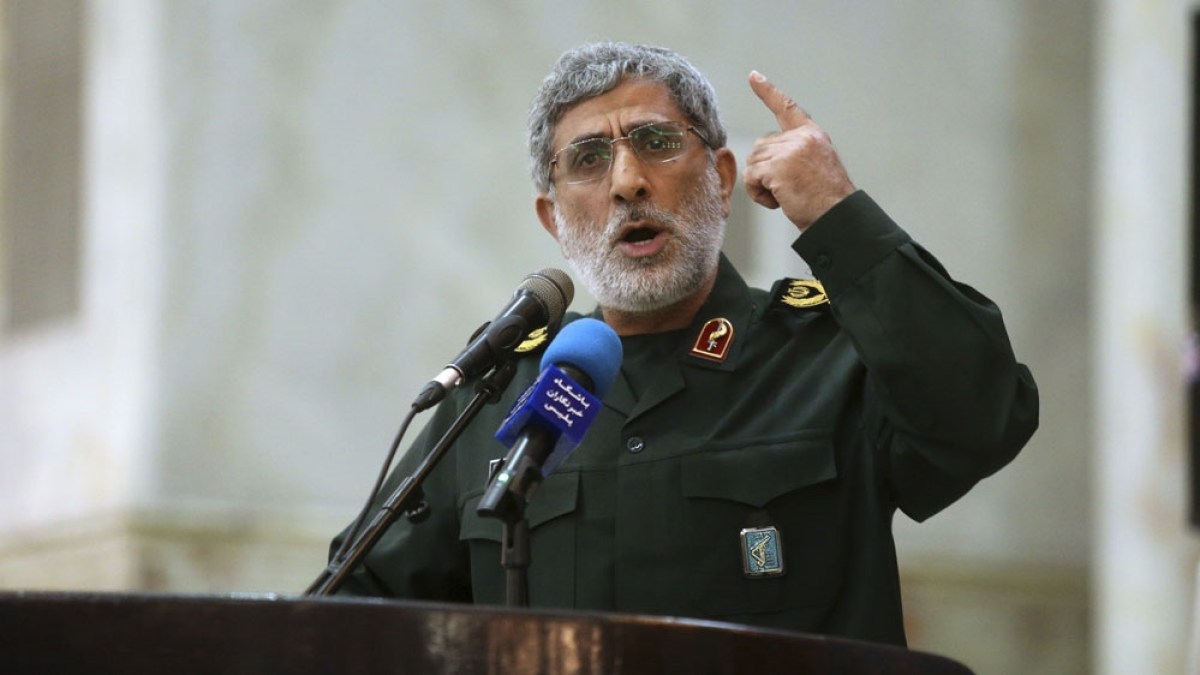
IRGC Quds Force commander Esmail Qaani conducted an unannounced visit to Baghdad to deliberate on Iraq's plan to bring all armed groups under state control. Iran has signaled its opposition to the immediate handover of weapons.
Key Takeaways
- Esmail Qaani, head of the IRGC Quds Force, held high-level meetings in Baghdad.
- The discussions focused on the Iraqi government's mandate to disarm non-state actors.
- Iran has advised a political compromise rather than a military confrontation over weapons.
- A critical September 30 deadline looms for the Iraqi government's disarmament plan.
In a significant diplomatic move, Esmail Qaani, the commander of the Quds Force within the Iranian Revolutionary Guard Corps (IRGC), made an unannounced visit to Baghdad earlier this week. According to sources within the Iraqi Coordination Framework, Qaani engaged in behind-the-scenes talks with political leaders, security officials, and commanders of various Shia paramilitary groups.
The core of these discussions revolved around the Iraqi government's intensifying efforts to enforce a monopoly on arms. Prime Minister Ali al-Zaidi is pushing for a plan that would strip armed factions of their weaponry and place all military assets under official state control. However, the Iranian message remains clear: Tehran is wary of a forced disarmament that could trigger a violent confrontation.
Why This Matters
BozokMedia analysis shows that the tension in Baghdad is a microcosm of the broader Middle Eastern power struggle. The ability of the Iraqi state to control its own territory and security apparatus is essential for regional stability. If the government fails to integrate these factions, Iraq risks becoming a fragmented landscape of competing militias.
The most realistic way out is to firmly establish the principle of restricting weapons and to link the decision of war and peace to Iraqi constitutional institutions alone.
While some groups have agreed to integrate into the national forces, powerful entities like Kataib Hezbollah and Harakat al-Nujaba remain defiant. This defiance creates a precarious security environment as the September 30 deadline approaches, a date by which the government aims to finalize its security restructuring.
Historical Background
The presence of powerful Shia paramilitaries in Iraq has been a defining feature of the post-2003 political landscape. These groups often operate with significant influence from Tehran, complicating Baghdad's efforts to establish a centralized command structure and maintain neutrality in regional conflicts.
Frequently Asked Questions
Question 1: What is the deadline for the Iraqi disarmament plan?
Answer: The Iraqi government has set a deadline of September 30 to restrict all weapons to state control.
Question 2: How does Iran view the disarmament of these groups?
Answer: Iran favors a political compromise and has signaled that it does not support the immediate handover of weapons by these factions.