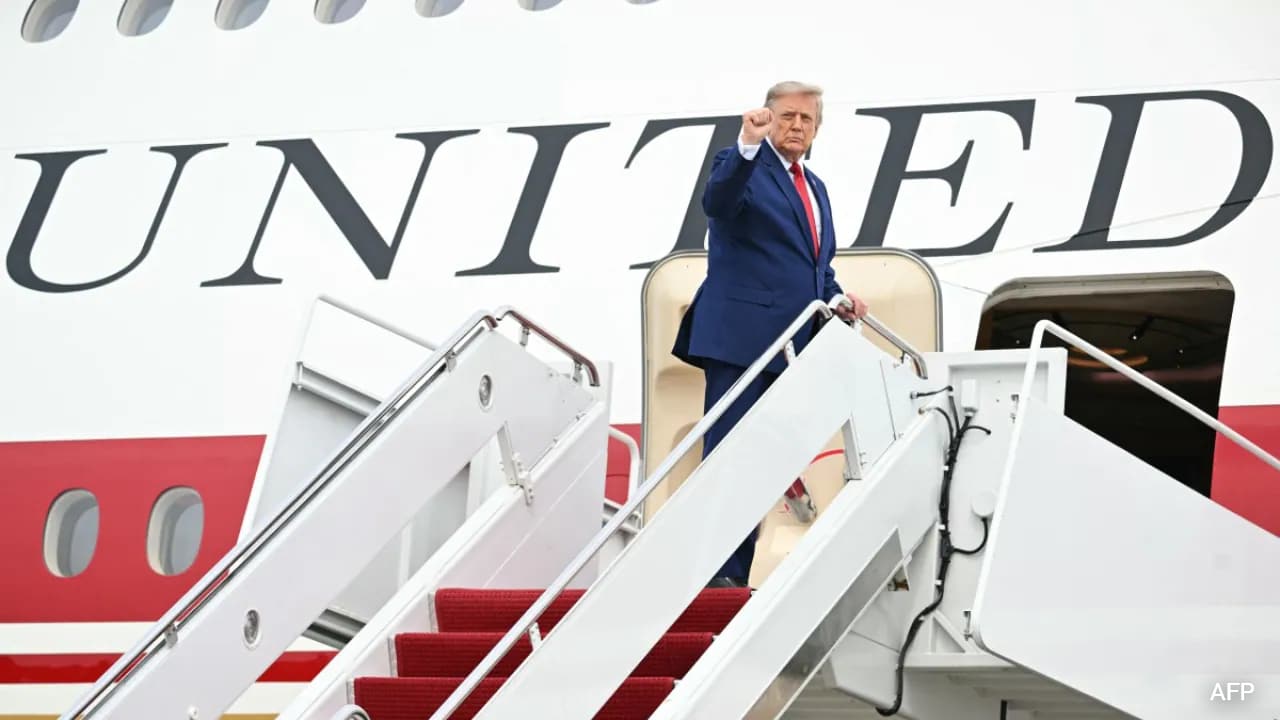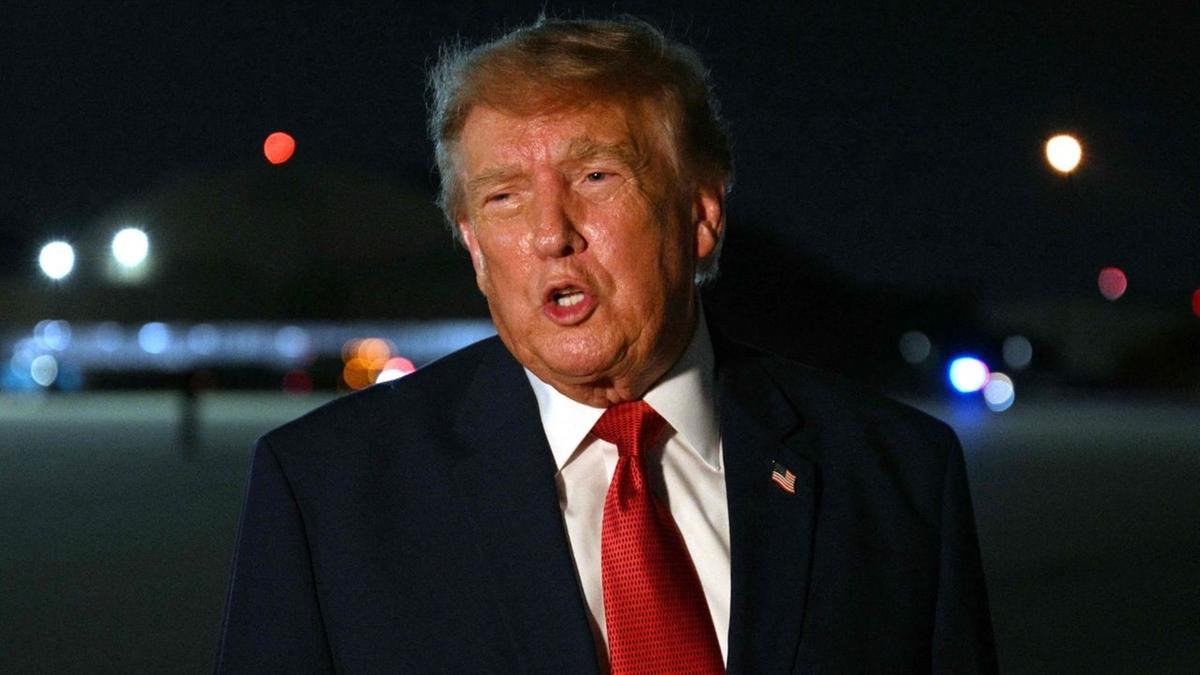
US President Donald Trump has asserted total dominance over the strategic Strait of Hormuz, describing the US naval blockade as an 'Iron Wall' against Iran.
Key Takeaways
- President Trump claimed total US control over the Strait of Hormuz.
- The US naval blockade was described by Trump as an 'Iron Wall.'
- Iran has countered by calling the waterway a 'battlefield' until sanctions are lifted.
- Global oil price volatility remains a risk ahead of US midterm elections.
Washington: In a high-stakes declaration, US President Donald Trump has claimed that the United States maintains absolute control over the strategic Strait of Hormuz. Taking to his Truth Social platform, Trump characterized the US Navy's blockade as an 'Iron Wall,' asserting that this critical maritime artery is firmly under American dominion.
Trump's rhetoric towards Iran was particularly sharp, claiming the nation is effectively neutralized. He alleged that Iran lacks a functional navy or air force and that its military personnel are unpaid. Mocking the Islamic Revolutionary Guard Corps (IRGC), Trump stated they are 'breaking down' and fleeing for their lives. He concluded his post by stating that Iran is no longer the 'bully' of the Middle East, adding, 'Praise be to Allah!'
Why This Matters
BozokMedia analysis shows that the Strait of Hormuz is the world's most vital energy chokepoint. Any disruption here triggers immediate spikes in global oil prices. Trump's assertion comes at a time of heightened tension, as Iran has threatened to turn the waterway into a 'battlefield' unless US sanctions are lifted and frozen assets are returned.
Control over the Strait of Hormuz is not just a military victory; it is the ultimate leverage over the global energy economy.
The conflict has escalated with Iran attempting to implement its own toll system and conducting attacks on vessels it claims are bypassing established routes. This geopolitical chess match is being played out against the backdrop of upcoming US midterm elections, where energy costs could become a decisive political factor.
Historical Background
The Strait of Hormuz has been a flashpoint for decades of US-Iran tensions. As a narrow passage connecting the Persian Gulf to the Gulf of Oman, it serves as the primary exit point for much of the world's petroleum. Control over this passage has historically been a tool for both diplomatic leverage and military posturing.
Frequently Asked Questions
1. What is the significance of the Strait of Hormuz?
It is a critical maritime chokepoint through which a massive portion of the world's oil supply is transported.
2. What are Iran's conditions for reopening the strait?
Iran demands the lifting of US sanctions, the unfreezing of its assets, and compensation for wartime damages.