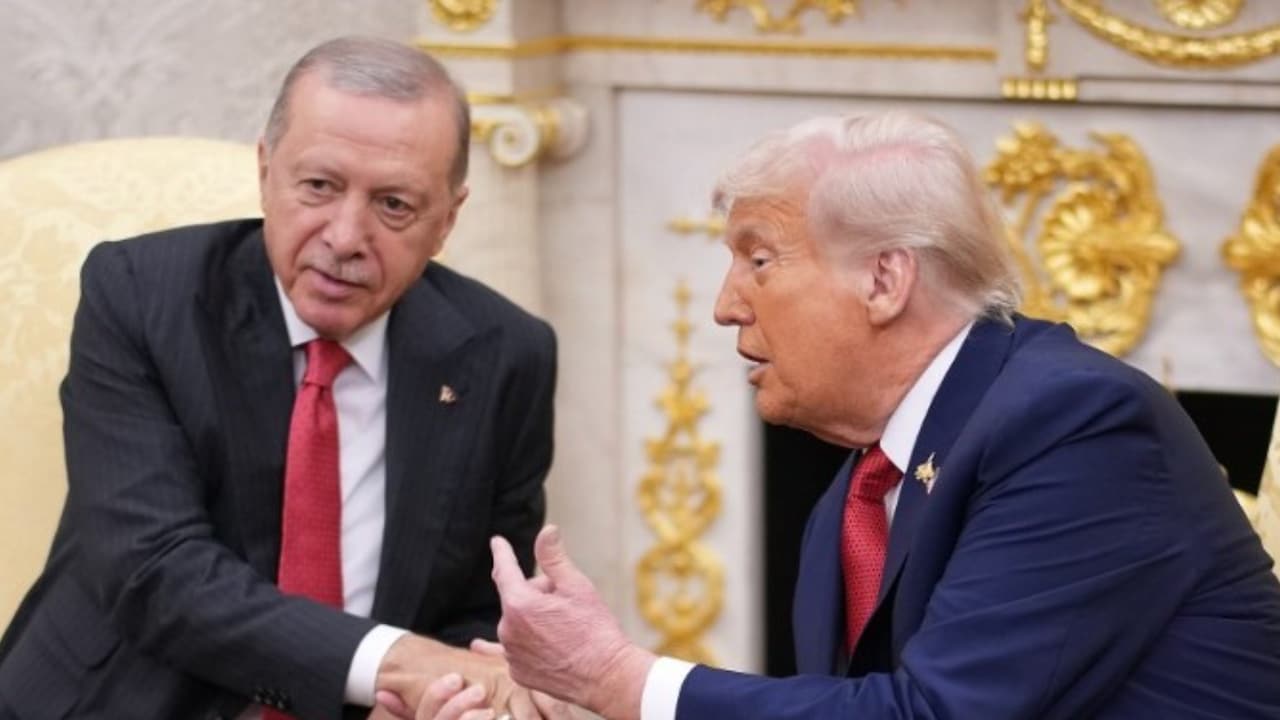
Former US President Donald Trump has welcomed a landmark defence agreement between Saudi Arabia, Türkiye, and Pakistan, sparking global debate over the emergence of an 'Islamic NATO' and its implications for regional security.
- Saudi Arabia, Türkiye, and Pakistan have entered into a strategic defence pact.
- Donald Trump has officially welcomed the move, calling it a 'big, bold, first step'.
- The agreement raises concerns regarding the shifting balance of power in West Asia and India's national security.
In a move that has sent ripples through the geopolitical landscape of West Asia, Saudi Arabia, Türkiye, and Pakistan have forged a comprehensive defence pact. The agreement, which aims to enhance military cooperation, intelligence sharing, and joint strategic planning, has received high-profile endorsement from Donald Trump, who characterized the alliance as a decisive step toward regional stability and autonomy.
The pact comes at a time of heightened volatility in the Middle East, where traditional alliances are being recalibrated. By aligning the military capabilities of Türkiye—a NATO member—with the strategic depth of Saudi Arabia and the nuclear capabilities of Pakistan, the trio is creating a formidable security bloc that could challenge existing power dynamics in the region.
Why This Matters
BozokMedia analysis shows that this alignment is not merely a military arrangement but a signal of a shifting ideological and strategic axis. The potential formation of what analysts are calling an 'Islamic NATO' suggests a desire among these nations to reduce reliance on Western security umbrellas while projecting collective strength in the face of regional adversaries.
"This pact represents a fundamental shift in West Asian diplomacy, moving from bilateral dependencies to a multilateral security architecture that could redefine the India-Israel-UAE axis."
For India, the development is viewed with caution. New Delhi is currently assessing the national security impact, particularly concerning the synergy between Pakistan and its allies. The deepening of ties between Riyadh and Islamabad, now bolstered by Ankara's military expertise, presents a complex challenge for India's strategic interests in the Arabian Sea and beyond.
Furthermore, the pact has highlighted potential fault lines between the UAE and Saudi Arabia. As the 'Mecca Pact' strengthens, the UAE may find itself increasingly aligned with the India-Israel axis to balance the growing influence of this new tripartite alliance.
Historical Background
Historically, Saudi Arabia and Pakistan have shared a deep military bond, often involving the deployment of Pakistani troops for the security of the Saudi kingdom. Türkiye, under President Erdoğan, has aggressively pursued a 'strategic autonomy' policy, seeking to lead the Islamic world. This pact is the culmination of years of incremental alignment between these three powers.
| Feature | Traditional Alliances | New Defence Pact |
|---|---|---|
| Leadership | US-Centric | Multipolar/Regional |
| Focus | Containment | Collective Strategic Autonomy |
| Key Players | USA, Israel, UK | Saudi Arabia, Türkiye, Pakistan |
Frequently Asked Questions
Q1: Is this the official creation of an 'Islamic NATO'?
While not officially named as such, the scale and nature of the defence cooperation lead many geopolitical analysts to describe it as a blueprint for an Islamic military alliance.
Q2: How does this affect India's relationship with Saudi Arabia?
India continues to maintain strong economic ties with Riyadh, but the military alignment between Saudi Arabia and Pakistan necessitates a careful recalibration of India's security strategy.