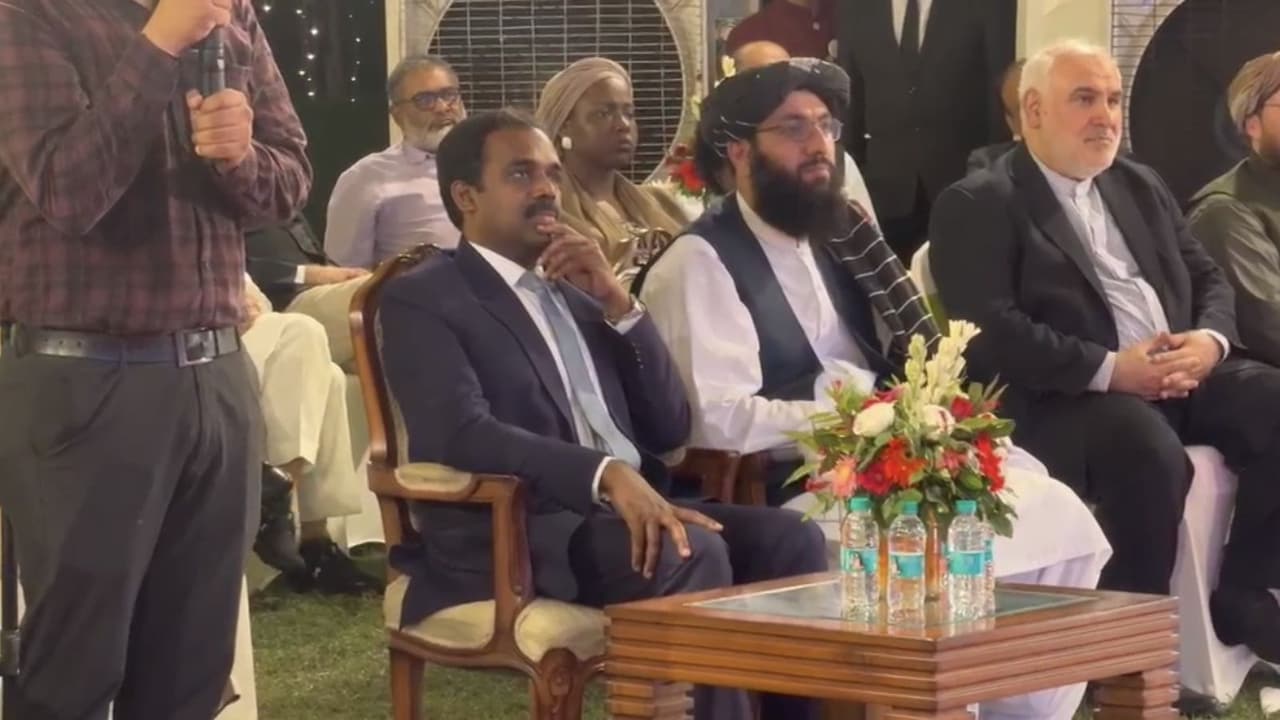
The presence of a Taliban envoy in New Delhi to mark Victory Day signals a strategic shift in India's approach toward Afghanistan. The emphasis on connectivity over competition marks a potential turning point in regional diplomacy.
- Taliban envoy attended Victory Day celebrations in New Delhi, signaling warming ties.
- Afghanistan proposed transforming its geography from a 'field of competition' into a 'bridge for connectivity'.
- India is shifting toward pragmatic engagement to secure strategic interests in Central Asia.
In a significant diplomatic development, the special envoy of the Taliban attended the celebrations of Afghanistan's Victory Day in New Delhi. This event underscores a gradual but palpable shift in India's foreign policy toward the current administration in Kabul. For years, New Delhi maintained a cautious distance, but the recent warmth in diplomatic interactions suggests a move toward functional stability.
During the proceedings, the envoy, Noor, articulated a vision for Afghanistan's foreign policy that centers on its unique geography. He declared that Afghanistan's land should not be a battleground for negative competition between global powers. Instead, he envisioned the nation as a bridge for connectivity, cooperation, and shared prosperity—a sentiment that resonates deeply with India's own strategic goals for the region.
Why This Matters
BozokMedia analysis shows that India is navigating a complex transition from ideological diplomacy to strategic pragmatism. By facilitating such engagements, India is ensuring it remains a relevant stakeholder in Afghanistan's future, preventing a total vacuum that could be filled by adversaries. This approach prioritizes security and trade over formal political recognition.
"The transition from competition to connectivity is the only viable path for long-term stability in the Heart of Asia."
Historically, India has been one of Afghanistan's largest regional donors, investing heavily in projects like the Zaranj-Delaram highway and the Afghan Parliament building. The sudden collapse of the previous government in 2021 left these assets in limbo. The current diplomatic thawing suggests that India is seeking ways to protect its investments and ensure the safety of its interests on the ground.
Furthermore, this engagement is critical for India's 'Connect Central Asia' policy. With the land route through Pakistan remaining largely closed, Afghanistan serves as the primary gateway for India to reach the resource-rich markets of Central Asia via the Chabahar port in Iran.
Frequently Asked Questions
1. Has India officially recognized the Taliban government?
No, India has not granted formal diplomatic recognition but has adopted a policy of 'pragmatic engagement' to maintain stability.
It suggests that Afghanistan is open to regional trade and infrastructure projects, which would benefit India's access to Central Asia.