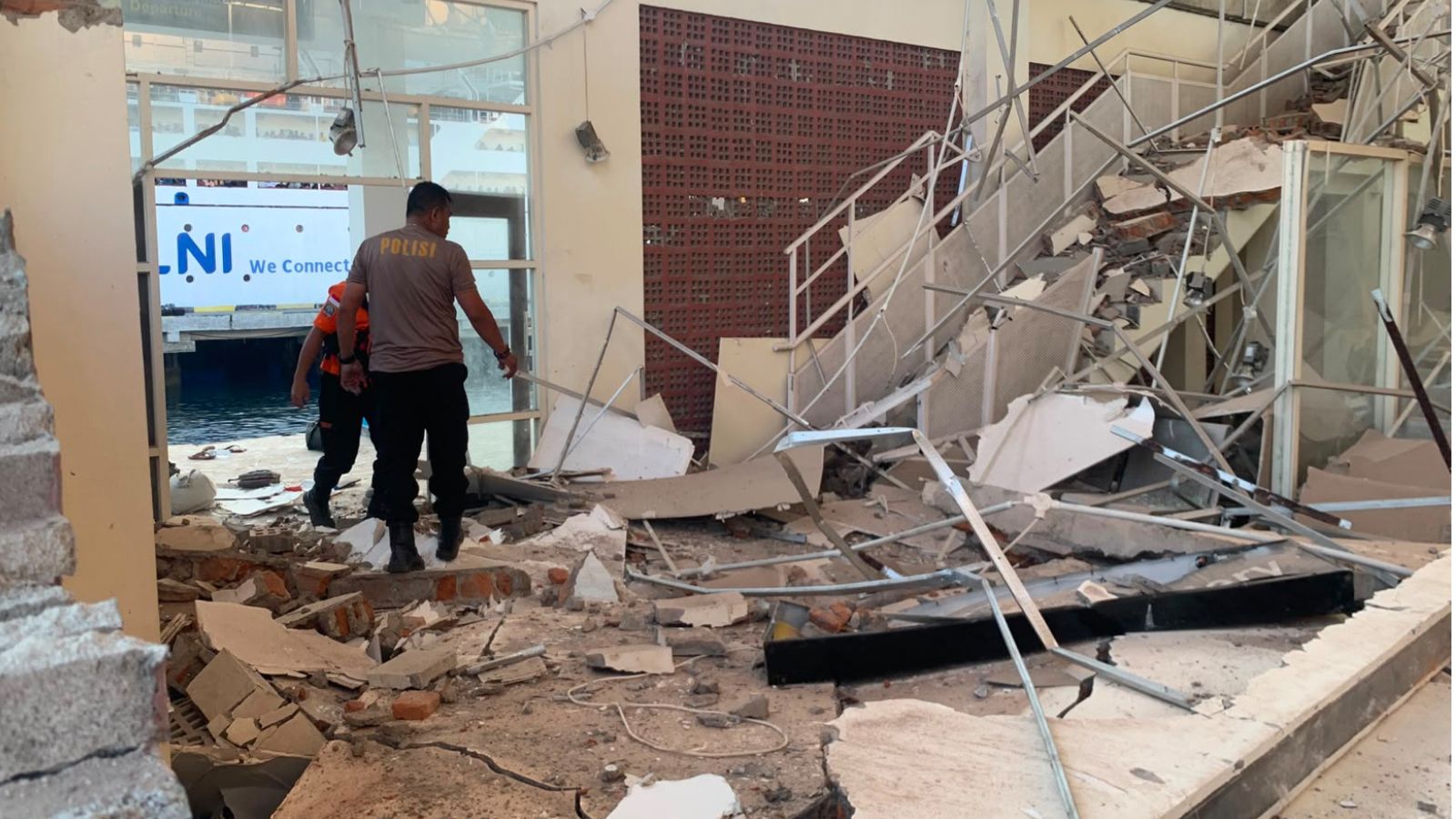
A fresh 5.9 magnitude earthquake has struck Indonesia's Flores region, compounding the devastation of a massive 7.7 magnitude quake from Saturday. The death toll has now climbed to 53 as rescue operations continue.
- A new 5.9 magnitude earthquake struck Flores on Monday at a shallow depth of 10km.
- The death toll from Saturday's 7.7 magnitude quake has risen to 53.
- Over 900 homes destroyed and 5,000 people displaced in East Nusa Tenggara.
- Landslides continue to block the critical Trans-Flores Highway.
The Flores region of Indonesia was rattled once again on Monday by a magnitude 5.9 earthquake, according to Germany’s GFZ Research Centre for Geosciences. The tremor occurred at a shallow depth of 10 km, striking a population already traumatized by a far more catastrophic 7.7-magnitude earthquake that hit the region just two days prior.
Rescue operations are currently in a race against time. Teams are digging through massive landslides and collapsed concrete to find survivors. As of Sunday, six more bodies were recovered, bringing the official death toll to 53. Thousands of displaced residents remain terrified of aftershocks, choosing to sleep in open fields rather than return to their precarious homes.
Why This Matters
BozokMedia analysis shows that the recurrence of seismic activity in such a short window indicates a high level of crustal instability in the Flores region. The psychological impact of constant aftershocks, combined with the physical destruction of critical infrastructure like the Trans-Flores Highway, creates a secondary crisis of isolation. When remote villages are cut off, the window for saving those trapped under rubble closes rapidly, turning rescue missions into recovery missions.
"The shallow nature of these quakes in the Ring of Fire means that even moderate magnitudes can cause disproportionate surface destruction."
The devastation is most acute in the East Nusa Tenggara province. Official reports state that more than 900 homes have been completely leveled, while another 450 sustained significant damage. Approximately 5,000 individuals are currently housed in temporary shelters. In Flores alone, 241 homes were damaged, and 135 people have been injured.
Logistical challenges remain the biggest hurdle for authorities. Fathur Rahman, head of the search-and-rescue office in Maumere, noted that while many landslides have been cleared, communication blackouts and power outages are severely hindering the coordination of aid to the hardest-hit regencies of Manggarai, East Manggarai, and Nagekeo.
Historical Background
Indonesia's geography makes it one of the most disaster-prone nations on Earth. Situated on the Pacific "Ring of Fire", the archipelago is a meeting point for several tectonic plates. Flores has a grim history; a 1992 quake and tsunami claimed roughly 2,500 lives. More recently, the 2004 Indian Ocean tsunami, triggered by a 9.1 magnitude quake, killed 230,000 people across 12 countries, underscoring the region's extreme vulnerability.
| Event | Magnitude/Impact | Outcome |
|---|---|---|
| Saturday Quake | 7.7 Magnitude | 53 Deaths, 900+ Homes Destroyed |
| Monday Quake | 5.9 Magnitude | Increased Panic, Infrastructure Stress |
| 1992 Flores Event | High Magnitude | ~2,500 Deaths |
Frequently Asked Questions
1. Why is Flores so prone to earthquakes?
It is located on the Ring of Fire, a zone of intense seismic activity where tectonic plates constantly shift and collide.
2. What is the current status of the rescue efforts?
Rescuers are focusing on clearing the Trans-Flores Highway to reach isolated villages in Manggarai and Nagekeo.
-1787542995234_v.webp)