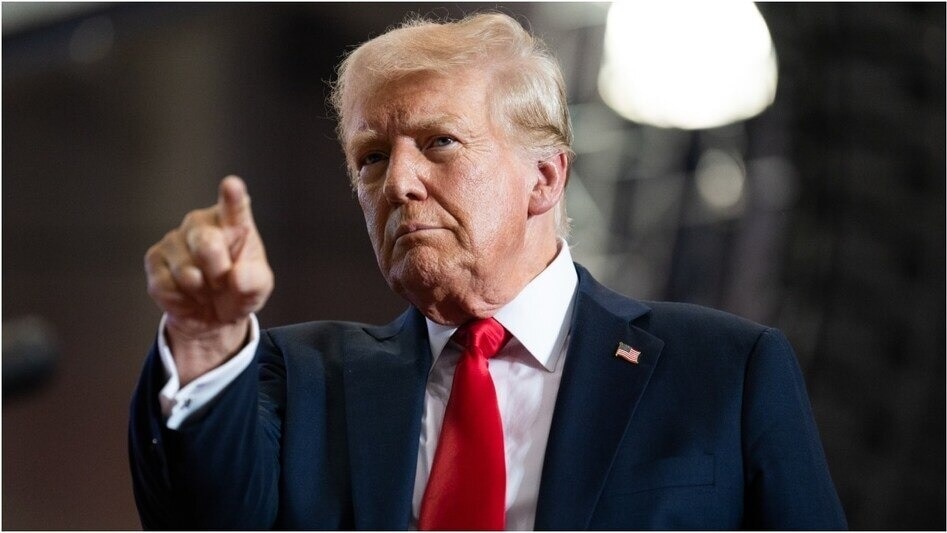
US President Donald Trump has issued a severe warning to Oman following reports that Iran is finalizing a joint shipping transit plan for the Strait of Hormuz. The escalation comes as a critical 60-day peace negotiation deadline expires without a breakthrough.
- Iran and Oman have reached an understanding on a new transit route map for the Strait of Hormuz.
- President Trump threatened to 'bomb' Oman if the Gulf nation obstructs US interests.
- The 60-day Versailles agreement deadline for ending the US-Iran war has expired with no extension.
- Houthi rebels have claimed fresh ballistic missile attacks on Saudi vessels in the Red Sea.
The geopolitical landscape of the Middle East has shifted into a high-alert phase. Iran has announced that it is in the final stages of coordinating a shipping transit plan with Oman. According to Iranian Foreign Ministry spokesperson Esmail Baghaei, an understanding has been reached regarding a route that would allow ships to enter near Iranian waters and exit near Oman, notably without the payment of tolls or fees.
This move has triggered a fierce response from US President Donald Trump. In an interview with Fox News, Trump explicitly threatened to bomb Oman if it "gets in the way" of US objectives. This is not an isolated comment; in May, Trump had previously warned that Oman must "behave just like everybody else" or face devastating military consequences.
Why This Matters
BozokMedia analysis shows that the Strait of Hormuz is the world's most critical oil chokepoint, with nearly 20% of global oil supplies passing through it. Any disruption or unilateral control by Iran and Oman directly threatens global energy security and the US dollar's dominance in oil trade. Trump's aggressive rhetoric is a calculated move to prevent a regional alliance that could bypass US naval hegemony in the Persian Gulf.
"The expiration of the diplomatic deadline combined with Trump's territorial ambitions creates a volatile environment where a single miscalculation could trigger a full-scale regional war."
Simultaneously, internal tensions are rising within the US Navy. The USS Abraham Lincoln aircraft carrier has been deployed at sea for a record-breaking 240 uninterrupted days. Despite reports of deteriorating mental health and supply shortages among the crew, President Trump dismissed these concerns, claiming the ship is "beautifully maintained."
The United Nations has stepped in to urge restraint. Secretary-General António Guterres, through spokesperson Stéphane Dujarric, emphasized that there is no military solution to the conflict and called for both Washington and Tehran to lower their rhetoric and return to peace talks.
Adding to the chaos, the Houthi rebels in Yemen claimed to have attacked Saudi Arabian military boats and ships near the Bab el-Mandeb Strait using ballistic missiles, further destabilizing the Red Sea shipping lanes.
The expiration of the 60-day deadline set at the Versailles agreement marks a failure in the interim deal, which was supposed to address the reopening of the strait and the lifting of the US blockade on Iranian ports.
Frequently Asked Questions
1. What is the proposed Iran-Oman shipping plan?
It is a transit arrangement allowing ships to pass through the Strait of Hormuz via specific routes without paying fees, aimed at reopening the waterway.
2. Why did the 60-day deadline fail?
The US and Iran remained far apart on issues regarding the nuclear program, the lifting of the US blockade, and the control of the Strait of Hormuz.