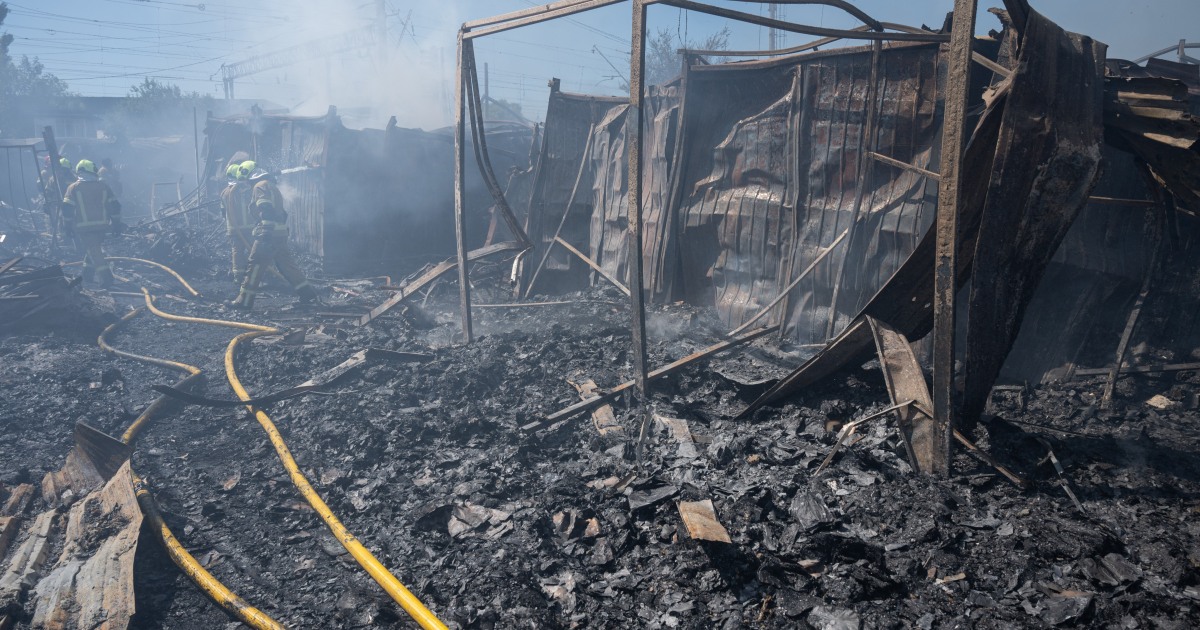
The 60-day peace framework between the United States and Iran has officially expired, leaving the region in a volatile state. Vague language and disputes over the Strait of Hormuz triggered a return to military strikes, erasing hopes for a diplomatic breakthrough.
- The June 17 MoU between President Donald Trump and President Masoud Pezeshkian has officially expired.
- Disputes over maritime routes in the Strait of Hormuz led to renewed military strikes by both nations.
- The agreement failed to address Israel's ongoing military operations in Lebanon and Gaza.
The fragile ceasefire between the United States and Iran has come to an end following the expiration of a Memorandum of Understanding (MoU) on Monday. Brokered in Islamabad, the agreement was intended to serve as a 60-day bridge toward a comprehensive peace deal, but it instead became a catalyst for further friction. While large-scale warfare has seen a temporary lull, the underlying conflict that ignited on February 28 remains dangerously unresolved.
The Anatomy of the Agreement
The 14-point MoU, signed by Donald Trump and Masoud Pezeshkian, promised an immediate termination of military operations on all fronts. The US had pledged to end its naval blockade, remove forces from Iranian borders upon a final deal, and provide a massive $300 billion reconstruction package. In exchange, Iran agreed to clear mines from the Strait of Hormuz, allow free passage for ships, and reaffirm its commitment to avoid nuclear weapons development.
The Catalyst for Collapse: The Strait of Hormuz
The primary trigger for the breakdown was the ambiguous wording regarding maritime sovereignty. Article 5 of the MoU promised "safe passage," but failed to define the exact routes. While Oman proposed a US-backed route, Iran insisted on its own map. When vessels followed the Omani route, Iran launched strikes on those ships, prompting the US to retaliate with two weeks of intensive military operations against Iranian assets.
The MoU was doomed to fail because it was poorly written, granting Iran excessive wiggle room to interpret sovereignty over the Strait of Hormuz and Lebanon.
Why This Matters
BozokMedia analysis shows that this failure is not merely a diplomatic lapse but a systemic clash of geopolitical interpretations. The absence of Israel from the text of the MoU—despite its occupation of Lebanese territory—created a strategic void. Iran viewed the 'all fronts' clause as inclusive of Israeli actions, while the US treated it as a bilateral arrangement, leaving the Hezbollah-Israel conflict to fester without a formal mechanism for resolution.
| Feature | US Commitment | Iran Commitment |
|---|---|---|
| Maritime Access | End naval blockade in 30 days | Clear mines & free passage (60 days) |
| Financials | $300bn reconstruction package | Negotiate uranium enrichment |
| Military | Withdraw forces post-final deal | Cease all operations on all fronts |
The fallout has seen Iran launch attacks on US military assets in Jordan and other Gulf nations, while Israel continues its offensive in Lebanon, occupying nearly one-fifth of the country. The expiration of the MoU leaves the region without a formal diplomatic safety net, increasing the risk of a full-scale regional war.
Frequently Asked Questions
Q: Why did the US-Iran MoU fail so quickly?
A: It failed due to vague language regarding shipping routes in the Strait of Hormuz and the omission of Israel's role in Lebanon, leading to mutual accusations and military strikes.
Q: What happens now that the MoU has expired?
A: There is currently no formal ceasefire or diplomatic framework in place, which increases the likelihood of renewed military escalations between the US, Iran, and their respective allies.