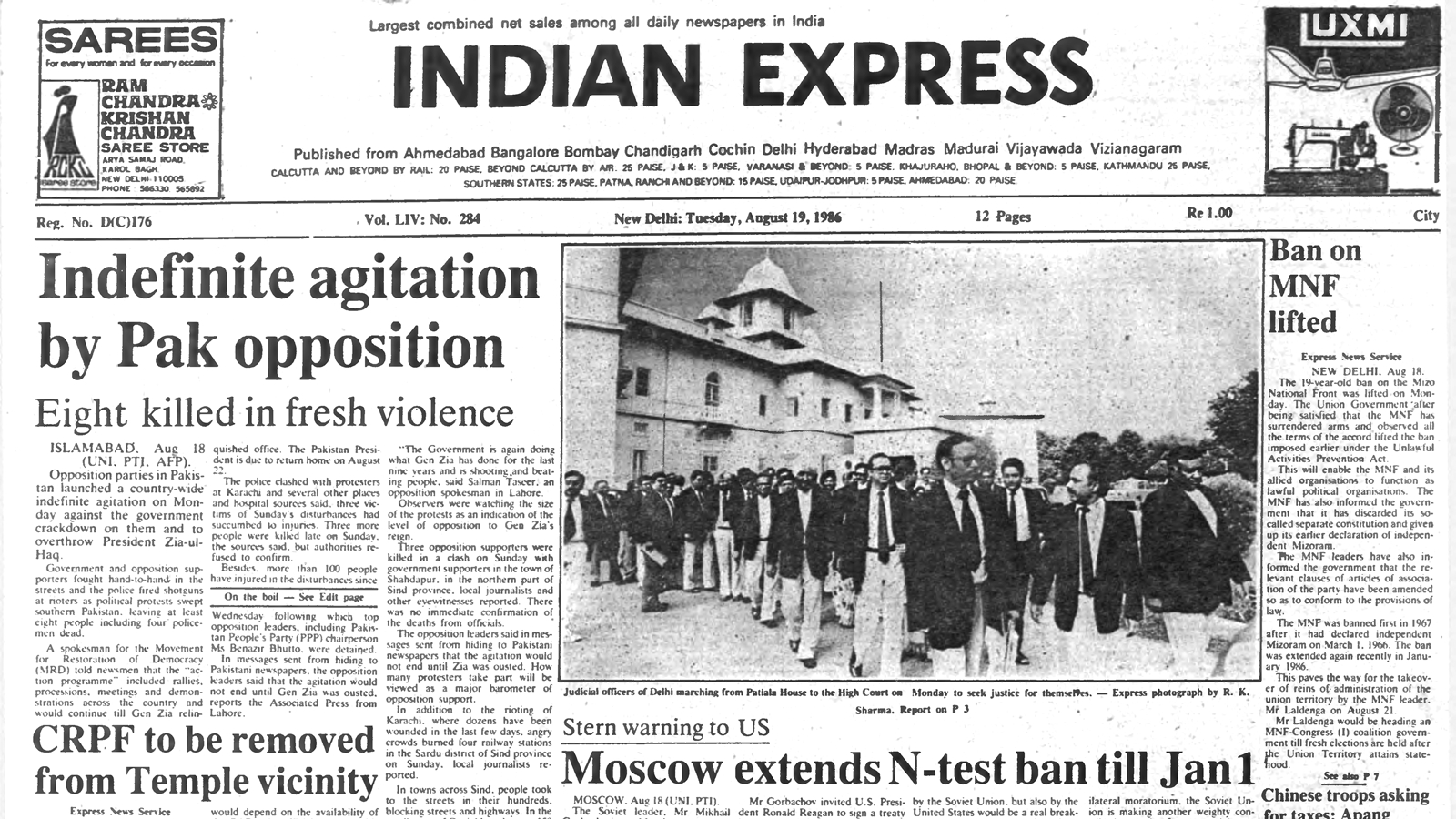
A deep dive into the news of August 19, 1986: From violent anti-Zia protests in Pakistan to the lifting of the MNF ban in India and Gorbachev's nuclear test moratorium.
- Widespread violence in Pakistan during anti-Zia-ul-Haq protests.
- Lifting of the 19-year ban on the Mizo National Front (MNF) in India.
- Soviet leader Mikhail Gorbachev extends the unilateral nuclear test ban.
- PM Rajiv Gandhi announces ₹30 crore relief for Andhra Pradesh flood victims.
Looking back at the headlines from August 19, 1986, we witness a world in significant political transition. The era was defined by intense domestic struggles in South Asia and critical diplomatic maneuvers in the Cold War landscape.
Unrest in Pakistan: The Fight Against Zia-ul-Haq
In 1986, Pakistan was gripped by intense political volatility. Opposition parties launched a countrywide, indefinite agitation aimed at toppling the regime of President Zia-ul-Haq. The protests, which swept through southern Pakistan, escalated into violent street battles between government supporters and opposition activists. The crackdown by law enforcement, including the use of shotguns against rioters, resulted in a tragic loss of life, with at least eight people, including four policemen, confirmed dead.
Why This Matters
BozokMedia analysis shows that the 1980s in Pakistan were characterized by a deep-seated tension between military rule and the yearning for democratic restoration. These agitations were precursors to the complex political shifts that would define the country for decades to come.
The 1986 protests represented a critical breaking point in the struggle for democratic legitimacy in Pakistan.
India: Peace in Mizoram and Flood Relief
Domestically, India witnessed a significant milestone in its internal security and peace processes. The 19-year ban on the Mizo National Front (MNF) was officially lifted. Following the MNF's decision to surrender arms and adhere to the terms of the peace accord, the Union government removed the restrictions previously imposed under the Unlawful Activities (Prevention) Act. This allowed the MNF to transition from a militant group to a legitimate political entity.
Simultaneously, the humanitarian crisis in Andhra Pradesh prompted immediate action from the central government. Prime Minister Rajiv Gandhi announced a substantial relief package of ₹30 crore from the PM Relief Fund to assist in the rehabilitation of those devastated by massive flooding.
Global Diplomacy: The Nuclear Moratorium
On the international stage, the Cold War dynamics were shaped by Soviet leader Mikhail Gorbachev. He announced the extension of Moscow's unilateral moratorium on nuclear testing until January 1, 1987. In a strategic move to prevent an arms race, Gorbachev urged US President Ronald Reagan to follow suit and sign a comprehensive treaty banning all nuclear testing, arguing that a halt in testing would prevent the continuous upgrading of massive nuclear stockpiles.
Frequently Asked Questions
Question 1: What was the cause of the violence in Pakistan in 1986?
Answer: The violence was triggered by nationwide protests against the military government of President Zia-ul-Haq.
Question 2: Why did Gorbachev want to ban nuclear testing?
Answer: He believed that stopping tests would prevent both the US and USSR from upgrading their existing nuclear weapon stockpiles.