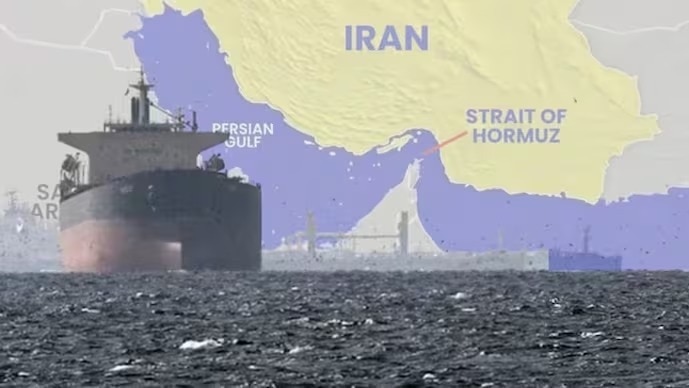
A massive shift in maritime logistics has been observed as over 80% of commercial vessels avoid Iranian waters in the Strait of Hormuz, opting for the US-authorized Oman route instead.
- Shipping firm Kpler reports an 80% diversion of commercial vessels away from Iranian routes.
- Ships are prioritizing the Oman coastal route due to US Navy protection and safety.
- Iran's ability to collect transit tolls is significantly undermined by this shift.
- The rise of 'dark traffic' via disabled transponders is complicating real-time tracking.
In a significant blow to Tehran's maritime leverage, the Strait of Hormuz—one of the world's most critical chokepoints—is seeing a massive exodus of commercial shipping. According to data from the shipping tracking firm Kpler, over 80% of commercial vessels have diverted from the Iranian-controlled paths to the US-authorized Oman route over the last two weeks.
This strategic shift occurs amidst escalating tensions between the United States and Iran. For years, Tehran has attempted to assert dominance over this waterway, often using the threat of interference to demand transit fees or exert political pressure. However, the widespread adoption of the Oman route suggests that the international shipping community is finding ways to bypass Iranian influence entirely.
Why This Matters
BozokMedia analysis shows that this trend signals a fundamental change in the power dynamics of the Middle East. As commercial entities move toward routes protected by the US Navy, Iran's primary tool of economic coercion—the ability to disrupt or tax oil flow—is being rendered increasingly ineffective. This diversion provides a much-needed safety buffer for global energy supplies, though it adds complexity to logistics.
Iran has lost at least partial control over the strait as vessels actively avoid its routes to escape tolls and risks.
Humayun Falakshahi, head of crude oil analysis at Kpler, noted that just a month ago, shipping activity on the Oman route was negligible. The sudden surge indicates a calculated move by global operators to mitigate risk. To further evade detection and potential Iranian aggression, many tankers have been operating with their transponders turned off, creating a phenomenon known as 'dark traffic' that makes accurate tracking via satellite extremely difficult.
Major oil producers, including Kuwait, Saudi Arabia, and the UAE, have also adapted. They are utilizing Very Large Crude Carriers (VLCCs) to transport oil through the Persian Gulf and then transferring it to other tankers in the Gulf of Oman, effectively staying clear of the high-risk zones controlled by Iran.
While former President Donald Trump has claimed that the US Navy maintains total control over the strait, current data suggests a more nuanced reality. US Energy Secretary Chris Wright noted that while oil flow remains near pre-war levels (approx. 15 million barrels per day vs 20 million), the volatility remains high. This implies that neither the US nor Iran holds absolute, undisputed control over the waterway.
Furthermore, direct negotiations between Iran and Oman regarding navigation freedom are reportedly underway. The fact that these talks are happening without direct US involvement has reportedly caused friction in Washington, highlighting the complex diplomatic dance occurring in the region.
Frequently Asked Questions
1. Why are ships avoiding the Iranian route?
Vessels are avoiding the risk of Iranian seizure and the imposition of transit tolls by using the safer, US-protected Oman route.
2. What is 'dark traffic' in shipping?
Dark traffic refers to ships that turn off their AIS (Automatic Identification System) transponders to hide their location and avoid detection in high-risk zones.