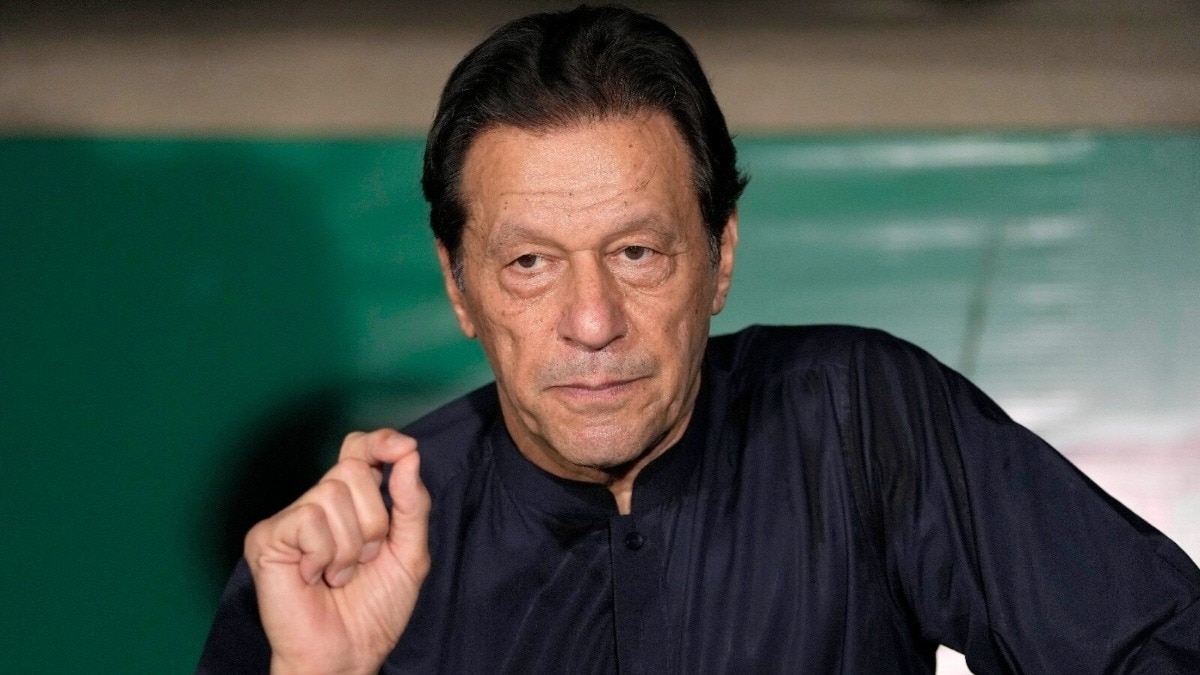
A close aide of jailed former Pakistani Prime Minister Imran Khan has revealed that Khan would not seek a confrontation with the country's powerful military chief, General Asim Munir, if he is released from prison. This strategic shift could pave the way for a potential de-escalation of Pakistan's prolonged political crisis.
- Imran Khan will not adopt an aggressive stance against Army Chief Gen Asim Munir upon his release.
- According to his aide, the former PM desires national political stability over personal vendettas.
- This strategic move aims to lower tensions with the military establishment and facilitate his release.
In an exclusive disclosure that could reshape the volatile political landscape of Pakistan, a close aide to jailed former Prime Minister Imran Khan has revealed that Khan is prepared to adopt a non-confrontational approach toward the country's powerful army chief, General Asim Munir, once he is released from prison. This marks a significant departure from the fiery, anti-establishment rhetoric that has defined Khan's political campaign over the last two years.
Imran Khan, the charismatic founder of the Pakistan Tehreek-e-Insaf (PTI) party, has been incarcerated since August 2023. He faces a barrage of legal challenges, ranging from corruption allegations in the Toshakhana case to charges of leaking state secrets under the Official Secrets Act. Khan and his legal team have consistently maintained that these charges are politically motivated, designed by the military establishment to keep him and his party away from the levers of power.
The military has long been the ultimate arbiter of power in Pakistan, having ruled the South Asian nation directly for nearly half of its history since independence in 1947. Khan's relationship with the military, which was initially seen as supportive during his rise to power in 2018, soured dramatically before his ouster in a parliamentary no-confidence vote in April 2022. His subsequent direct attacks on top military brass created an unprecedented rift.
| Strategic Aspect | Past Stance (2022-2023) | Reported Current Stance (2024) |
|---|---|---|
| Stance on Military Leadership | Direct and aggressive confrontation; public criticism of the Army Chief. | Non-confrontational policy; willingness to engage in constructive dialogue. |
| Political Strategy | Mass street protests, rallies, and active defiance of state institutions. | Focus on constitutional processes and seeking national stability. |
According to the close aide, Imran Khan's primary objective now is not vengeance but the restoration of political and economic stability in Pakistan. The aide emphasized that Khan is fully aware of the toll the ongoing political deadlock is taking on the country's fragile economy. By offering an olive branch, Khan hopes to signal to the military that he is willing to operate within the constitutional framework without targeting individual military leaders.
Why This Matters
BozokMedia analysis shows that this strategic pivot by Imran Khan represents a highly pragmatic attempt to break Pakistan's deep-seated political deadlock. By signaling a non-confrontational approach toward General Asim Munir, Khan is attempting to lower the political temperature and offer the military establishment a face-saving exit strategy. This gesture could lower the barriers to his release and allow PTI to rejoin the mainstream political process ahead of future electoral cycles.
The history of civilian-military relations in Pakistan is a complex saga of power struggles, where no civilian prime minister has ever completed a full five-year term. Analysts view Khan's latest stance as a tactical retreat—stepping back to survive and eventually fight another day. If the military establishment views this gesture as genuine, it could pave the way for a grand political settlement that has eluded the country for years.
"This shift suggests a realization within PTI that direct confrontation with the military establishment is a losing battle in Pakistan's deeply entrenched political landscape."
Currently, the coalition government led by Prime Minister Shehbaz Sharif and the military leadership have not issued an official response to these statements. Pakistan's economy remains in a precarious state, heavily reliant on a multi-billion dollar bailout program from the International Monetary Fund (IMF). In this context, political stability is not just a domestic necessity but a prerequisite for international financial confidence.
Frequently Asked Questions
Q1: Why is Imran Khan currently in prison?
A1: Imran Khan is serving sentences related to multiple convictions, including corruption (Toshakhana case) and leaking state secrets (Cipher case), which he and his supporters claim are politically motivated to keep him out of politics.
Q2: What is the significance of his non-confrontational stance toward the Army Chief?
A2: The military is Pakistan's most powerful institution. By offering a truce to Army Chief General Asim Munir, Khan is opening a realistic pathway for political dialogue, potential legal relief, and a return to mainstream politics.