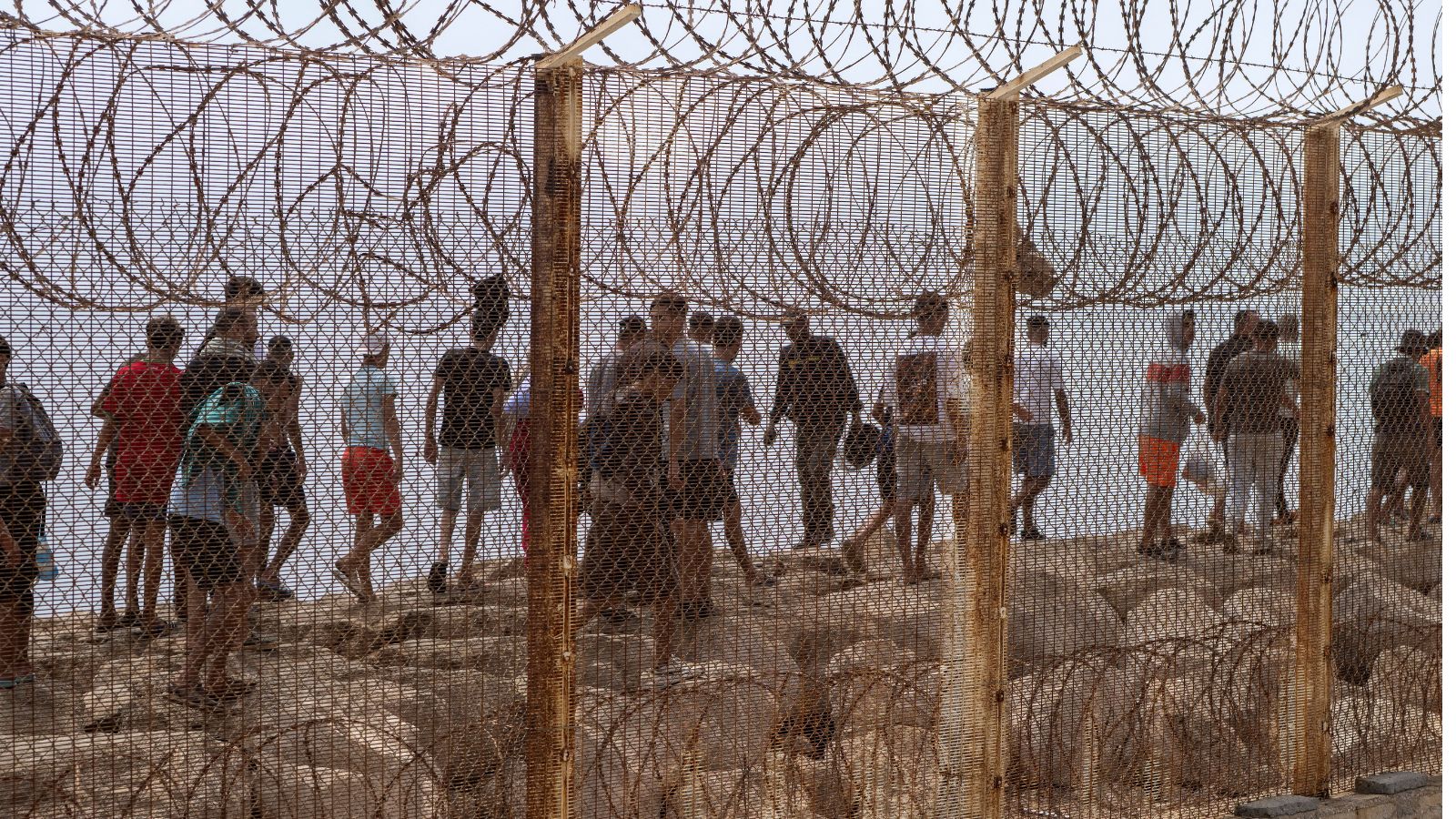
The recent tragedy at the Ceuta border highlights a chilling shift in political discourse, where human lives are reduced to mere legalities and security threats.
- The Ceuta border tragedy resulted in nearly 150 deaths, highlighting a massive humanitarian crisis.
- European political leaders are increasingly using dehumanizing language like 'invasion' and 'illegal'.
- Scientific data contradicts the myth that immigration leads to higher crime rates.
The image of Faten Ben Omar El Azizi—a young woman, a footballer, a dreamer—drowning while attempting to cross into the Spanish exclave of Ceuta, serves as a haunting metaphor for the modern migration crisis. Her story is one of thousands; according to the International Organization for Migration (IOM), at least 3,400 people died or went missing last year while attempting to reach Europe.
While a natural human response to such loss would be grief or shock, the reaction from the European political establishment has been strikingly different. Instead of empathy, the discourse is dominated by a vocabulary of exclusion. From Spain’s Pedro Sánchez discussing 'territorial integrity' to US President Donald Trump labeling migration an 'invasion,' the focus has shifted from human suffering to border security and legality.
Why This Matters
BozokMedia analysis shows that the labeling of individuals as 'illegal' is a political construct rather than a human reality. By reducing complex human journeys to legal statuses, states effectively strip migrants of their inherent natural rights, treating them as threats to be managed rather than people to be helped.
Migration is an ancient human phenomenon, but the discourse around it today is confined within a remarkably narrow and young framework of borders.
One of the most persistent myths used to justify harsh border policies is the link between immigration and crime. However, empirical evidence suggests otherwise. Studies across 21 European countries and data from 30 OECD nations have found no statistical evidence that rising immigration increases violent or property crime. In many cases, undocumented immigrants commit crimes at lower rates than native-born populations.
There is a profound historical irony at play. The very nations now tightening their borders were once the world's primary movers. During the eras of colonial expansion, European mobility was framed as 'exploration' or 'empire-building.' The movement of people was seen as a sign of progress, even when it involved the displacement of indigenous populations across the Americas, Africa, and Asia.
Frequently Asked Questions
1. Does immigration increase crime rates in host countries?
Extensive research from OECD countries shows no statistical link between increased immigration and higher rates of violent or property crime.
2. What happened at the Ceuta border?
A massive humanitarian crisis occurred at the Morocco-Spain border, resulting in numerous deaths of migrants attempting to cross into Europe.