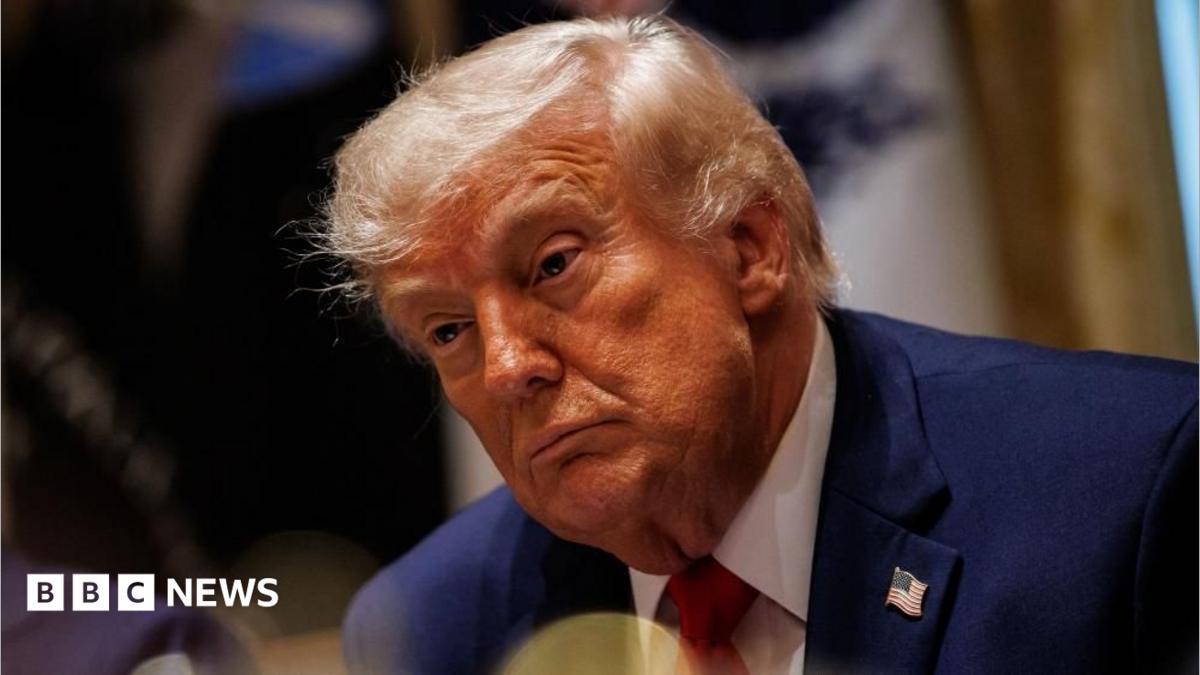
President Donald Trump has vowed an 'economic D-Day' to break the deadlock with Iran, threatening severe consequences for any nation continuing to trade with Tehran. The strategy aims to expand the 'economic blast radius' to third-party countries.
- Trump administration has declared an 'economic D-Day' targeting Iran's economic lifelines.
- Treasury Secretary Scott Bessent will reveal specific mechanics on August 24.
- The policy targets third-party countries (allies or foes) engaging in oil or financial transfers with Iran.
- Iran has a proven track record of using 'shadow vessels' to bypass existing sanctions.
Nearly six months after President Donald Trump promised a swift victory over Iran, the conflict has reached a strategic standstill. With military options and diplomatic settlements appearing increasingly unlikely, the administration is pivoting toward a massive economic offensive known as 'Economic D-Day.'
The core of this strategy involves targeting not just Iran, but any nation that facilitates its economy. US Treasury Secretary Scott Bessent has signaled a hardline stance, stating in a CNBC interview that the US is prepared to exert its full might against any entity—friend or foe—extending a lifeline to Tehran. "You are either with us or against us," Bessent warned, specifically mentioning oil transfers and financial transactions.
Why This Matters
BozokMedia analysis shows that this represents a shift from traditional sanctions to a more aggressive 'secondary sanction' model. By leveraging the global dominance of the US dollar, Washington aims to force third-party nations like China or Turkey to choose between Iranian trade and access to the US financial system.
This is a recognition that the US is almost stuck in this war; it is another attempt at maximizing economic pressure.
Vice-President JD Vance has characterized this as a "new phase" of the conflict, asserting that economic pressure is the most effective tool at the administration's disposal. This coincides with 'Operation Economic Fury,' a dual-pronged campaign combining Treasury-coordinated sanctions with a naval blockade of Iranian ports to choke regime financial flows.
However, experts remain skeptical about the effectiveness of these measures. Imran Bayoumi of the Atlantic Council suggests that the US lacks a clear overarching strategy, making this move look like a reaction to mounting frustration. Furthermore, the ability of Iran to adapt has been proven over decades of isolation.
| Strategy Component | Mechanism | Primary Objective |
|---|---|---|
| Operation Economic Fury | Naval Blockade & Treasury Sanctions | Disrupting Iranian ports and direct regime cash flow |
| Economic D-Day | Secondary Sanctions on Third Parties | Expanding the 'blast radius' to global trading partners |
Sanctions expert Michael Parker notes that the new strategy aims to expand the "economic blast radius" by targeting anyone touching the US dollar in connection with Iran. This makes the conflict much more complex, as it directly involves the economic sovereignty of other nations.
The success of this campaign hinges on international compliance. As Mohammed Hammouda of the London Stock Exchange points out, Iran is incredibly adept at using "shadow" vessels and irregular commercial fronts to circumvent rules. If major players like China refuse to comply, the sanctions may fail to achieve long-term strategic goals.
Frequently Asked Questions
1. What is the goal of 'Economic D-Day'?
The goal is to force Iran into submission by cutting off all international trade, including from third-party countries.
2. How will the US enforce these sanctions?
The US will likely use the threat of losing access to the US dollar-based financial system to compel compliance from foreign banks and nations.