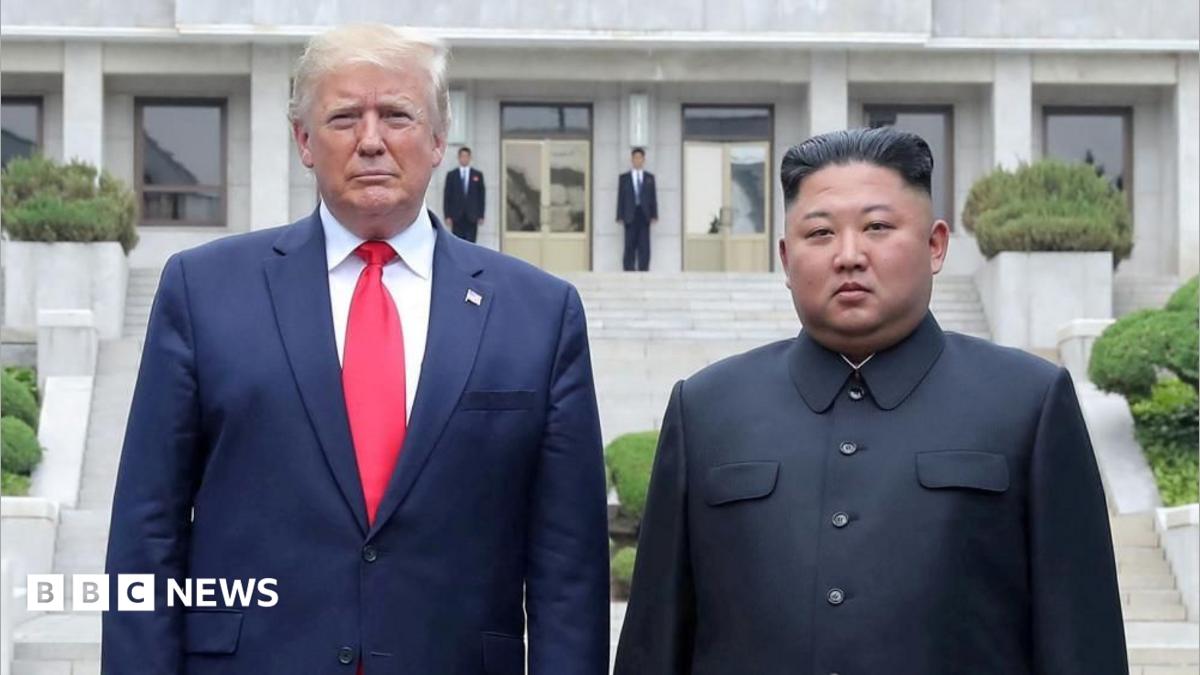
US President Donald Trump's sudden decision to scale down military drills with South Korea has sent shockwaves through the region, raising fears about the future of US security guarantees in Asia.
- President Donald Trump ordered a substantial reduction in the 'Ulchi Freedom Shield' military exercises.
- Trump labeled the drills as 'inappropriate and hostile' towards North Korea.
- The sudden move has caused uncertainty among allies like Japan and Taiwan.
- There is growing domestic pressure in South Korea to develop independent nuclear deterrence.
In a move that has blindsided regional allies, US President Donald Trump has ordered the Pentagon to significantly scale down the annual 'Ulchi Freedom Shield' military exercises with South Korea. The drills, which involve 18,000 South Korean troops and multiple allies, were halted with only half the program completed, following Trump's assertion that the exercises were 'inappropriate and hostile' toward North Korea.
The suddenness of this decision caught Seoul off guard. While South Korean Foreign Minister Cho Hyun attempted to frame the decision as a mutual agreement, he admitted that officials were not pre-informed of Trump's intent to curtail the drill. This unilateral shift has sent ripples of anxiety through Japan and Taiwan, nations that rely heavily on the umbrella of US security guarantees in the Indo-Pacific.
Why This Matters
BozokMedia analysis shows that Trump is fundamentally reshaping the concept of alliance management by blurring the lines between national security and economic leverage. By treating military cooperation as a negotiable trade asset, the US risks alienating long-term strategic partners.
Trump's unpredictable diplomacy could inadvertently push South Korea toward independent nuclearization.
The geopolitical stakes are heightened by Trump's desire to rekindle a personal rapport with North Korean leader Kim Jong Un. While Seoul has historically supported diplomatic outreach, the current administration's approach—linking security drills to trade grievances and demands for military assistance in Iran—has created a volatile environment for the ROK-US alliance.
Historically, the two Koreas have remained technically at war since the 1950s. While the North has recently pivoted its ideology away from reunification, its military posture has become increasingly aggressive, recently launching ballistic missiles toward Japan and codifying nuclear use in its constitution.
Frequently Asked Questions
1. Why did Trump stop the military exercises?
Trump stated the exercises were too costly and acted as a hostile provocation toward North Korea, preferring a diplomatic approach with Kim Jong Un.
2. How is South Korea reacting?
President Lee Jae Myung has praised the move as a 'bold decision' for peace, but many experts suggest it may force Seoul to seek its own nuclear capabilities.
| Issue | South Korea's Stance | Trump Administration's Stance |
|---|---|---|
| Military Drills | Essential for deterrence | Costly and provocative |
| Security vs Trade | Separate issues | Interconnected/Negotiable |