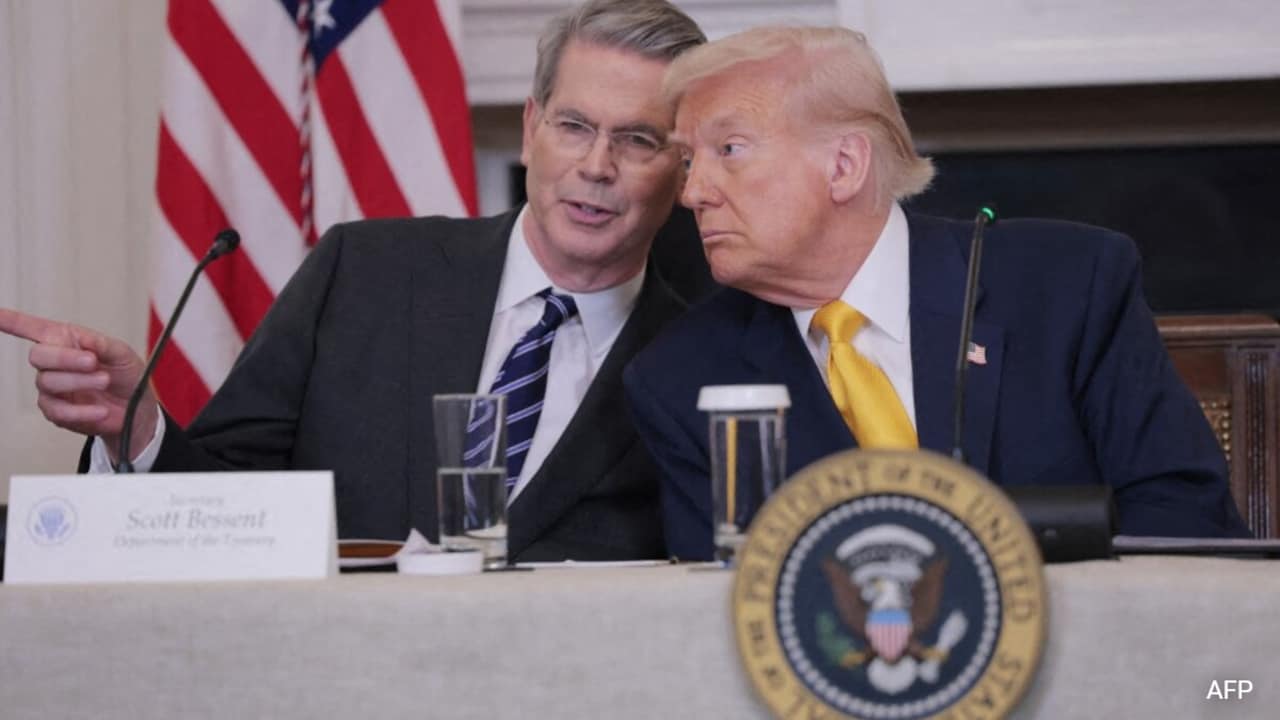
US Treasury Secretary Scott Bessent has announced a massive economic offensive aimed at toppling the Iranian government through unprecedented sanctions and blockades.
- The US is preparing to implement the most stringent economic sanctions in history against Iran.
- Treasury Secretary Scott Bessent issued an ultimatum: nations must choose between aligning with the US or trading with Iran.
- The reopening of the Strait of Hormuz remains a critical objective for global energy stability.
In a high-stakes declaration from Washington, US Treasury Secretary Scott Bessent has signaled a massive escalation in the economic warfare against Tehran. Speaking to CNBC, Bessent stated that a new series of coordinated economic measures is designed to "collapse" the Iranian regime, describing the strategy as the "greatest coordinated economic isolation in the history of the world."
The announcement follows a similar vow from President Donald Trump, who promised the most crushing economic operation ever directed at a nation. Bessent emphasized a "one-two punch" strategy consisting of a physical blockade and the implementation of the "toughest sanctions in history." This aggressive stance comes amid a nearly six-month-long conflict involving US and Israeli operations against Iranian interests.
Why This Matters
BozokMedia analysis shows that the US is shifting from traditional targeted sanctions to a policy of total economic exclusion. By threatening secondary sanctions against any nation involved in transferring money, buying oil, or providing maritime transport to Iran, the US is attempting to create a global embargo that could reshape international trade alliances.
"The US is no longer just sanctioning a regime; it is attempting to weaponize the entire global financial system to enforce its geopolitical will."
A central component of this tension is the Strait of Hormuz. Since the conflict escalated on February 28, Iranian forces have restricted passage through this vital waterway, causing global oil prices to surge. Bessent noted that while the US aims to reopen the strait, countries like China—which relies on the Gulf for 50% of its energy—must decide whether to cooperate with the US or face potential economic consequences.
Historical Background
The US has maintained a policy of containment and isolation against Iran for decades. The current administration has intensified these efforts by designating individuals associated with groups like Hezbollah for sanctions. Despite these efforts, many geopolitical analysts remain skeptical about whether economic pressure alone can achieve the ultimate goal of regime change in Tehran.
Frequently Asked Questions
1. What is the US strategy to destabilize Iran?
The strategy involves a combination of a naval/physical blockade and the most severe economic sanctions ever recorded to isolate the regime.
2. Will the US target China for trading with Iran?
While Bessent did not give a direct answer, he warned that the US government would use its "full might" against anyone conducting business with Iran, including oil transfers and shipping.