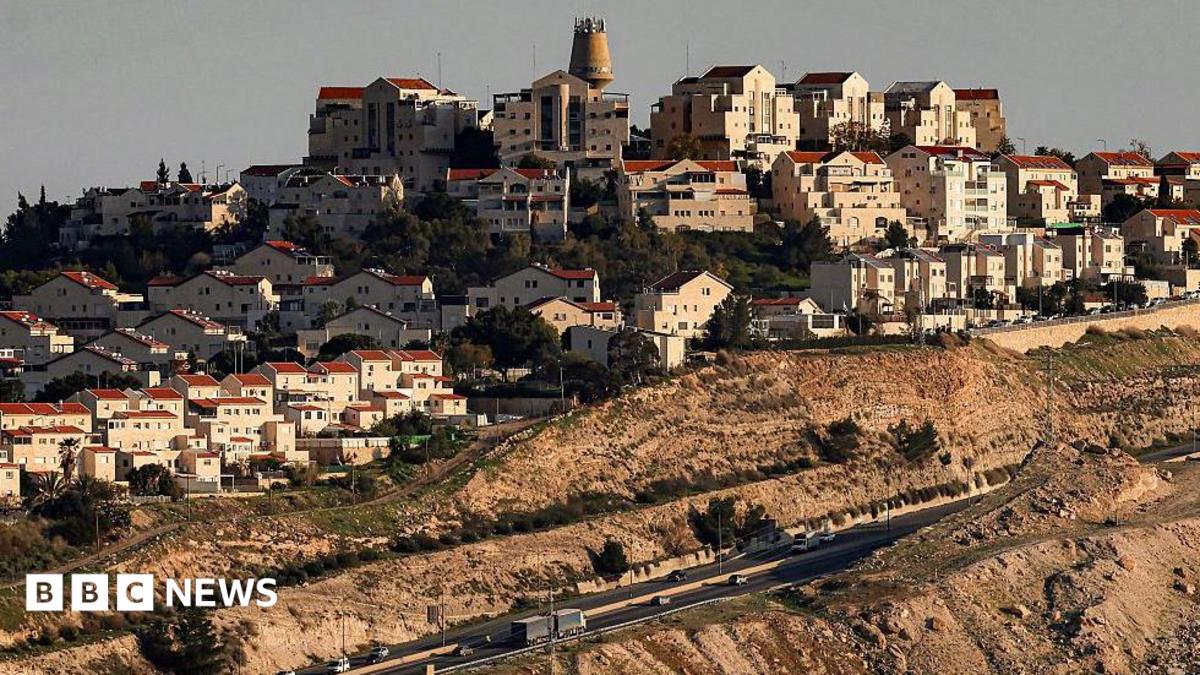
A coalition of major Western powers, including the UK, France, and Canada, has denounced Israel's plan to expand settlements in the strategic E1 area of the West Bank as 'unacceptable'.
- Israel has opened tenders for 1,200+ new settlement homes in the strategic E1 area.
- UK, France, Germany, Italy, and Canada issued a joint condemnation calling the move 'unacceptable'.
- The expansion threatens the viability of a contiguous Palestinian state and the two-state solution.
- The timing coincides with Israel's upcoming general elections on October 27.
Israel's decision to open tenders for the construction of approximately 1,200 settlement homes in a strategically vital part of the occupied West Bank has ignited a firestorm of international condemnation. In a coordinated diplomatic move, the UK, France, Germany, Italy, and Canada issued a joint statement labeling the decision "unacceptable" and urging Israel to retract the plans immediately.
Under international law, all Israeli settlements in occupied territories are considered illegal. For decades, international pressure had successfully kept the E1 project—located east of Jerusalem—at bay. However, the Israeli housing ministry has now proceeded with bids for 1,234 housing units covering roughly 12 square kilometers between East Jerusalem and the Maale Adumim settlement.
Why This Matters
BozokMedia analysis shows that this expansion is not merely a residential project but a geopolitical maneuver that could fundamentally alter the map of the Middle East. By building in the E1 zone, Israel effectively creates a wedge that would bisect the West Bank, isolating East Jerusalem from the northern and southern Palestinian territories. This would effectively dismantle the geographical possibility of a contiguous Palestinian state.
The E1 plan poses an existential threat to a contiguous Palestinian state.
The diplomatic fallout has been swift. The UN Secretary-General and the Foreign Minister of Belgium have echoed the concerns of the Western coalition, warning of the long-term implications for regional peace. Meanwhile, Israeli Finance Minister Bezalel Smotrich has signaled a hardline stance, suggesting that the very idea of a Palestinian state is being systematically erased.
Historical Background
Since the 1967 Middle East war, Israel has established approximately 160 settlements in the West Bank and East Jerusalem, currently housing around 700,000 Jewish residents. These areas are also home to an estimated 3.3 million Palestinians who seek them as the foundation for a future sovereign state. Settlement expansion has accelerated significantly under Prime Minister Benjamin Netanyahu's current right-wing coalition.
| Factor | Palestinian Perspective | Israeli Settlement Perspective |
|---|---|---|
| Territorial Goal | Contiguous Sovereign State | Strategic Depth and Expansion |
| Legal Status | Protected under International Law | Contested/Illegal under International Law |
The timing of these tenders is highly significant. With a deadline for bids set for October 19, just days before Israel's general election on October 27, the current government is creating a 'fait accompli' that would be extremely difficult for any subsequent administration to reverse.
Frequently Asked Questions
1. Why is the E1 area so controversial?
The E1 area is critical because its development would cut the West Bank in two, preventing Palestinian connectivity.
2. What is the international legal stance on settlements?
The majority of the international community considers settlements in occupied territories to be illegal under international law.
