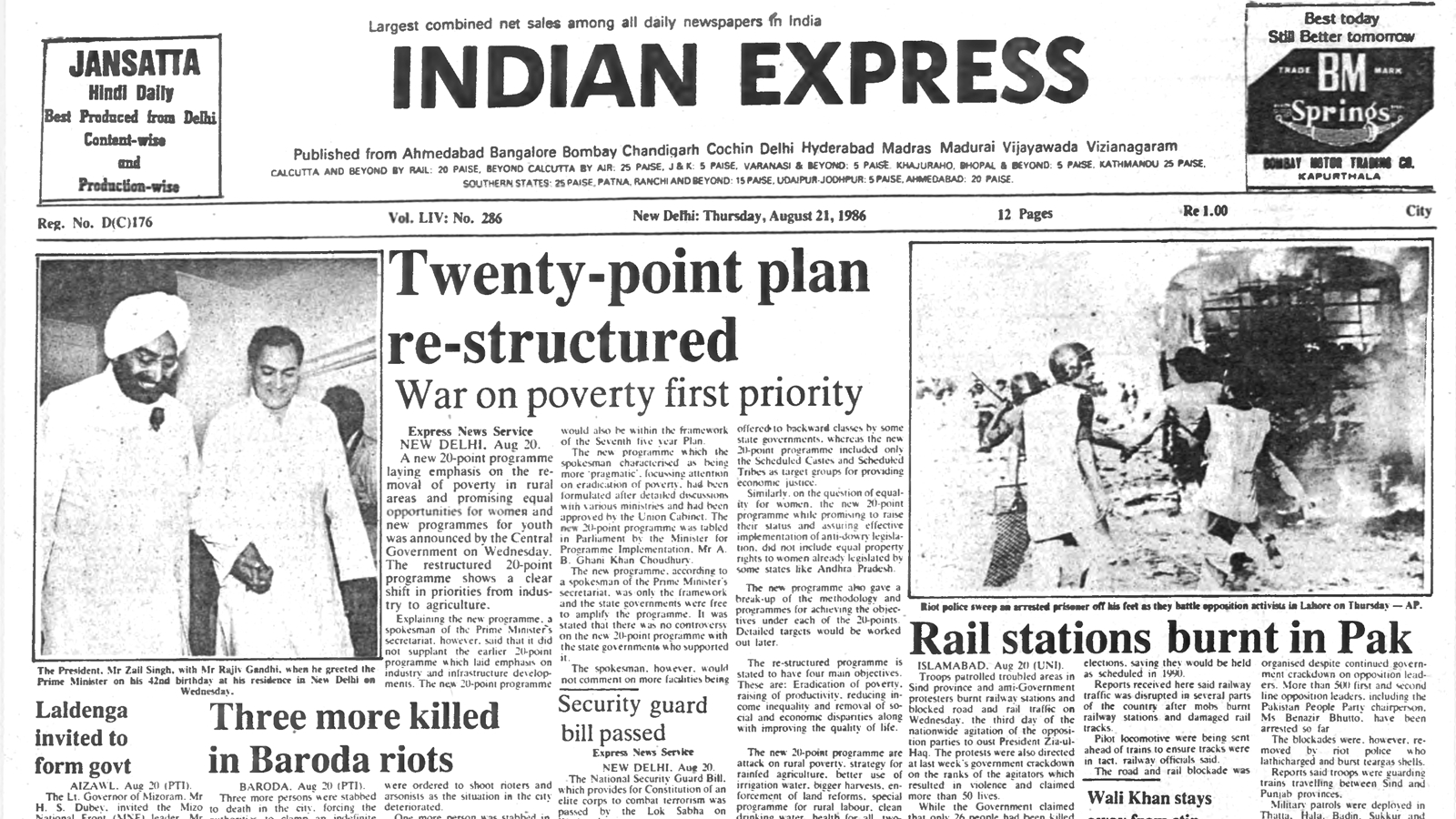
A deep dive into the historic headlines of August 21, 1986, covering India's shift toward agriculture, the unrest in Pakistan, and Reagan's stance on Nicaragua.
- The Indian Government announced a new 20-point program prioritizing rural poverty removal and agriculture.
- Massive anti-government protests in Pakistan against President Zia-ul-Haq led to violence.
- U.S. President Reagan issued a blunt warning regarding the situation in Nicaragua.
- The Punjab government waived ₹300 crore in farmer debts.
On August 21, 1986, the geopolitical landscape was marked by significant shifts in both domestic and international policy. In India, the Central Government announced a restructured 20-point program. This landmark initiative signaled a decisive shift in national priorities, moving the focus from heavy industrialization toward agriculture and the eradication of rural poverty. The plan specifically promised new developmental frameworks for women and youth, aiming to stabilize the agrarian economy.
Simultaneously, the neighboring nation of Pakistan was engulfed in chaos. Nationwide agitations led by opposition parties aimed to oust President Zia-ul-Haq. The protests turned violent, with demonstrators burning railway stations and blocking essential transport routes in the Sindh province. This wave of civil unrest, which claimed over 50 lives, highlighted the deep-seated political instability within the country at the time.
Why This Matters
BozokMedia analysis shows that the policy decisions of the mid-1980s laid the groundwork for modern economic structures in South Asia. The pivot toward rural development in India was a precursor to various later agrarian reforms, while the instability in Pakistan continues to be a studied case of regime resistance and civil unrest.
The 1986 policy shift toward agriculture was a foundational moment in India's struggle to balance industrial growth with food security.
On the global stage, President Ronald Reagan made headlines with his uncompromising stance on Nicaragua. During an interview in California, he stated that unless the Nicaraguan government embraced democracy, the rebels would inevitably take power. This statement served as a blunt declaration of the United States' interventionist policy and its support for anti-communist rebels in the region.
In the Indian state of Punjab, a significant relief measure was implemented. In honor of the late Akali Dal president Sant Harchand Singh Longowal, the state government wrote off ₹300 crore in water course lining charges due from farmers. Additionally, prison sentences were remitted, reflecting a period of intense regional political and religious sentiment.
Historical Background
The mid-1980s were characterized by the Cold War's influence on regional conflicts and the internal restructuring of developing nations. India was navigating the complexities of post-Green Revolution economics, while the world watched the fallout of ideological battles in Central America and the Middle East.
Frequently Asked Questions
Question 1: What was the primary goal of the 1986 20-point plan?
Answer: The primary goal was to alleviate rural poverty and shift economic focus toward agriculture.
Question 2: Why was there unrest in Pakistan in August 1986?
Answer: There were widespread protests against the administration of President Zia-ul-Haq.