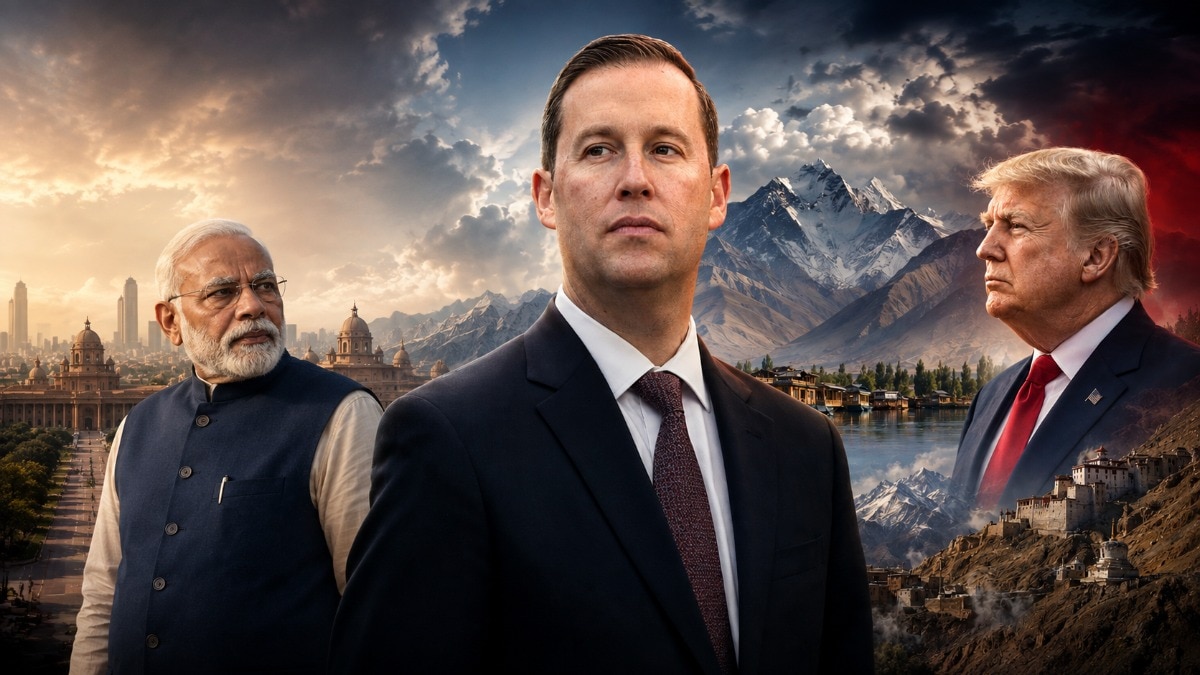
U.S. Ambassador Sergio Gor has broken decades of Washington neutrality by describing Kashmir as an 'important part of India.' The remark has sparked outrage in Pakistan and raised questions about the Trump administration's evolving South Asia policy.
- Ambassador Sergio Gor labeled Kashmir as an 'important part of India.'
- The statement breaks decades of established U.S. neutrality on the Kashmir issue.
- Pakistan has formally lodged a complaint regarding the remarks.
- Experts suggest this may be part of a broader diplomatic charm offensive by the U.S.
In a move that has sent shockwaves through South Asian diplomacy, U.S. Ambassador Sergio Gor has described Kashmir as an "important part of India." This statement marks a significant departure from the long-standing Washington policy of maintaining neutrality and treating Kashmir as a bilateral issue to be resolved by India and Pakistan.
Decoding the Diplomatic Shift
Speaking in a recent analysis, Michael Kugelman, Senior Fellow for South Asia at the Atlantic Council, noted that while this may not represent an official change in U.S. foreign policy, the language used is undeniably significant. Gor, a trusted adviser to President Trump, appears to be leading a strategic charm offensive to strengthen the U.S.-India partnership.
BozokMedia analysis shows that the timing of this visit to Jammu and Kashmir is crucial. As the U.S. looks to bolster ties with New Delhi to counter regional challenges, the ambassador's rhetoric reflects a growing alignment with India's sovereign position.
The significance of Gor's comment lies not just in the words themselves, but in the identity of the man speaking them.
However, the statement has caused immediate friction with Pakistan. Islamabad has formally complained to the U.S. charge d’affaires, viewing the remark as a violation of established diplomatic norms. This comes at a sensitive time as Pakistan seeks to recalibrate its relationship with the Trump administration.
Historical Background
For decades, the United States has navigated the Kashmir dispute by avoiding taking a definitive side, often emphasizing the need for bilateral dialogue between India and Pakistan. This neutrality was a cornerstone of U.S. policy in South Asia. Gor's assertion challenges this historical precedent and aligns more closely with India's long-held stance.
Why This Matters
The ambiguity of this statement creates a complex situation. While it signals warmth toward India, it contradicts previous instances where President Trump offered to mediate in the dispute. This inconsistency highlights the unconventional nature of the current administration's messaging.
Frequently Asked Questions
1. Is this the new official U.S. policy on Kashmir?
It is not yet an official policy shift, but it represents a significant change in the diplomatic tone used by high-ranking officials.
2. How has Pakistan reacted to the Ambassador's comments?
Pakistan has expressed strong indignation and has formally lodged a protest with U.S. diplomatic representatives.

