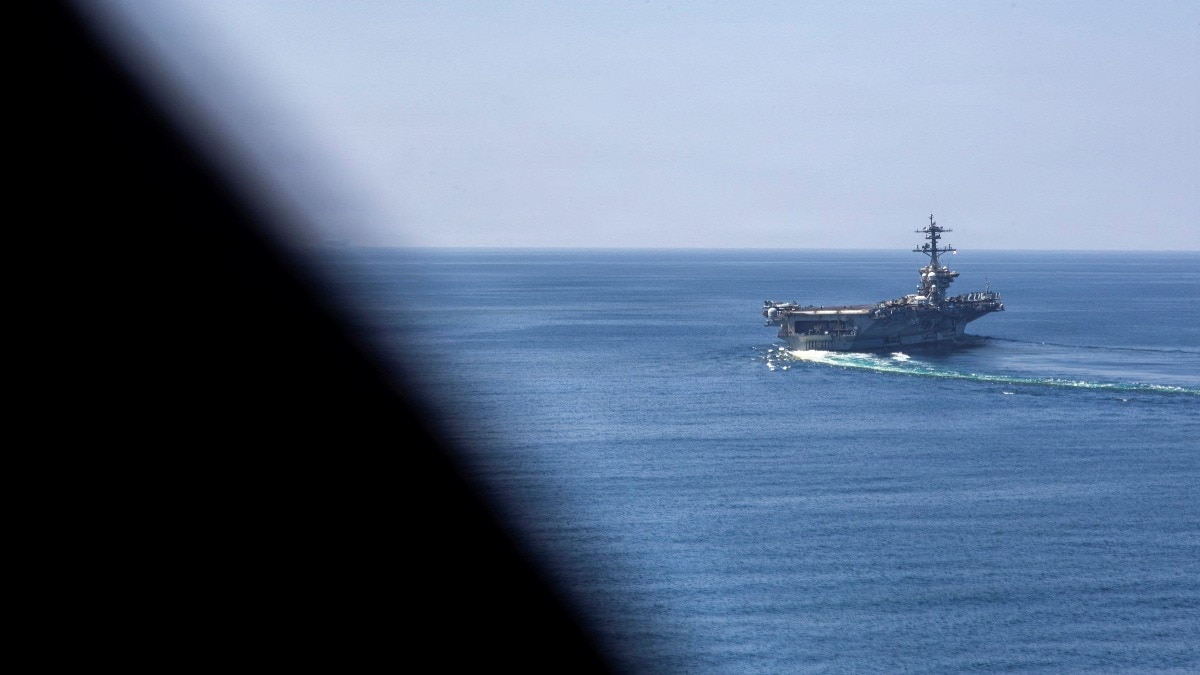
Following a grueling nine-month deployment fueled by the Iran conflict, the USS Abraham Lincoln is heading home amidst reports of crew exhaustion and mental health struggles.
- USS Abraham Lincoln is returning to San Diego after a deployment extended by the Iran conflict.
- Families have raised alarms regarding food shortages and deteriorating mental health among the 5,000-strong crew.
- The USS George Washington has arrived to replace the Lincoln in the Middle East.
The USS Abraham Lincoln, a cornerstone of US naval power, has officially departed the Middle East following an extraordinarily prolonged deployment. Originally slated for a standard rotation, the aircraft carrier was diverted to the region in February 2026 following the outbreak of conflict with Iran. After more than nine months at sea, the vessel is now making its way back to its homeport in San Diego.
Throughout its mission, the carrier served as a vital launch platform for thousands of aircraft sorties, providing critical support for US military operations. However, the operational tempo has come under intense scrutiny as reports emerge regarding the welfare of the approximately 5,000 sailors and Marines aboard. Concerns voiced by family members include extreme exhaustion, food shortages, and declining mental health.
Why This Matters
BozokMedia analysis shows that the human element of naval warfare is often overshadowed by technological prowess. The strain placed on crew members during extended, high-intensity combat deployments can have long-term implications for military readiness and the psychological well-being of service members.
Deployment at sea is uniquely challenging and tough, and people respond differently to stress.
The controversy intensified when reports surfaced that the carrier had gone over 200 consecutive days without a port call—a modern-era record. One relative, speaking to the BBC, highlighted the physical toll, noting that a sailor had reportedly lost 29 kg due to the relentless demands of life at sea, including constant noise and vibration.
Historical Background
Aircraft carriers like the USS Abraham Lincoln are the primary instruments of American power projection. These massive floating cities require immense logistical support to maintain crew morale and physical health. Historically, prolonged deployments without replenishment or shore leave have been a point of contention within military circles regarding the sustainability of long-term naval operations.
Despite the allegations, US officials have pushed back. Defense Secretary Pete Hegseth described reports of deteriorating conditions as "completely misrepresented," while President Donald Trump maintained that the deployment duration was necessary given the geopolitical climate.
Frequently Asked Questions
Question 1: What ship is replacing the USS Abraham Lincoln?
Answer: The Japan-based USS George Washington has arrived in the region to take over its duties.
Question 2: How long will it take for the ship to reach San Diego?
Answer: The journey back to San Diego is expected to take approximately three weeks.