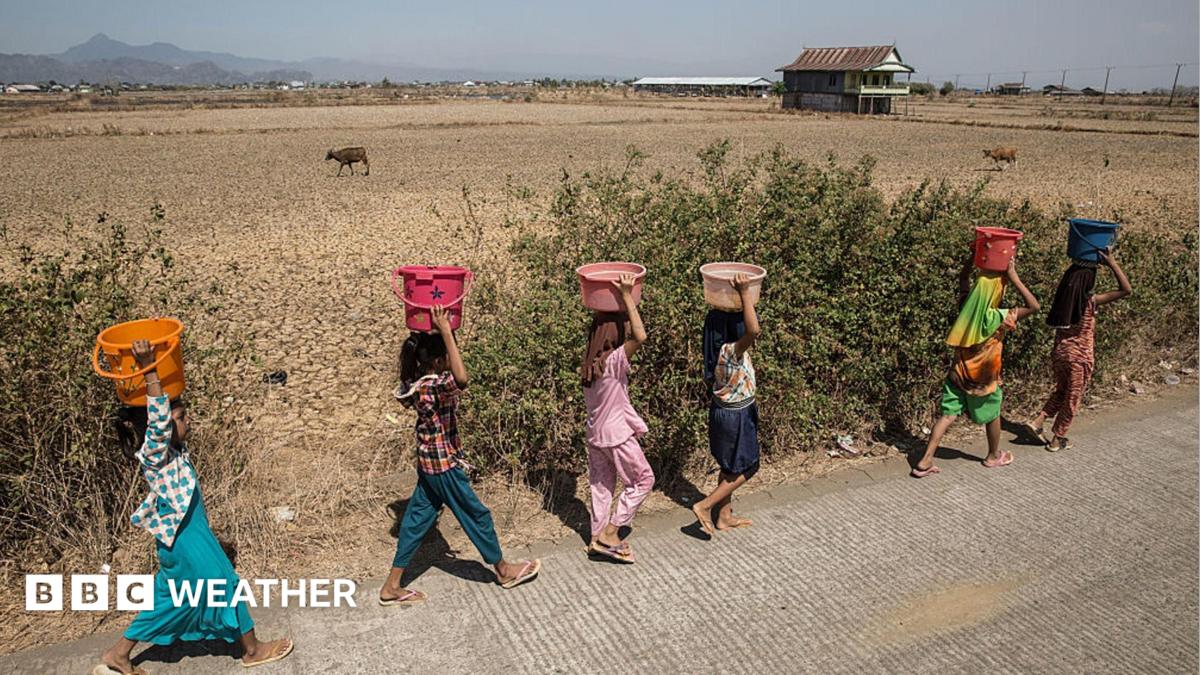
The developing El Niño in the Pacific is set to become the strongest on record, threatening to make 2027 the hottest year globally. Experts warn of extreme weather, including weakened monsoons in India and global food insecurity.
- The Pacific Ocean's El Niño event is trending toward being the most intense in living memory.
- Sea surface temperatures could exceed 3°C above average, a level unseen since 1950.
- 2027 is highly likely to become the hottest year globally due to the combined effect of El Niño and climate change.
- Implications include drought in Australia, floods in South America, and weakened monsoons in India.
A massive climate phenomenon is unfolding in the Pacific Ocean. The UK Met Office has issued a stark warning that the current El Niño event is likely to be the strongest in living memory. When combined with human-induced climate change, scientists project that 2027 will likely become the hottest year ever recorded on Earth.
Current measurements indicate that sea surface temperatures in key Pacific regions are already more than 2°C above the long-term average. However, as the event nears its peak, forecasts suggest these temperatures could soar beyond 3°C. This would represent an unprecedented level of warming not seen in records dating back to 1950. Adding to the intensity, deep ocean temperatures at depths of 100 meters are roughly 8°C above normal, acting as a massive reservoir of heat to fuel the event.
Why This Matters
BozokMedia analysis shows that this is not merely a seasonal shift but a systemic disruption of global weather patterns. The convergence of a 'Super El Niño' with rising greenhouse gas emissions creates a compounding effect that threatens both biodiversity and global economic stability.
"I have never seen an El Niño signal this intense in our forecasts. We should be clear that this is an unprecedented event," says Prof. Adam Scaife, head of long-range forecasting at the UK Met Office.
Global Disruption and Regional Impacts: Thermal shifts in the Pacific are already rippling across the globe. In South Asia, the 2026 monsoon has already recorded below-average rainfall, a common hallmark of El Niño years. Conversely, the tropical Atlantic is seeing suppressed hurricane activity. While parts of Australia and northern South America face severe drought and wildfire risks, nations like Peru and Ecuador are bracing for increased flood risks.
The Economic and Humanitarian Toll: Beyond the weather, the economic implications are staggering. The UN’s Food and Agriculture Organisation (FAO) has warned that this event could expose tens of millions of people to severe food insecurity. Disruptions to the production of staples like rice, coffee, and cocoa are expected to drive up global food prices and destabilize supply chains.
| Region | Expected Impact |
|---|---|
| South Asia (India) | Weakened Monsoon, Below-average Rainfall |
| Australia / South America | Drought and Wildfire Risks |
| Peru / Ecuador | Increased Flood Risks |
| Atlantic Ocean | Suppressed Hurricane Activity |
Frequently Asked Questions
1. Is climate change making El Niño stronger?
While there is no definitive evidence that climate change increases the frequency of El Niño, scientists agree that its impacts are much more extreme in a world that is already warmer due to greenhouse gas emissions.
2. Why is 2027 predicted to be the hottest year?
The peak of an El Niño event often results in the strongest temperature spikes in the following calendar year, which, when added to the existing 1.4°C rise since the 19th century, pushes temperatures to record highs.